
Bulgaria joins mega project for underwater cable across the Black Sea
The optical fibers will be connected on land at Aheloy, after which the existing infrastructure of Bulgartransgaz will be used
 Georgi Zhelyazkov
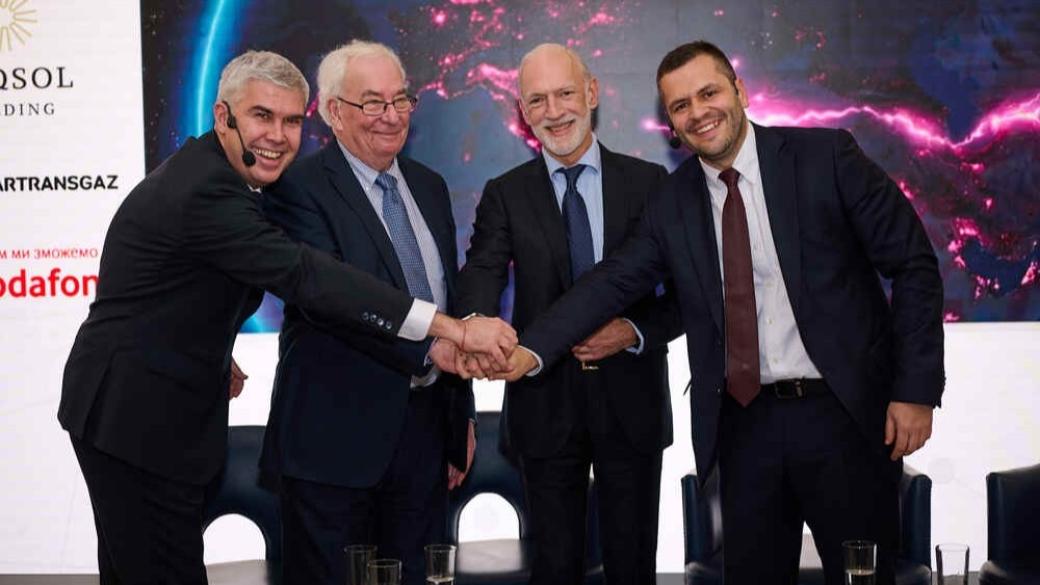
 An official event organized by the British Embassy in Bulgaria marked the official launch of one of the most significant technological projects in the region – the construction of the Kardesa submarine fiber optic cable. With an investment of €100 million provided by Vodafone and NEQSOL Holding (through Vodafone Ukraine), the project promises to transform the digital map of Southeast Europe and connect the Old Continent and Asia at unprecedented speeds.
The initiative, in which Bulgaria plays a key role, connects the Caspian region via the Black Sea. The underwater system is being built by the international company Xtera, a global leader in the design and construction of underwater telecommunications networks. The countries will make every effort to complete the project by mid-2027.
In Bulgaria, the underwater section of the high-speed optical cable will connect to land near the town of Aheloy, where the landing station will be located, from where it will continue underground to Sofia – along two independent routes already built by Bulgartransgaz. The Bulgarian gas transmission operator "will work consistently for its timely and successful implementation, demonstrating institutional capacity, technical expertise, and strategic vision for the development of critical digital infrastructure."
Digital sovereignty and strategic sustainability
British Ambassador to Bulgaria H.E. Nathaniel Copsie opened the event, emphasizing that Kardesa is much more than infrastructure.
It is an investment in our digital sovereignty, economic sustainability, and regional unity," he said.
The ambassador noted that the new system will provide a capacity of 500 terabits per second—an impressive figure that is 25 times greater than the current capacity in the region. This connectivity will support critical sectors such as education, healthcare, finance, and defense.
An alternative to "bottlenecks" in the global network
Rick Perry, head of international network development at Vodafone, placed the project in a global context.
He explained that over 99% of international traffic passes through submarine cables, but traditional routes, especially those through the Red Sea, are becoming increasingly risky and expensive due to geopolitical tensions, conflicts, and geographical features.
Geopolitical tensions are creating problems we have not encountered before. However, the route through Iraq and Turkey to the Black Sea is now technically and commercially viable, making the Black Sea an extremely important digital corridor," he explained.
He presented a map showing the enormous density of cables in the narrow Red Sea and attempted to illustrate the potential technical problems caused by this concentration of routes:
There are 17 cables gathered in a very narrow space. A shark deciding to bite a cable or a ship dropping an anchor could shut down communications for entire regions.
From the Black Sea to the Caspian Sea
Vasil Latsanich, representing NEQSOL Holding, expanded on the vision for the project. He shared that for Ukraine, connectivity is a matter of survival in wartime.
For Ukraine, connectivity is not just business, it is a matter of survival in wartime," he commented.
The cable will connect Bulgaria, Turkey, Georgia, and Ukraine, but the ambitions do not stop there.
The company is currently involved in the construction of a similar system in the Caspian Sea, which will connect Azerbaijan and Kazakhstan, creating a new digital route between Central Europe and Central Asia, bypassing risk areas.
No one has ever attempted such a bold project before," added Latsanich.
Kardesa is part of a larger digital connectivity initiative known as the "middle corridor" or "Digital Silk Road," which passes through the Caucasus, the Caspian Sea, and Central Asia.
Regarding the project reaching Bulgaria, Vladimir Malinov, CEO of Bulgartransgaz, pointed out that it is of key importance for the future of the country.
This is a new, latest-generation underwater telecommunications system across the Black Sea, which will connect Bulgaria and Georgia, with branches to Turkey and a planned future branch to Ukraine, turning our country into a strategic entry point for a new digital corridor between Europe and Asia."
The Bulgarian partnership and the future
The project on Bulgarian territory is being implemented with the active participation of the telecommunications infrastructure company Novatel (part of Deutsche Telekom) and the operator of the state gas transmission network Bulgartransgaz. The two companies will form a consortium – DZZD Novatel – Bulgartransgaz, in which the private company will have a majority stake. It will build and operate the digital infrastructure in the Aheloy area, as well as two independent optical routes to Sofia.
The role of Bulgartransgaz, a company more commonly associated with the construction of gas pipelines, will be to provide its existing infrastructure for the installation of a 24-core fiber optic cable. This involves an existing pipe (Ø40) along the route Sofia – Botevgrad – Pleven – Polski Senovets – Targovishte – Provadia – Lozenets – Stara Zagora – Plovdiv – Ihtiman – Sofia, originally intended for an auxiliary communication network. It will also provide up to 50 sq. m of land in compressor stations for container colocation facilities.
Vladimir Malinov said that when the ring-shaped gas infrastructure was built, the pipes in which the cables to Sofia will now be "launched" were prudently installed. Due to the existence of this infrastructure, Bulgartransgaz will not incur additional costs, but expects "millions" in revenue under the infrastructure usage agreement.
Negotiations are currently underway on the terms of the contract, which are extremely difficult, and we expect the contracts to be signed by March at the latest," the director of the state-owned company told reporters.
He shared that the term of the contract is 25 years – 15 years of firm commitment with the option of automatic renewal for another 10 years.
During the event, a Memorandum of Understanding was signed between DZZD NOVATEL – BULGARTANSGAS, APOLLO SUBMARINE CABLE SYSTEM LIMITED, and PrJSC VF Ukraine, which provides the general framework, rights, and responsibilities of the companies involved in the implementation of the connection between Aheloy and Sofia, part of the submarine cable project.
Interesting facts and technical data
- Digital sovereignty: The project is designed to be independent of the infrastructure of countries with high geopolitical risk, providing a "clean" and secure route for NATO and EU data.
- Global giants are here: During the discussion, it was confirmed that the infrastructure will serve the needs of "hyperscale" companies such as Google and Amazon, which require huge volumes of data with low latency.
- The Black Sea-Caspian Sea route: This is part of NEQSOL Holding's larger vision, called the "Digital Silk Way," which aims to make the Caucasus and Balkan region a major transit hub between China and Western Europe.
- Speed of implementation: The project has already passed the planning phase and is moving on to the actual laying of the infrastructure, with Sofia playing the role of the main distribution center (Point of Presence).
- Environmental aspect: Submarine cables are one of the most environmentally friendly forms of large-scale infrastructure, with a minimal impact on the seabed compared to energy projects.
Translated with DeepL.