Bulgaria will soon have more cars than adults
Used cars account for more than four times as many first registrations as new cars, according to an analysis by “Za Zemiata”
~ 3 min read
 Gloria Hristova
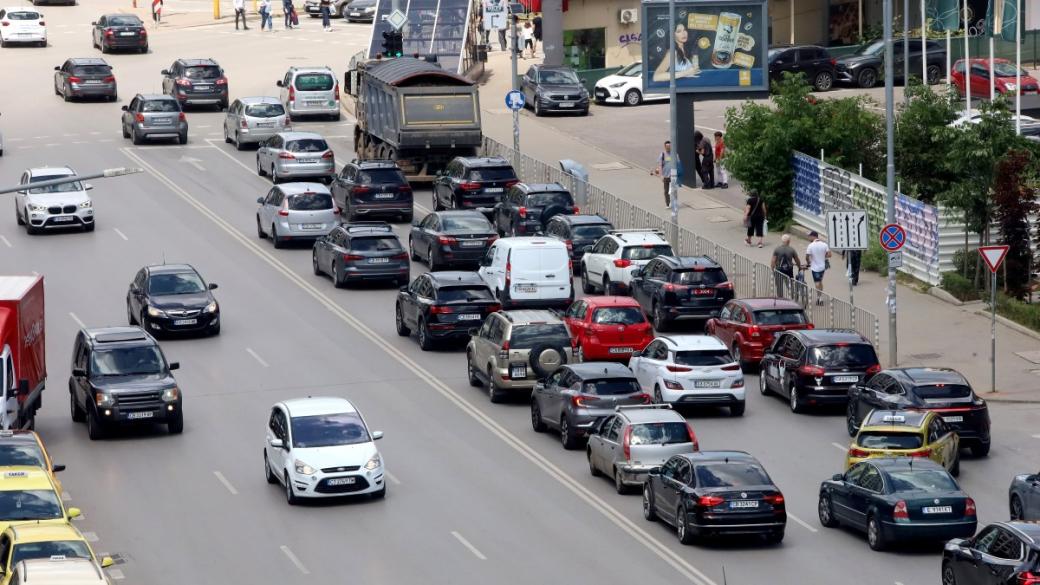
 The number of registered motor vehicles in Bulgaria could exceed the number of adult residents in the country in 5 – 6 years if the current trend continues. This is the forecast by the environmental organization “Za Zemiata” in an analysis of the vehicle fleet, compiled primarily using public data from the Ministry of the Interior.
The forecast covers the entire country, and the calculation includes all registered motor vehicles, not just passenger cars.
As of May 1, 2026, there were 4,424,316 registered vehicles in Bulgaria. According to the organization’s calculations, this amounts to more than eight vehicles for every ten adult residents. By comparison, in 2024 there were 4.18 million, and in 2020 – 3.81 million.
Perhaps the day is not so far off when this country will be “populated” by more cars than people.”
Although Bulgaria is still far from the top in terms of passenger car motorization per capita in the EU – where Italy is the undisputed leader – it is growing at an alarming rate – with 3,289,722 passenger cars, our country reports a motorization rate of nearly 512 cars per 1,000 residents, up from 444 per 1,000 in 2024 (the latter figure is based on Eurostat data).
What do the new registration figures mean?
The report examines both the entire registered vehicle fleet and the vehicles that were registered for the first time in Bulgaria during the first four months of 2026.
“First registration” does not necessarily mean a new car. This group includes both brand-new cars and used cars that are entered into the Bulgarian registry for the first time – most often after import. The data does not include the ordinary sale of a car that has already been registered in Bulgaria.
According to the analysis, used passenger cars registered for the first time in Bulgaria during the first four months of the year outnumber new ones by more than four to one. About 53% of all newly registered vehicles are over ten years old. For passenger cars, the share is nearly 55%. Even cars meeting the EURO 3 and EURO 2 standards – which are more than 20 and 25 years old, respectively – are being registered for the first time.
The age structure is improving very slightly, but the number of older vehicles continues to grow. Vehicles over 15 years old account for 74.4% of the total fleet, down from 76.6% in 2024. Those under five years old make up 6.5%. More than half of all vehicles – 54.4% – are over 20 years old. Their share is almost the same as in 2024, but due to the overall increase in the vehicle fleet, their number has grown by over 130,000.
In other words, older vehicles are decreasing slightly as a percentage but increasing in absolute numbers.
We are importing cars that cities are gradually restricting
“For the Earth” draws attention to the contradiction between the continued registration of EURO 2 and EURO 3 vehicles and the expansion of low-emission zones in European cities. According to the report, many of these cars, especially diesel ones, pollute significantly even when they are in good working order because they were manufactured to much older environmental standards.
Sofia is cited as an example, where the low-emission zone already restricts some older diesel vehicles within the inner ring road, and starting in 2027, the restrictions are set to cover a larger area.
A car’s age isn’t the only factor determining how much pollution it emits
At the end of the analysis, the organization also draws attention to vehicle inspections. Practical measurements conducted at the request of “Za Zemiata” show that a well-maintained older car with a functioning filtration system can pollute less than a newer car with a removed or damaged filter.
According to the organization, the problem is that technical inspections measure the smoke opacity of diesel vehicles but do not directly measure the amount of fine particulate matter. Thus, a diesel vehicle with a removed DPF filter can meet the smoke opacity requirement even though it emits high levels of particulate matter.
At the same time, the number of diesel vehicles in Bulgaria continues to rise – from 2.02 million in 2024 to 2.14 million as of May 2026. Their share remains unchanged at 48.4% of the total vehicle fleet.
Translated with DeepL.