U.S. giants may build Bulgarian highways and rail lines starting in 2027
Rumen Radev hopes Bulgaria will replace Russia as a natural gas supplier to Central and Eastern Europe
~ 4 min read
 Simona Gotsova
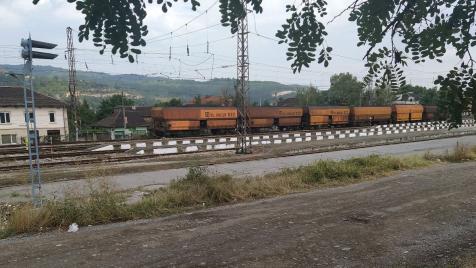
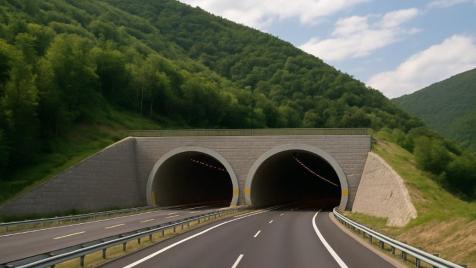
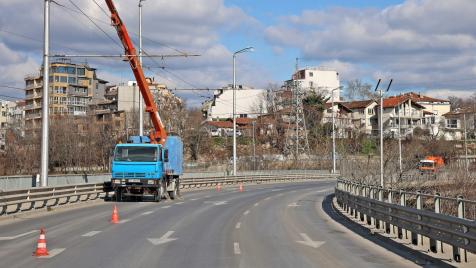
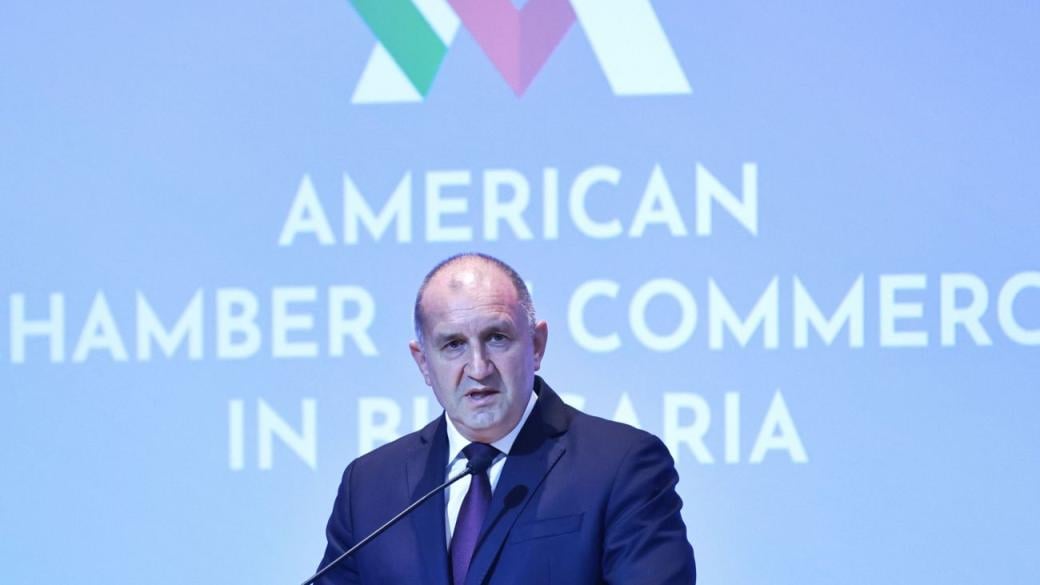
 Next year, leading American companies will be invited to participate in tenders for strategic infrastructure projects in Bulgaria, including highways, railways, ports, and airports. This became clear from remarks made by Prime Minister Rumen Radev during a business breakfast organized by the American Chamber of Commerce in Sofia.
Next year, alongside all other Bulgarian and international companies, we will invite leading U.S. companies, such as Bechtel (Bechtel), which have a strong presence in Europe and build strategic infrastructure, to participate in the tenders we will hold specifically for the connectivity of highways, rail links, ports, and airports,” Radev said.
He described the U.S. as a key strategic partner of Bulgaria, noting that trade between the two countries grew by over 40% last year alone. According to him, the traditional areas of cooperation remain security and defense – with projects such as the F-16s, the “Stryker” armored personnel carriers, and coastal anti-ship systems. The government’s ambition, however, is for the partnership to lead to a breakthrough in high-tech fields.
It is time for American investments to come to Bulgaria in the areas of artificial intelligence factories, high-capacity data centers, robotics, mechatronics, and semiconductors,” he commented.
“Let’s hire without restrictions”
Radev also emphasized the need to accelerate the development of strategic infrastructure, where the lack of project readiness remains a major problem.
He noted that at present, the country cannot even announce a concession tender for a new highway because the design phase is incomplete, and a detailed zoning plan, environmental impact assessment, land acquisition, and building permits are required.
To overcome this delay, the prime minister has authorized the Minister of Regional Development and Public Works to appoint, without restriction, experts to expedite the development of the projects.
I have authorized the minister (of Regional Development and Public Works) to appoint as many people as he wants – designers, engineers, economists, lawyers, environmentalists – without restrictions, so that we can develop the projects at full speed,” the prime minister said.
“Much Larger Quantities of Gas”
Radev highlighted the energy sector as one of the strongest areas of cooperation and stated that Bulgaria is ready to transport significantly larger quantities of U.S. liquefied natural gas to Central and Eastern Europe (CEE). He linked this to the upcoming ban on Russian pipeline gas starting in 2027, which opens up a market niche for the country.
We are ready to transport American liquefied natural gas in much, much larger quantities to CEE,” the prime minister said.
He highlighted Bulgaria’s access to the two LNG terminals in Greece and the five in Turkey – with a combined capacity of over 35 billion cubic meters – as well as the existing infrastructure.
The prime minister added that he had discussed with leaders from Slovakia, the Czech Republic, and other countries the idea of pooling gas needs “into a single basket” in order to negotiate better terms and a lower price with American companies.
From an Airport to an Industrial Park
Radev also gave an example of how the government and the business sector can work together – the transformation of the former Dobroslavtsi military airport near Sofia into an industrial zone. According to him, the site, located 15 km from the capital, was formally and institutionally designated as an economic zone three years ago, during the caretaker government of Galab Donev that he had appointed, but progress stalled for a long time afterward.
Two months of extremely active work, followed by three years of inactivity,” the prime minister commented.
Now the project is gaining momentum. Radev announced that a memorandum was signed two months ago with a leading Bulgarian and European manufacturing company. According to him, construction will begin on the site of one of the largest high-tech industrial parks in Europe, which will also serve as a center for research and development in the space and defense industries.
By combining the state’s capabilities with the business community’s initiative, I am convinced that we will begin construction of one of the largest high-tech industrial parks in Europe,” Radev stated.
As for economic growth, he commented that next year’s budget is intended to further restrict the oligarchic circles’ access to public procurement and public resources.
What we are working on right now is removing this oligarchy’s access to public resources.
I can say that we’re already doing this very successfull – we’re terminating compromised public procurement contracts, reviewing others, and conducting audits. This is the key focus of next year’s budget – indeed, to limit any such access,” the prime minister noted.
For his part, the president of the American Chamber of Commerce, Tommy Ver Elst, said that Bulgaria is well-positioned to achieve sustainable economic growth, as it is part of the European Union and NATO, has strong international partnerships, and boasts a talented workforce.
One of Bulgaria’s greatest assets today is its people,” Ver Elst noted.
According to him, the country’s strategic location, industrial capabilities, potential for innovation, and energy resources also create a strong foundation for long-term economic success and increased competitiveness.
Ver Elst expressed hope that a direct air link between Bulgaria and the United States would be established in the near future. In his view, it would have a positive effect on investment, tourism, and people-to-people contacts.
Translated with DeepL.