From “Hemus” to Dams: Shishkov Proposes Leniency for Infrastructure Lacking Documentation
Roads, water pipelines, gas pipelines, power lines, dams, and other facilities without the necessary documentation may be retained under certain conditions
© ECONOMIC.BG / MRDPW
~ 9 min read
 Gloria Hristova
 Roads and related facilities, water pipelines, gas pipelines, power lines, wastewater treatment plants, shoreline protection structures, and dams built without the required construction permits may, under certain conditions, be granted “tolerated” status – even if they were built after 2001. This is what Regional Minister Ivan Shishkov is proposing with new amendments to the Spatial Development Act (SDA).
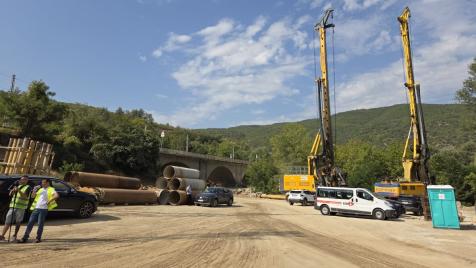
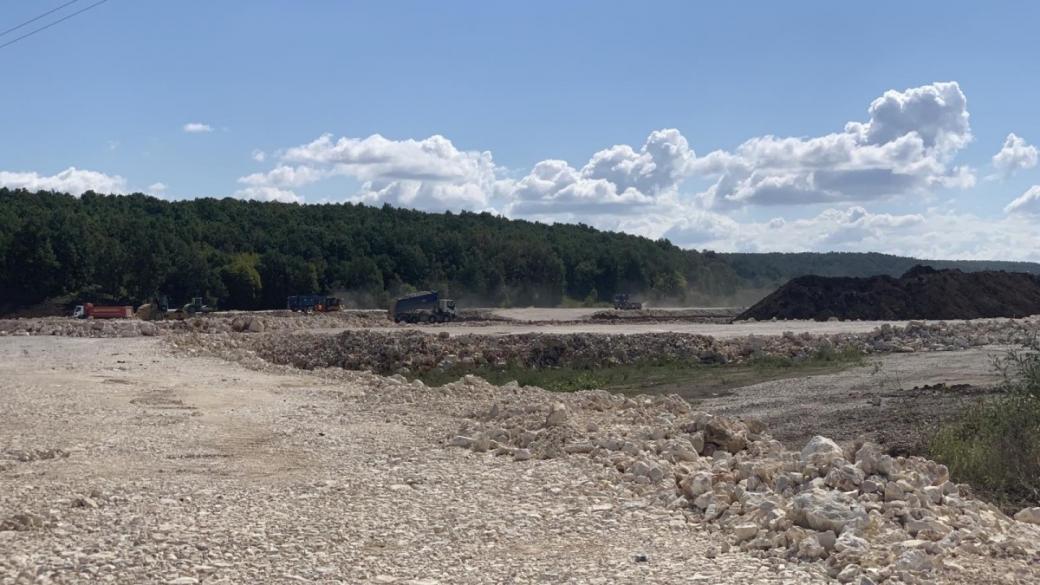
The bill was expected. Such a mechanism would allow for the resolution of the issue regarding construction already completed without the necessary building permits on sections of the Hemus Highway. In June, Shishkov again linked the idea to the highway, stating at the time that the state would not demolish the identified illegal construction in Section 4 and would seek a policy of tolerance.
The bill has been published by the Ministry of Regional Development and Public Works (MRDPW) for public comment through October 19, 2026.
In practice, this means that if a structure meets the requirements of the law and passes the required inspections, it will not be demolished or taken out of service, even though it was built without all the necessary documentation. For unfinished infrastructure, there is also an opportunity for construction to continue, but only after a design has been prepared and a building permit has been issued.
This is precisely where the major difference lies compared to the current law. The Spatial Development Act (SDA) already recognizes so-called “tolerated structures”, but this regime applies to older buildings. The latest cutoff date under the current Section 127, Paragraph 1 is March 31, 2001 – unauthorized structures built by that date may be tolerated if they were permissible under the rules in effect at that time or under current rules.
Shishkov does not eliminate this date for all such structures. He proposes a new exception only for certain technical infrastructure, in which case the cutoff date will be the day on which the future legislative changes take effect.
Which structures will be eligible for tolerance?
The proposal is by no means limited to the Hemus Highway. The new Paragraph 8 refers to specific categories listed in Article 64, Paragraph 1 of the Spatial Development Act. If the text is adopted as is, the new regime will apply to:
- transportation infrastructure and related facilities – including roads, bridges, tunnels, overpasses, underpasses, railroad crossings, and other similar structures;
- transmission networks and facilities within and outside urbanized areas – this includes, for example, water mains, gas pipelines, power lines, and related facilities;
- distribution networks and facilities – transformer stations, electrical substations, drinking water and wastewater treatment plants, step-down and distribution stations, service lines, etc.;
- land reclamation infrastructure and facilities for protection against the harmful effects of water;
- shore reinforcement, shoreline protection, and geotechnical protection structures;
- hydraulic engineering structures, including dams and their associated facilities;
- air navigation support facilities – communication, navigation, surveillance, power, and meteorological facilities used to support air traffic.
The first five of these categories are contained in the current Article 64, paragraph 1, while hydraulic engineering and air navigation facilities are added to it by the bill itself. Two categories from the current Article 64 remain outside the scope of the new tolerance: the physical infrastructure for electronic communications networks under item 6 and waste treatment facilities and installations.
In its explanatory memorandum, the Ministry of Regional Development and Public Works also cites roads, power lines, water pipelines, gas pipelines, and coastal protection structures as specific examples. According to the ministry, for some of this infrastructure, the lack of construction permits is currently preventing completion, operation, repairs, reconstruction, and even insurance.
“Tolerated” does not mean that the construction becomes legal retroactively
An important distinction must be made here. The status of “tolerated construction” does not imply the retroactive issuance of the missing building permit. The main result is that the structure will not be demolished, and its use will not be prohibited.
And this will not happen automatically. For each structure submitted for review, a commission will be appointed, which must inspect the site within three months to assess its condition and degree of completion.
For structures that are already completed, the developer will have to provide information on when construction began and ended, documents proving ownership or the right to build, a survey of the actual structure, an inspection report, opinions from regulatory authorities, cadastral documents, and a technical passport. Only then can the competent authority issue a certificate of tolerance.
For a project that has been started but is unfinished, the procedure is different. The portion already built may be retained, but for the remaining part, the developer must prepare an investment project and obtain a building permit in accordance with the general procedure. This must be requested within two years of the inspection report; depending on the type of project, the relevant environmental, fire safety, water, and other permits will also be required.
Thus, in the case of unfinished infrastructure, the mechanism is actually a two-step process – what has already been built without permits is retained as tolerated, while future construction must proceed legally.
The law does not specify that the facilities must necessarily be state- or municipality-owned
Here, a discrepancy also emerges between Shishkov’s public statements, the impact assessment, and the bill itself. In June, the minister stated that provisions would be proposed for the tolerance of engineering infrastructure “built by the state and municipalities.” The MRDPW’s impact assessment also asserts that the affected structures are “entirely public property.” However, the legislative text contains no such condition.
The new Paragraph 8 links tolerance to the type of infrastructure, the absence of building permits, and its admissibility under zoning regulations, but does not require the structure to be necessarily public state or municipal property. In fact, the documents for a completed structure explicitly state that a document may be submitted proving ownership, an established right to build on another’s property, or the right to build on another’s property pursuant to a special law.
Submitting an application will also suspend proceedings for demolition
The bill also addresses what happens if a building inspection procedure has already been initiated against such a structure. According to Paragraph 8, Section 9, if there are pending proceedings under Articles 224, 224a, 225, or 225a of the Spatial Development Act (SDA), they will be suspended as soon as the application for the new tolerance is filed. Upon the subsequent issuance of a certificate of tolerance or a permit to complete construction, the proceedings will be terminated.
Under the current Article 224, the National Construction Control Directorate (DNSK) may suspend illegal constructions classified as first through third categories, and under Article 225, the head of the DNSK orders their removal. Article 225, paragraph 2 defines as illegal, for example, a structure that contradicts a detailed zoning plan in force or has been constructed without approved investment projects and/or without a building permit. For the lower categories, municipal authorities have similar powers under Articles 224a and 225a.
In other words, the new procedure will not apply only going forward but may also intervene in administrative proceedings already underway against specific properties.
How the First “Hemus Law” Changed
This is not the first time Shishkov has proposed such leniency. As far back as September 2022, again as acting regional minister, he directly linked the amendment to the Spatial Development Act (ZUT) to the illegal construction in sections 4 and 5 of the Hemus Expressway, as well as parts of the Vidin - Botevgrad expressway, as well as major road repairs carried out under contracts for routine maintenance. At that time, the Ministry of Regional Development and Public Works (MRDPW) stated that, due to the illegal construction that had already taken place, no permits could be issued for these sections.
The bill was subsequently submitted by the Council of Ministers to the 48th National Assembly on December 2, 2022. Even then, the basic mechanism was the same – special tolerance for certain infrastructure lacking construction permits, including structures built after March 31, 2001.
The current draft, however, expands the scope of the regime. In Shishkov’s first bill from 2022, the tolerance covered transportation infrastructure and related facilities, transmission networks, distribution networks and facilities, irrigation and drainage infrastructure, as well as hydraulic engineering structures and their associated facilities. In practice, this includes roads, bridges, tunnels, water pipelines, gas pipelines, power lines, transformer stations, substations, wastewater treatment plants, as well as dams and other hydraulic engineering structures.
Shishkov is now adding to this list shoreline reinforcement, shoreline protection, and geotechnical protection structures, as well as air navigation support facilities – communication, navigation, observation, power, and meteorological facilities necessary for air traffic control.
The procedure is also laid out in greater detail – with a commission and quarterly inspections, a specific set of documents and a technical passport, a two-year deadline for submitting a completion plan, and an explicit rule regarding the fate of pending proceedings for illegal construction.
Between Shishkov’s two drafts, there was also a version proposed by the Ministry of Regional Development and Public Works (MRDPW) under Minister Andrey Tsekov. It was proposed in October 2023, after Tsekov had previously withdrawn Shishkov’s version, commenting that the proposed text would open Pandora’s box, as it was unclear how many properties would fall within the scope of the tolerance regime. Tsekov’s bill was more restrictive in one key aspect – the regime was limited to infrastructure projects owned by the state or municipalities. Nevertheless, a number of industry organizations expressed reservations.
First, a permit for reinforcement; then, a detailed urban plan
The new tolerance provision is not the only significant change to the Spatial Development Act proposed by Minister Shishkov. The bill also proposes a special procedure for the installation of unforeseen reinforcement structures and facilities along national highways and railways outside populated areas.
Currently, Article 64, paragraph 2 of the Spatial Development Act requires that elements of technical infrastructure be provided for in zoning plans. Furthermore, a deviation from an approved investment project that violates the current detailed urban plan (DUP) constitutes a “material deviation” under Article 154, paragraph 2, item 1, while Article 154, paragraph 4 generally does not permit such a change after a building permit has been issued.
Shishkov proposes an exception. Under the new Article 148, paragraphs 17 and 18, where a national highway or railway line already exists, a reinforcement structure may be authorized even if it is not yet provided for in the current detailed zoning plan. The investment project and the building permit may be approved prior to the detailed zoning plan itself, which must subsequently be brought into compliance. Notarized consent from the affected property owners will be required.
A similar exception is established under the new Article 154a, where unforeseen terrain or geological conditions are discovered after construction has already begun, necessitating additional reinforcement. The amendment must be approved before the reinforcement work is carried out, but the Detailed Urban Plan may again be amended afterward.
In other words, for these specific cases, the usual sequence is reversed – the necessary reinforcement may be authorized first, and the zoning procedure may be completed afterward.
However, the facility cannot be put into operation until the Detailed Urban Plan (DUP) has entered into force and the affected properties have been expropriated or acquired. To this end, the new Article 209a provides a three-year period following the plan’s entry into force; in the event of early expropriation of the property, the owner must also be compensated for lost profits.
New Rules for New Infrastructure, Stricter Inspections for Existing Structures
While opening the possibility of tolerating infrastructure built after 2001, the Ministry of Regional Development and Public Works (MRDPW) proposes, at the same time, to tighten inspections under the existing regime for older tolerated structures. The newly proposed Paragraph 9 concerns applications filed under the current Paragraph 16 of the Spatial Development Act (ZUT) and Paragraph 127, Section 1 of the 2012 amendments. These applications will now require the submission of a structural assessment of the building’s condition, and the administration will ex officio verify whether the structure was in fact permissible under the zoning regulations. The new requirements will also apply to proceedings that have already begun but have not yet been concluded.
The Ministry of Regional Development and Public Works (MRDPW) explains the change by noting that, rather than the number of such certificates gradually decreasing, an increase has been observed, and there are cases in which the concept of tolerance is being used to “legalize” newer construction. However, the exact number of such cases is not specified.
The Council of Ministers Wants Numbers
It is precisely the lack of specific data that is one of the observations made by the administration of the Council of Ministers regarding the preliminary impact assessment.
The Council of Ministers points out that the Ministry of Regional Development and Public Works (MRDPW) refers to an increase in the number of tolerance certificates and to numerous infrastructure projects lacking building permits, without providing data on either the number of these certificates or the number of affected projects. Therefore, the administration recommends that the issue be supported by quantitative information.
At the same time, the MRDPW’s assessment does not identify any negative economic, social, or environmental consequences resulting from the introduction of the new tolerance policy.
The Council of Ministers’ administration further insists that the law specify the timeframe and the entity responsible for conducting a follow-up assessment to determine whether the changes have achieved their intended objectives.
Translated with DeepL.