Bulgaria is seeking EU funding for five transportation projects in collaboration with Romania and Greece
The application is being submitted under the Connecting Europe Facility, including for military mobility
© ECONOMIC.BG / Krasimir Svrakov
~ 4 min read
 Gloria Hristova
 Bulgaria, Romania and Greece will jointly apply for European funding for transportation projects along the North-South corridor; on the Bulgarian side five projects are included in the list, according to a decision by the Council of Ministers.
Bulgaria has included two railway projects near the Greek border, the extension of the “Struma” highway section to the “Kulata” border crossing point, feasibility studies for the future highway route from Veliko Tarnovo through Nikolaevo to the “Maritsa” Highway and the electrification of the railway link between “Danube Bridge” and “Ruse-Distribution” Station.
The three countries are preparing joint proposals in response to the 2026 call for proposals under the Connecting Europe Facility (CEF) in the “Transport” sector, which is open until October 6.
This call has a total budget of €1.1 billion for European transport infrastructure. Of this amount €260 million is allocated under the Cohesion Package for railway projects while another €130 million is earmarked for military mobility. The latter category funds dual-use infrastructure – for both civilian and military transport.
Two Railway Projects
Under the Cohesion Package Bulgaria plans to apply for pre-project studies for the Mihailovo – Dimitrovgrad railway section as well as construction on the Lyubimets – Svilengrad – Greek border route.
Both sections are part of the larger North–South railway corridor. As Economic.bg reported in April the NRIC has already begun preparing pre-investment studies for a future railway link between the Danube and the Aegean Sea.
One of the options under consideration follows the existing fourth railway line along the route Ruse – Gorna Oryahovitsa – Veliko Tarnovo – Dabovo – Stara Zagora – Mikhailovo – Dimitrovgrad – Svilengrad – Greek border. The contract for the studies had an estimated value of over €1.3 million but was terminated.
The railway corridor in southern Bulgaria has already been the subject of significant investments. Sections of the Plovdiv – Svilengrad line and the connections to the Greek and Turkish borders were modernized under European programs in previous funding periods.
From Design to Construction at “Kulata”
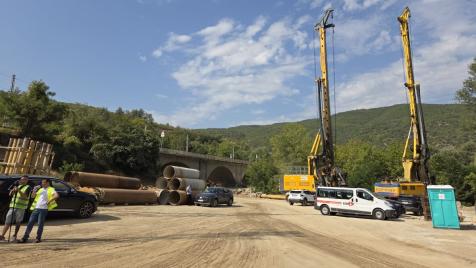
Among the three proposals in the “Military Mobility” package is the expansion of the road section that covers the end of the “Struma” highway and extends to the “Kulata” border crossing point; this time the country will apply for construction funding.
The project is not new. Economic.bg reported as early as November 1, 2024 that the RIA had launched a procedure for designing the approximately 2 km link between the highway and the border crossing point. The current road has variable width, while the future route is planned to be widened to two lanes in each direction.
The same package also includes studies for the highway route from Veliko Tarnovo through Nikolaevo to the “Maritsa” Highway. This is part of a much larger plan for the Ruse – Veliko Tarnovo highway to continue south toward the Greek border.
As Economic.bg reported, the planned route from Veliko Tarnovo to “Makaza” has an estimated length of about 220 km and is divided into three sections – Veliko Tarnovo – Nikolaevo, Nikolaevo – “Maritsa” Expressway and “Maritsa” Expressway – “Makaza.” The preliminary studies consider a route through the Pass of the Republic – “Hainboaz.”
Thus the current application covers the studies for the first two sections of the future southern extension – from Veliko Tarnovo to the junction with the “Maritsa” Highway.
Electrification at “Danube Bridge”
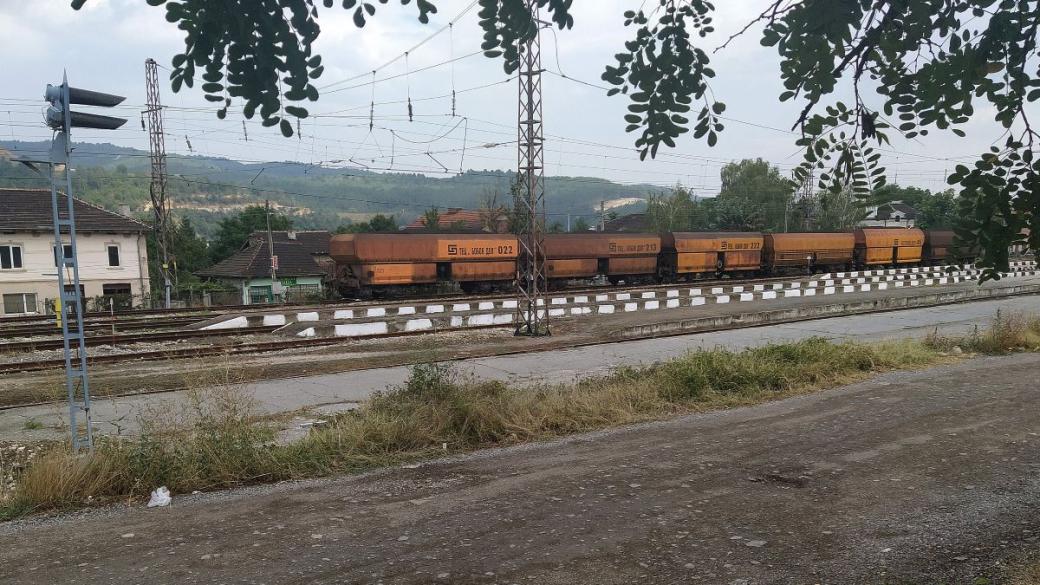
The fifth project is the electrification of the railway section between “Danube Bridge” and “Ruse-Distribution” Station, again in the context of military mobility. Preparations for this project have already begun. On August 10, 2024 NRIC published an investment proposal for the electrification of the line from Ruse-Distribution Station to Danube Bridge 1, including the section up to the state border with Romania. NRIC has also initiated an environmental impact assessment for the project.
The project also fits into the broader plans for the modernization of the Ruse railway hub.
Economic.bg reported in April that the NRIC is preparing preliminary studies and conceptual designs for the hub, which is part of both the European “Baltic Sea – Black Sea – Aegean Sea” corridor and the military mobility network.
From a Long List to Specific Projects
The joint application is based on the memorandum between Bulgaria, Greece and Romania, signed in Brussels on December 3, 2025. The document established a platform for coordinated work on transport links between the Black Sea, the Aegean Sea and the Danube and included road, rail and cross-border projects.
In June the Ministry of Transportation announced that the initial broad list would be reviewed, and the focus would be shifted to projects with a realistic chance of being prepared and funded. Even then the Ministry of Transport reported that the three countries were preparing a joint project proposal for funding under the Connecting Europe Facility. The specific Bulgarian projects with which the country will participate in the current CEF call have now been identified.
Translated with DeepL.