
The real estate market is entering a new reality: Cheap mortgages are in question
Against the backdrop of declining transactions and high prices experts are outlining various scenarios for 2027, with the cost of borrowing remaining the main unknown
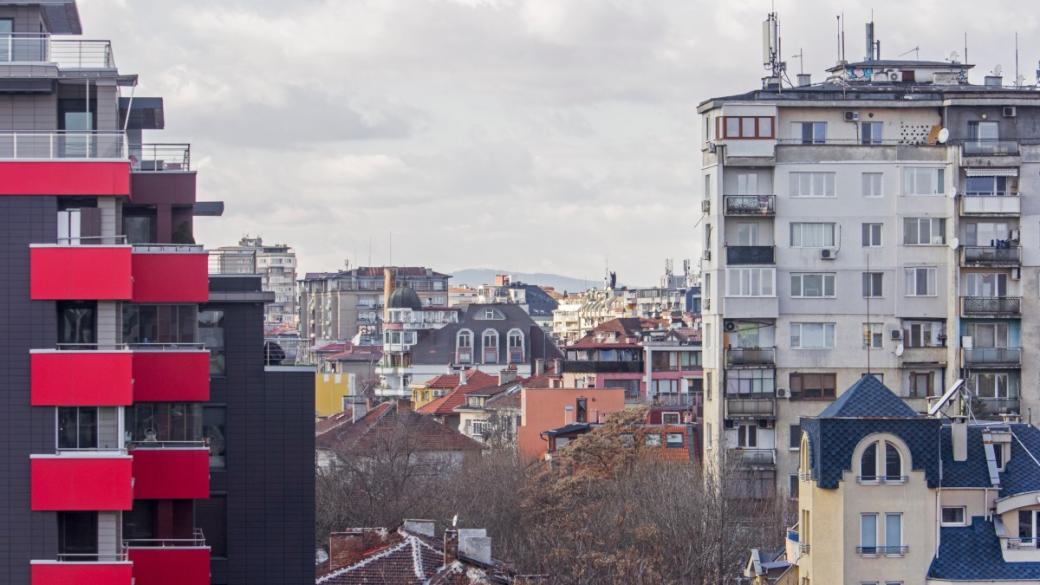
© ECONOMIC.BG / Krasimir SVrakov
 Gloria Hristova
The real estate market in Bulgaria is reaching a turning point – transactions are declining, but prices remain high and continue to rise. At the same time buyers are becoming increasingly cautious and are already tightening their budgets, while sellers still believe they can get their asking price. Developers are facing slower sales and some are even postponing the start of new projects. All of this points to a market whose current state is unsustainable, warns Dr. Miroslav Vladimirov, a member of the Board of Directors of ERA Bulgaria.
We are closing fewer and fewer deals at increasingly higher prices, and this is the unstable situation as of today,” the expert noted during a real estate forum organized by Investor Media Group.
According to him, however the real change is yet to come and it will not be linked simply to the declining number of transactions or price movements but to the terms under which purchases are financed. Following Bulgaria’s accession to the eurozone the housing market now operates in a fundamentally different financial environment, and its development in 2027 will depend increasingly on mortgage lending and the interest rate policy of the European Central Bank (ECB).
The ECB has already raised its key interest rates twice this year – in June and September, by 25 bps each time – and market expectations point to another increase in December. According to Vladimirov’s analysis, the effect on mortgage rates in a number of European countries is already beginning to be felt, while the same trend has not yet been observed in Bulgaria.
How long this difference will persist and how the rising cost of financing would affect demand remain among the key questions facing the market. Based on this Vladimirov outlined three scenarios for 2027, with the most likely one, in his view, involving a rise in mortgage rates, a further slowdown in transactions and a deceleration in price growth. Other participants in the forum, however, presented significantly more moderate expectations regarding both future increases in borrowing costs and trends in housing prices.
Is the market stable right now?
At first glance the Bulgarian real estate market continues to appear resilient. Prices are holding steady, bank lending remains active and interest in purchasing homes has not waned. Data on the number of transactions, however, reveal a different trend.
In the third quarter of 2026, 45 312 real estate sales were registered nationwide, a 22.1% decrease compared to the same period the previous year, according to statistics from the Registry Agency. In Sofia, the decline was 21.2% – from 9 238 to 7 282 sales.
At the same time the latest data published by the National Statistical Institute show that in the second quarter housing prices in Bulgaria rose by 15.5% year-over-year and by 4.5% compared to the previous three months. Data on price trends in the third quarter are scheduled to be published in December.
It is precisely this discrepancy between transaction trends and price trends that Vladimirov identifies as one of the market’s main problems. According to his analysis in recent years the market has failed to significantly increase the number of transactions despite substantial income growth, high inflation and exceptionally favorable lending conditions. Instead of leading to more purchases strong demand has primarily driven up prices.
In his words the initial reaction when certain price levels are reached is for buyers to pull back rather than for property prices to fall. The reason is that buyers can relatively quickly postpone their decision while sellers continue to base their prices on the high levels already reached.
Sellers remain anchored to their old prices,” he explained.
This leads to a market where fewer and fewer deals are being closed, but at prices that remain high and are still rising. For Vladimirov this is not necessarily a harbinger of a crash, but a natural part of the market cycle. The significant change, he believes, is yet to come from another source – the way purchases are financed.
Is the end of cheap mortgage lending approaching?
Bulgaria’s entry into the eurozone on January 1, 2026 is the turning point that Vladimirov emphasizes. For nearly three decades the country operated under a currency board and the local banking market had its own unique characteristics. This allowed mortgage loans in Bulgaria to remain relatively cheap during the previous cycle of rising interest rates in the eurozone despite the ECB’s significant tightening of monetary policy.
Now however conditions are different, Vladimirov noted. Bulgarian banks are part of the eurozone’s common monetary system, and developments in the broader European market will increasingly influence the pricing of financial instruments.
According to Vladimirov this is precisely the change that participants in the real estate sector have not yet fully appreciated.
The data he presented show that since March mortgage rates in most eurozone countries have already begun to rise. Moreover the statistics currently available reflect only the beginning of the effect of the ECB’s first interest rate hike in June. The impact of the subsequent decision in September has yet to be felt.
In Bulgaria such a trend has not yet been observed to the same extent. Vladimirov however expects that over time the rise in European interest rates will begin to spill over into the local mortgage market, though not necessarily at the same pace or to the same extent. This correlation is becoming increasingly significant because in recent years mortgage lending has become one of the main drivers of home purchases.
According to data he presented more than half of all real estate transactions in the country now involve mortgage financing. For Sofia and other major cities he estimates that the share is even higher. This means that buyers’ affordability no longer depends solely on wage growth or their available savings. The cost of credit and the terms under which banks are willing to provide it will become increasingly important.
Three Scenarios for Development – and None Guarantees the Current Rate of Growth
On this basis Vladimirov outlined three possible scenarios for the development of the real estate market over the next year.
The optimistic scenario predicts that mortgage interest rates will remain largely unchanged, demand will begin to recover and the decline in transactions will be limited to current levels. However he considers this option to be the least likely.
The baseline scenario, which he believes is most likely to materialize, involves a gradual increase in mortgage rates in 2027 by approximately 0.5 – 0.7 ppt. This would lead to a further contraction in demand, fewer transactions and more moderate growth in housing prices.
The risk scenario assumes a more significant tightening of monetary policy, under which mortgage rates in Bulgaria could reach around or above 3.5%. According to Vladimirov such a development cannot be ruled out, especially if inflationary pressures in the eurozone spread beyond energy products and begin to feed more strongly into the prices of other goods and wages. In that case the ECB may be forced to continue raising interest rates into next year.
The expert emphasized that as early as the beginning of 2026 the current baseline scenario was already viewed as risky. However the change in the economic environment over the past few months has necessitated a reassessment of the probabilities.
According to him the main question is no longer whether the market will be able to sustain the record-high activity of recent years but at what level demand will settle under the new financing conditions.
Banks expect a much more gradual rise in interest rates, but with conditions
Not all market participants, however, share the expectations of such a significant increase in the cost of mortgage financing. Ivaylo Valchev, Deputy Director of “Retail Banking” at First Investment Bank, presented a significantly more moderate forecast. According to him a slight increase in mortgage rates is possible only in the second half of 2027, with the expected increase in the range of 10 bps, or 0.1%.
The difference between the two forecasts is substantial. While Vladimirov emphasizes the gradual integration of the Bulgarian mortgage market into the eurozone’s overall interest rate cycle, Valchev highlights the factors that continue to keep borrowing costs low in Bulgaria. These include banks’ high liquidity and capital adequacy, strong competition among lending institutions, low interest rates on deposits and the specific features of the interest rate methodologies used by banks.
Valchev noted that the ECB’s recent hikes in key interest rates have not yet had a significant impact on the cost of home loans in Bulgaria.
He admitted, however, that mortgages with the lowest interest rates will gradually become available to a more limited group of borrowers, which would raise the average interest rate.
The banker also highlighted the risks that could change the situation. These include potential changes in interest rate-setting methodologies, restrictions on banks’ ability to capitalize their profits and a decline in real estate prices, which would affect the collateral in loan portfolios.
An additional risk, according to the banker, stems from the government’s proposal tointroduce a tax on excess profits in 2027. The measure, included in the proposed budget amendments, provides for an additional 33% tax on profits exceeding a certain threshold for several sectors, including banks, insurers, telecommunications companies and large retail chains.
According to Valchev such taxation could limit banks’ ability to capitalize a portion of their profits and, consequently, reduce their willingness to grant new loans. This, he said, could also lead to an adjustment in interest rates.
A similar warning was issued back in late September by Dimitar Radev, Governor of the Bulgarian National Bank. In an official statement dated September 25, 2023 he noted that the additional tax on bank profits could affect not only the capital of financial institutions but also the cost of loans, the terms under which they are granted and deposit products.
For households this could mean more expensive or harder-to-access credit,” Radev warned at the time, insisting that the measure’s impact on financial intermediation be assessed before its final adoption.
Another risk highlighted by Valchev is a potential decline in real estate prices. According to him, such a correction could affect the value of collateral in bank portfolios and necessitate additional provisions, which would also limit banks’ appetite for lending.
For now however the banking sector does not expect a sharp change in mortgage financing conditions. This is also confirmed by current statistics from the Bulgarian National Bank (BNB), according to which the average interest rate on new home loans in August was 2.42%.
Will the measures in the 2027 draft budget affect the real estate market?
Against the backdrop of the changing market environment the government is also proposing several tax measures that directly affect the construction and real estate sectors. These include mandatory VAT registration prior to taxable transactions involving new buildings and plots of land, a ban on cash payments in the construction sector and a phased increase in property tax assessments.
In a comment to Economic.bg the chairman of the National Association of Construction Entrepreneurs, Georgi Shopov, supported the proposal that sellers of new buildings and regulated land parcels submit an application for VAT registration at least seven days before the tax on the relevant supply becomes due, regardless of their turnover.
According to him the goal is to put an end to the practice of certain companies making all their sales within a single month before they are registered for VAT. He noted that such cases have already been the subject of tax proceedings and court rulings, but explicitly addressing them in the law would limit the potential for abuse.
This is fair and just for both society and the industry,” Shopov commented.
According to him such practices are mainly found among companies that enter the sector with the intention of completing a single project and subsequently exiting the market. He emphasized that there are no companies among the association’s members that adopt such an approach.
His assessment of the proposal that payments between construction companies, contractors and subcontractors be made exclusively through a payment account, regardless of their amount, is quite different. Shopov described this idea as “nonsense” since in his view large construction companies already make their payments primarily via bank transfers.
Therefore he does not expect the new restriction to increase their costs or affect the prices of new construction projects. In his view the measure could create difficulties for small-scale renovation projects, citing as an example the need to purchase additional materials during home renovations. However the proposed legal wording applies to payments between participants in the construction chain and does not explicitly mention payments by private households to contractors.
For his part Miroslav Vladimirov commented to Economic.bg on the planned phased increase inproperty tax assessments for the period 2027 - 2029. In his view this change will not have a significant impact on real estate market dynamics. He based his assessment on the growing share of transactions financed through bank mortgages. In such cases the actual agreed-upon price is known to the lending institution, which severely limits the possibility of the transaction being recorded at a lower value corresponding solely to the tax assessment. Therefore according to Vladimirov the future of the market will depend to a much greater extent on mortgage interest rates than on changes in tax assessments.
Buyers Are Already Tightening Their Budgets
Regardless of the various forecasts for interest rates the change in buyer behavior is already visible. According to Vălchev’s observations, households are beginning to consciously limit the budgets they are willing to allocate toward purchasing a home. The reason is not necessarily deteriorating creditworthiness, but rather a combination of significantly higher upfront costs and growing uncertainty.
According to his calculations between 2020 and 2026 real estate prices rose by an average of 113% nationwide and by about 118% in Sofia. Over the same period income grew by approximately 103% while savings increased by 93%.
The discrepancy is particularly evident in the funds that a buyer must have available even before a mortgage is approved. While in 2020 a standard two-room apartment of 70 m² required about €22 000 in equity – including the down payment and associated transaction costs – today that amount has risen to approximately €50 000, according to Vălchev’s calculations.
This means that even households capable of servicing a larger mortgage do not always have sufficient funds for the initial down payment on the purchase.
Added to this is the uncertainty surrounding inflation, the global economic situation and future interest rates. Buyers prefer to keep part of their savings as a reserve rather than invest it entirely in a home.
It is precisely the lack of such a reserve that could become a serious problem in the event of a rise in mortgage interest rates. According to Valchev the most vulnerable would be borrowers who have already taken on debt “at the limit of their means” and are allocating about half of their monthly income to service those loans.
Another at-risk group, he says, consists of households that have invested all their available equity in a home purchase without having any liquid buffers for unforeseen expenses. Should financial conditions change, these households would have the most limited ability to cope with additional strain on their family budget.
Nevertheless the banker does not believe that housing affordability in Bulgaria has reached critical levels. According to his calculations purchasing a standard 70 m² home in 2026 will require approximately 7.4 gross annual salaries compared to 6.9 in 2020. Although this represents a slight deterioration the indicator remains more favorable compared to a number of other European countries.
Sellers with Unrealistic Price Expectations
However the withdrawal of some buyers does not mean that sellers will automatically start offering discounts. Polina Stoykova, CEO and co-owner of Bulgarian Properties, pointed out that there are still owners on the secondary market with unrealistic price expectations. They continue to base their prices on the high values achieved in previous years, even though finding a buyer now takes longer.
According to her observations the supply of existing homes has increased this year compared to 2025, when the number of listed properties was relatively limited.
They still believe they can achieve the prices they have in mind,” Stoykova commented regarding the sellers.
As a result the time it takes to sell certain properties is lengthening and the need to revise the initially listed prices is gradually increasing.
In the case of new construction, however, there is another explanation for the situation. Georgi Shopov, chairman of the National Association of Construction Entrepreneurs, noted that, according to the organization’s data, preliminary contracts have decreased by about 12 - 15% this year. This, he said, is not a sign of a crisis but rather a return to more normal levels of activity following the unusually strong year of 2025.
Shopov noted that preliminary contracts for new construction should not be confused with official statistics on completed transactions, as there is often a significant time lag between the two. In his words construction companies are not under pressure to sell immediately and can afford to sell already-built homes at a slower pace.
I will sell at this price more slowly. I do not need the money right now. I will wait for this price,” he said, describing the logic of developers who have the financial means to keep their properties on the market.
This is also one of the reasons why prices are not reacting to the decline in demand as quickly as some buyers expect.
At the same time Shopov acknowledges that households’ purchasing power places real constraints on demand. According to his observations the greatest interest right now is in small two-bedroom apartments as these are the ones that remain within the budget of the average buyer.
Right now demand is highest for small two-bedroom apartments because that is what people can afford,” he said, noting that this conclusion is based on his company’s sales.
According to him developers targeting the mass market must take into account the budgets of the average household rather than the financial capabilities of luxury property buyers. As a benchmark for this segment he cited homes in the price range of around €200 000 - €220 000, reaching approximately €230 000. Even such amounts, however, are already out of reach for some middle-class families in Sofia, Shopov noted.
Expensive finishing work and a decline in new projects
The changing environment does not necessarily mean uniform development across all market segments. Stoyan Gochev of Re/Max City and Re/Max City Mall believes that in the coming years the gap between new and existing residential construction may widen. He forecasts that prices for new homes will continue to rise, while those for older properties may remain around current levels or see a moderate decline.
According to him the change will be linked not only to construction costs but also to the way developers market their projects.
Gochev pointed out that the advertised prices of new homes do not always reflect the actual amount the buyer must pay in order to move in or begin renting out the property. The reason is that developers in Bulgaria continue to sell a large portion of new construction in a rough-finished state while finishing costs have risen significantly.
According to his estimates, finishing work in Sofia now costs an average of about €500 per m². Thus for a home with an initial price of €2 500 - €2 600 per m² the final cost of the finished property could reach about €3 200 per m², according to his calculations.
In addition to the financial costs there is also the time required to complete the home. For an investment purchase this means a period during which the owner cannot generate rental income.
This is precisely why Gochev expects more and more construction companies to begin offering fully finished “turnkey” homes in the coming years. In his view such a product will better meet buyers’ needs and will gradually replace the traditional practice of offering properties with only plaster and putty, which he predicts will become a “rarity.”
Gochev also highlighted another trend that offers a different perspective on the state of the construction sector. Based on his observations an increasing number of companies are abandoning their plans to launch new projects due to expectations of weaker demand and concerns that they will not be able to sell future homes amid rising construction costs.
This contrasts with Shopov’s assessment that developers have the financial capacity to wait longer to sell properties that have already been built. While the chairman of the National Association of Real Estate Agents (NARE) does not see significant pressure on companies to lower prices, Gochev draws attention to their decisions regarding whether to even begin the next projects.
Differences exist not only between new and old construction but also between individual cities and neighborhoods. Vladimirov also noted that one cannot speak of a completely unified housing market in Bulgaria. According to his analysis neighborhoods in Sofia are moving relatively in sync with the overall urban trend while in Varna and Burgas individual districts are following more varied price trajectories.
This suggests that potential changes in demand and prices over the next year will not necessarily manifest equally everywhere.
Translated with DeepL.