
Multi-funds offer the potential for a return of over 7% on the second pension
In 2027, the most significant overhaul of Bulgaria’s pension system is set to take place—people will be able to choose for themselves
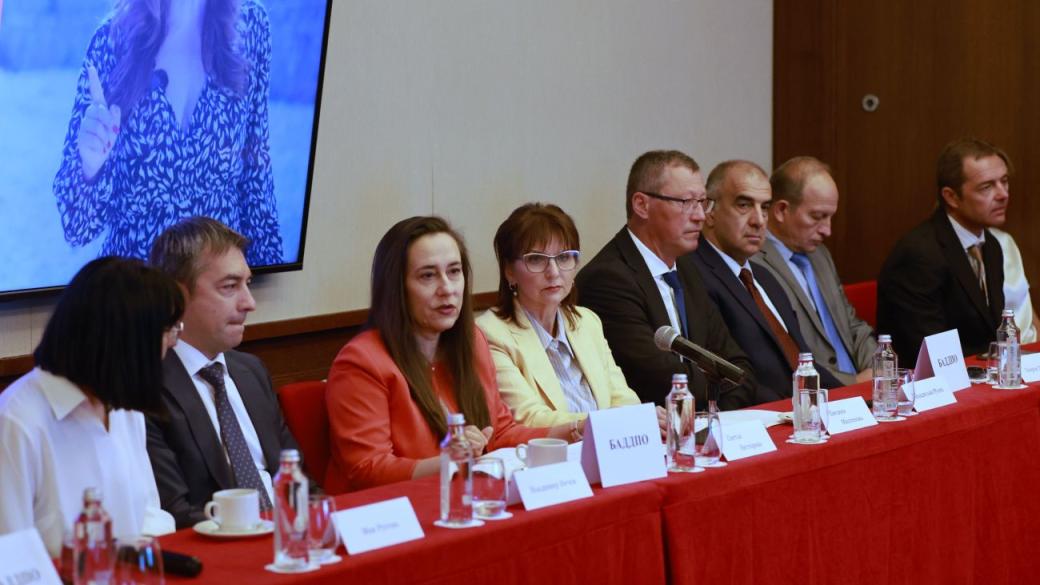
© ECONOMIC.BG / BTA
 Simona Gotsova
 The average annual return for someone insured through a private pension company could exceed 7%, but only if they choose the riskiest subfund. This information was provided by Svetla Nestorova, a member of the Association of Supplementary Pension Insurance Companies (BADDPO), during an explanatory press conference dedicated to the introduction of multi-funds in Bulgaria starting in early 2027. The dynamic subfund is recommended for younger people who have enough time to recover from a potential market downturn.
The multi-fund model provides for our second-pension funds to be managed according to the age and investment horizon of working individuals. Accordingly, there are three subfunds:
- Dynamic – with the highest permissible exposure to stocks and other variable-income instruments, but also with higher potential for capital accumulation;
- Balanced – striking a balance between long-term growth potential and asset protection;
- Conservative – a low-risk profile with a predominance of fixed-income instruments.
The most aggressive of the three – the dynamic subfund – is projected by pension companies to yield an average annual return of over 7%. For the balanced subfund, the return will range from 4% to 7%, while the conservative subfund will have the lowest return, between 2% and 3%.
The investment philosophy is not something new, ultra-innovative, or invented in Bulgaria. When a person is young and has a long time horizon ahead to accumulate funds, invest them, and benefit from returns, they can – and should – adopt a more dynamic approach to investing,” Nestorova explained.
She noted that the dynamic subfund is suitable for younger people with a longer time horizon. At the same time, if there are three years or fewer remaining until retirement, workers will be automatically allocated to a conservative fund.
Whatever you’ve achieved, you’ve achieved; we need to focus primarily on preserving and safeguarding it,” Nestorova said, explaining the model’s philosophy.
She added that the conservative sub-fund is managed “very conservatively, just like a bank deposit,” and that this is precisely where people who do not want their money to carry any market risk can be directed from day one.
“People with a specific preference”
The provisions regarding multi-funds in the Social Security Code (SSC) stipulate that:
- Anyone under the age of 50 will be placed in the dynamic subfund;
- those aged 50 to three years before retirement—in the balanced subfund;
- in the last three years before retirement—mandatorily in the conservative subfund.
However, employees have the right to choose their own subfund between September 1 and November 30 of this year. After that, they will be able to make a change every 12 months. If they do not choose now, they will be assigned according to the example above.
Nestorova noted, however, that efforts to select subfunds began several days ago.
This morning, even before the press conference began, notifications had already been received from clients regarding their choices. So the process is, in fact, already well underway. People who have a particular opinion and want to stand out, so to speak, can express that opinion at any time and can change it at any time,” she added.
What the Fees Will Be
BADDPO emphasized that fund fees will be cut in half over the next 10 years. The deduction from each pension contribution will drop from the current 3.75% to 2.1%, and the investment fee on assets will become a two-part fee.
The new approach is for the fee to be tied to performance—at the end of the reduction cycle, one of the components will be up to 6% of the positive return achieved, so that a company that invests successfully will earn higher revenue. Industry representatives acknowledge that some companies will continue to offer fees below the statutory cap, as is currently the case with certain exceptions. First, however, the model must be implemented for the actual difference to become apparent, the companies noted, and it is expected that the first results will be visible in 2–3 years.
An Example in Numbers
During the event, an example was given using the average monthly wage for the second quarter of 2026, which, according to official data, is 1,440 euros. The example considered a young person who is just starting work and will be paying into the system throughout their entire working life – about 40 years – until retirement at age 65. In practice, this period is often even longer, as many people begin working before the age of 25.
Importantly, the calculation is based on notably conservative assumptions. It assumes that this person’s salary will grow by an average of 2% per year over the entire period – that is, without a scenario in which they change jobs for higher pay or receive a significant raise. An average return across the various funds, weighted by their size, is also used.
Under these modest parameters, the calculation shows that such a person – even if they make no additional effort, have no third pillar, and do nothing extra – could count on a second pension of around 780 euros.
“Tragedy and Gambling”
According to Nestorova, the worst thing that could happen is for the money to simply remain there without growing.
If it (the money) hasn’t grown, that’s a tragedy,” she noted.
The Association emphasizes that higher potential returns go hand in hand with enhanced guarantees. For the first time, the law guarantees not only the gross amount of contributions but also the amount of the pension already granted
In her words, fears that the reform is a “gamble with one’s old age” are unfounded, since the gross amounts are guaranteed by law.
Anyone who is hesitant to participate more actively in the investment process or to be part of the financial markets can immediately declare their preference for a conservative approach, where their money will be managed very conservatively, just as if it were a bank deposit,” the expert stated emphatically.
The choice is a right, not an obligation
The Association emphasizes that the choice is a right, not an obligation, and that there is no rush. If the insured person does not make an active choice, they will be automatically assigned to a track based on their age.
For her part, Evelina Miltenova, chair of the BADDPO Board of Directors, described the change as “the most significant enhancement to the model since its creation more than 25 years ago.” The main goal of the reform, according to Miltenova, is to achieve a better balance between security and returns throughout the various stages of an insured person’s life.
Until now, there was a single investment approach that applied to everyone, regardless of whether a person was 25 years old or nearing retirement. But now, as of January 1, that is changing,” she noted.
Miltenova explicitly reassured insured individuals that their funds remain protected. In her words, the money is personal, inheritable, and guaranteed, and is held in an individual account.
Translated with DeepL.