Interview | A Just Transition Does Not Mean Deindustrialization, but Modernization
Stara Zagora, Pernik, and Kyustendil Should Not Simply Replace One Economic Dependency with Another
Atanas Pekanov, Deputy Prime Minister for European Funds:
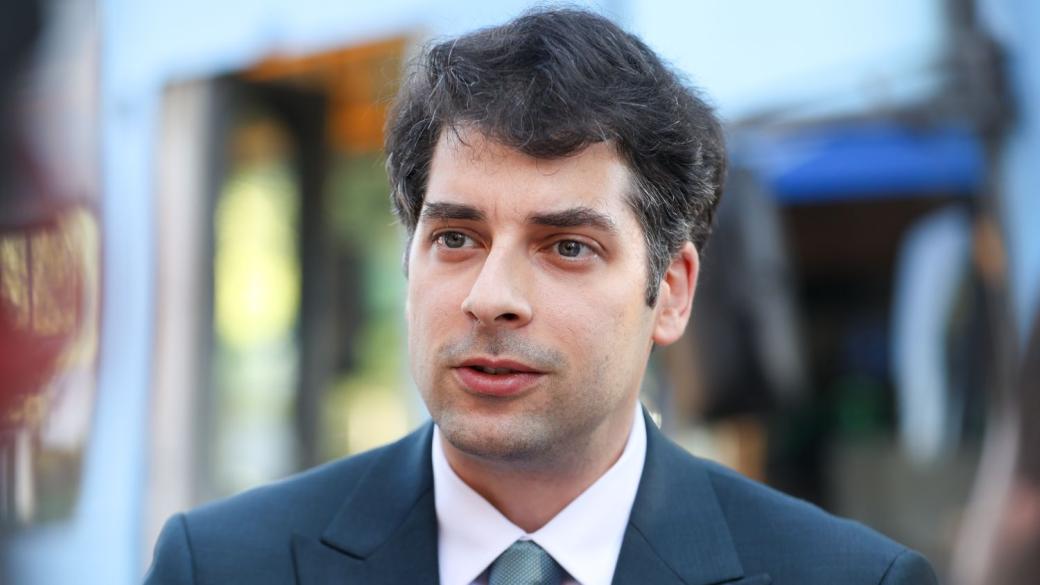
© ECONOMIC.BG / BTA
~ 8 min read
 Gloria Hristova
 This interview is part of a special online publication on the European COREJIO project – “Mapping the Opportunities for a Just Transition: Investment Profiles and Best Practices from Stara Zagora, Pernik, and Kyustendil.”
The responses from Atanas Pekanov, Deputy Prime Minister for European Funds, date from mid-July and highlight the most pressing issues surrounding the absorption of funds from the Just Transition Fund, the reasons for the delay in payments, the new mechanisms for accelerating them, and the long-term vision for economic diversification in the three coal-mining regions.
Mr. Pekanov, you recently announced that approximately 40% of the Just Transition Fund resources have been contracted, while only about 7.5% have actually been disbursed. What are the main reasons for this unsatisfactory result, and what specific steps are you taking to accelerate the process?
Indeed, there is a significant delay in the implementation of support under the Just Transition Fund (JTF). To date, 616 million euros of the Fund’s resources have been committed (nearly 42%), while only 118 million euros (8%) have been disbursed to beneficiaries. To put these figures in context, the average payment rate for programs under Cohesion Policy currently stands at 24%, i.e., three times higher. This comparison clearly illustrates the lag in support for the transition of coal-dependent regions to a low-carbon economy.
The reasons for this lag are complex. First and foremost is the significant delay in preparing and opening the call for applications for funding procedures. This is due to the lack of a clear vision for the green transition, the failure to prioritize measures, and a lack of capacity. We must also not underestimate the lack of project readiness “on the ground.”
On a broader scale, however, the reasons for the delay in support from the Fund are much more complex and deep-rooted – they are political, structural, economic, and social. The transition of coal-mining regions is one of the most complex processes of economic transformation. It requires a long-term vision, political stability, the will to carry out reforms, and policy consistency.
I believe that today we already have a clearer direction and the necessary political resolve. That is why our efforts are now focused on making up for the accumulated backlog by the end of the current programming period. This is also the immediate challenge facing us today. By the end of the year, Bulgaria must submit a claim to the European Commission for reimbursement of funds under the Cohesion Fund totaling over 440 million euros. Losing these funds is a risk the government cannot afford.
That is why, from the very beginning of the government’s term, we have been working extremely hard to accelerate implementation under the Fund. We are currently finalizing an Action Plan that includes a set of mutually complementary measures. These include the creation of a new financial instrument to support the transition of coal-mining regions, renegotiating the procedures that are of greatest interest to applicants, and changing the model for requesting funds from the European Commission – from reimbursement of actual expenses to so-called non-cost-based funding – that is, funding based on results achieved. We have already received the green light from the European Commission on these measures, and I believe that by implementing them, we will be able to overcome the risk of losing funds.
Ultimately, it is important not to allow any loss of funds from the Just Transition Fund, but it is even more important that these funds lead to real economic diversification and sustainable investments, encourage the creation of new jobs, and support the transition of those directly and indirectly affected.
The European Commission places a strong emphasis on results, not just on spending the funds – that is, Brussels wants real transformation and revitalization of the regions after the end of the coal era. In your opinion, what specific projects would have a real impact in Stara Zagora, Pernik, and Kyustendil, and what stage of implementation are they at?
Indeed, the purpose of the Just Transition Fund is not merely to absorb funds for their own sake, but to ensure that these funds lead to a sustainable transformation of the regional economy, the creation of new jobs, the expansion of the industrial base, and economic growth. That is why, over the past month, the government has been working to identify the strategic investments with the greatest potential to contribute to this transformation.
Our view is that several types of investments can have the greatest impact. First and foremost are industrial and technology parks. These are not an end in themselves, but rather a tool for attracting strategic investors. If we have prepared sites, the necessary technical infrastructure, and a predictable regulatory environment, the opportunities for attracting new industrial investments, implementing innovations, and conducting R&D increase significantly.
Investments in high-value-added manufacturing are particularly important – equipment for clean technologies, electronics, renewable energy components, energy storage systems, low-carbon manufacturing, and solutions related to the circular economy. It is precisely these types of investments that boost productivity, expand the industrial base, and create the conditions for mobilizing private capital in the long term.
Equally important are investments in skills. The Just Transition Fund was established precisely to support people in coal-mining regions as they transition to new economic activities. Training and reskilling are key to this process.
Another fundamental element of the transition to a low-carbon economy is the reclamation of mining sites and the improvement of local infrastructure, but these should be viewed as part of a broader economic development strategy for these regions, rather than as an end in themselves.
The three regions are now considered coal-based economies. Given their specific characteristics, how do you – and the government as a whole – envision their transformation: dominated by a single sector or more diversified?
The future of these regions should not lie in replacing one dependency with another. For decades, their economies were built around coal mining and coal-fired power generation. It is precisely this heavy concentration that has made them so vulnerable today. One of the key lessons from the development of coal-dependent regions is that dependence on a single sector creates significant economic risks. That is why the European policy for a just transition emphasizes economic diversification, innovation, and the development of new high-value-added industries. The goal is for the economy of each of these regions to be based on several mutually complementary sectors that generate sustainable growth and quality employment.
Here, too, it is important to emphasize that a just transition does not mean deindustrialization, but rather the modernization of the industrial base. Bulgaria has strong manufacturing traditions, and it is precisely on these that we must build. The profile of industry is changing – from dependence on coal-fired power to more modern, technology-driven, and low-carbon production with high added value. European funding must accelerate this very transition.
For example, the Stara Zagora region has the potential to remain one of the country’s main energy hubs for a long time to come, because energy security remains an important national priority. Therefore, investments in new industrial production facilities related to energy, clean technologies, and energy storage will be prioritized. At the same time, however, it is important to lay the groundwork now for structural change in the regional economy by developing industrial and technology parks, attracting new investors, and promoting low-carbon, high-value-added production. Other key investments to be implemented in this region are aimed at improving industrial capacity to enhance defense capabilities.
For Pernik, the focus is on modernizing industrial sites, logistics centers, and new manufacturing facilities, as well as on better integration with the economy of the Sofia region.
For Kyustendil, support for the manufacturing sector, the bioeconomy, and the food and beverage industry will play a major role in the transformation of the economy.
Support measures for each region must be tailored to its specific characteristics and potential. Ultimately, the success of the transition will not be measured by whether we have replaced the coal-based economy with another single-sector economy. It will be measured by whether we have built a more sustainable, more diversified, and more competitive regional economy that attracts private investment and creates high-quality jobs.
What are the strengths and weaknesses of the three regions – in terms of human capital, infrastructure, local governance, the regulatory environment, and so on?
All three regions possess significant competitive advantages that can serve as the foundation for a successful transition.
First and foremost is human capital. For decades, a workforce with technical, engineering, and industrial skills has been developed there, skills that can be successfully applied in new manufacturing sectors.
The second strength is the existing industrial and energy infrastructure, which is one of the most significant competitive advantages of the three regions. The key here is to gradually build upon it through new investments, modern production facilities, and innovation, rather than allowing it to be lost.
Of course, there are also challenges. These manifest differently across the various regions, but in general, they can be summarized as dependence on a limited number of large employers, unfavorable demographic trends, the need for faster administrative procedures, and the need for closer partnerships between local authorities, businesses, and educational institutions.
Therefore, the state’s role is, above all, to create conditions for development – high-quality infrastructure, a predictable investment and regulatory environment, functioning industrial and technology parks, and an effective policy for attracting private investment.
A similar approach is already being implemented in a number of European coal-mining regions – for example, Lusatia in Germany, Silesia in Poland, and the Moravian-Silesian Region in the Czech Republic – where public investment creates the conditions for mobilizing private capital, developing industrial clusters, and expanding the industrial base.
The unions conducted a survey of the three regions regarding people’s skills and their expectations for the transition, which revealed that most want to remain in the energy sector and maintain their relatively high wages, especially in Stara Zagora. Do you think this is possible, given the current labor market and economic outlook?
These attitudes are entirely logical. The energy sector has traditionally provided stable employment, highly skilled jobs, and wages above the national average. It is natural for people to want to maintain this security.
At the same time, it is important to have a vision of what these regions will look like in the long term. This is precisely where the Just Transition Fund comes in. Its goal is not to finance existing coal operations, but to support the structural transformation of the regional economy through new investments, economic diversification, and the creation of high-quality jobs.
The realistic goal is for a significant portion of the population to remain in their regions but gradually find fulfillment in new enterprises that utilize their qualifications and skills and offer competitive compensation. This is precisely why attracting private investment, developing industrial and technology parks, and building new production facilities are so important. If we succeed in creating conditions for high-value-added enterprises, there is every reason to expect that high-quality employment will also be maintained.
This requires a predictable investment environment, well-prepared industrial sites, active participation by local authorities, and partnerships between business, educational institutions, and the government. It is precisely in this way that, in a number of European regions, the transition is becoming not a process of deindustrialization, but rather a modernization of the industrial base.
This is also the essence of a just transition – to combine economic competitiveness with social sustainability and the goals of the European Green Deal.
Translated with DeepL.
Co-Funded by the European Union. Views and opinions expressed are however those of the author(s) only and do not necessarily reflect those of the European Union. The European Union cannot be held responsible for them.