
Vignettes (for now) will not be replaced by tolls
Shishkov says Bulgarians should be glad to pay if they get new roads in return
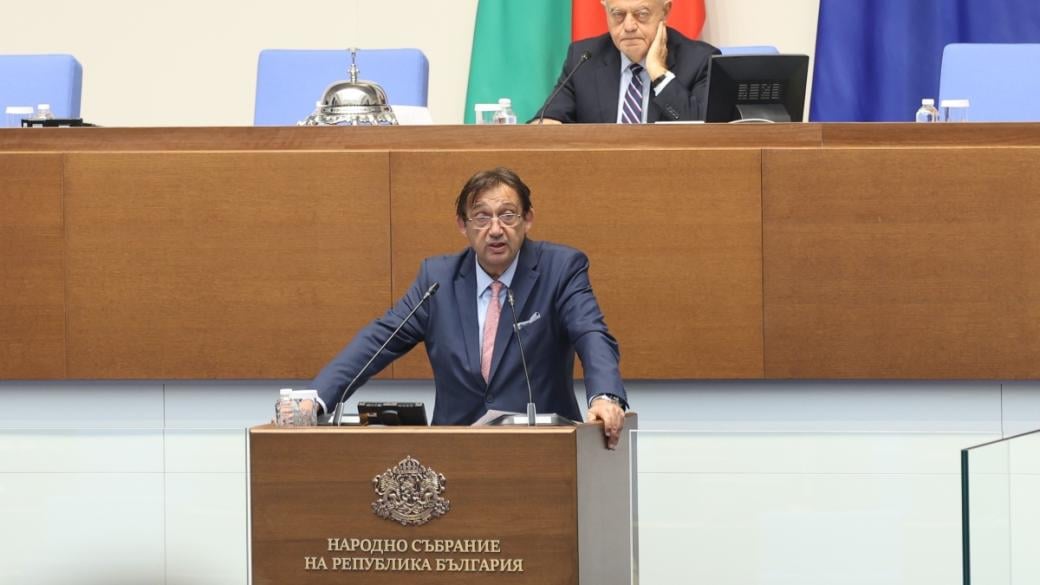
© ECONOMIC.BG / BTA
~ 4 min read
 Gloria Hristova
 Vignettes for passenger cars will not be automatically phased out after 2030, and no decision has been made at this time to replace them with a pay-as-you-drive system. Nor has a future price per kilometer been set, nor has a methodology for calculating it, nor has a specific scope of the road network been defined to which such a model might eventually apply.
This was clarified by Minister of Regional Development Ivan Shishkov during parliamentary oversight on Friday in response to a question from “Vazrazhdane” MP Petar Petrov.
The issue has sparked serious debate in recent weeks after, on September 8, during a visit to the Plovdiv Ring Road, Shishkov stated that, under European regulations, after 2030, road tolls must be standardized to match the way heavy-duty vehicles currently pay. At the time, he was quoted as saying that this meant “all roads will be toll roads.”
In Parliament, however, the minister provided an important clarification.
As of today, no decision has been made to abolish the vignette systems for passenger cars in Bulgaria,” Shishkov stated.
According to him, there is no set price per kilometer, no established methodology for calculating it, and no definitively determined scope of the road network to which such a model would apply.
What does Europe actually require?
Petar Petrov’s question was prompted precisely by the discrepancy between the minister’s initial remarks and the text of the European directive.
Directive (EU) 2022/362 does indeed provide for a change effective March 25, 2030, but it applies to heavy-duty vehicles on the Trans-European Transport Network (TEN-T). As of that date, Member States, as a general rule, must not apply time-based tolls to these vehicles, although exceptions are provided for.
For light vehicles, there is no analogous European requirement to abolish vignettes by 2030. Instead, by March 25, 2027, the European Commission must assess the implementation and effectiveness of the rules governing their tolling, and only after this assessment may it, if it deems it necessary, propose legislative changes.
This is precisely what Shishkov confirmed to the members of parliament.
The current European regulatory framework does not set 2030 as a deadline for a mandatory transition from vignette-based to distance-based tolling,” the regional minister explained.
According to him, only once there is clarity regarding the future European regulatory framework will possible solutions be analyzed at the national level. Only then will it be possible to discuss specifically “the model, scope, and amount of any distance-based tolls,” he noted.
Vignettes Remain in Effect for Now
When asked directly by Petrov how long Bulgarian drivers would continue to use vignettes, Shishkov did not answer directly but linked his response to the government’s plans for highway construction.
For projects already underway – including the “Hemus” highway and the expressway to Vidin – the state will continue to invest budgetary funds, he stated.
Vignettes will obviously continue to be the method used to pay road tolls,” Shishkov said regarding this period.
However, the situation may be different for future road projects that the government intends to implement through concessions.
Shishkov reiterated the intention to build another 1,000 km of highways and expressways, including the “Black Sea” Highway, the Ruse – Makaza route, the Petrohan Tunnel, and the “Rila” Highway. According to the minister, the state budget lacks the resources to finance all these projects on its own, and therefore the government will seek private capital through concessions.
The only way they can be built is by awarding them as concessions,” the minister stated.
And it is precisely here that he acknowledged a future change in the payment method.
It is obvious that once they are built, a change will be necessary. What that change will be will be determined when we begin drafting the concession agreements,” Shishkov said.
No Double Payments Under Concessions
The minister assured that, should highways be awarded under concession, there must be no situation in which drivers pay twice for the same trip.
Duplicate payments for the same trip cannot be allowed,” Shishkov stated.
According to him, for every concession, both the terms of the concession agreement and the current toll collection model must be taken into account. Technically, the system already supports such a model. According to the minister, the existing electronic toll collection system is capable of recording the actual distance traveled on specific road sections.
I think the time will come when we’ll be glad to pay (note: for the concession highways), because when we pay, we’ll have them (note: better roads).
According to him, revenue from vignettes in Bulgaria is insufficient both for building new infrastructure and for maintaining the existing one, which, in his view, indicates that the current economic model is flawed.
Petrov, for his part, raised the issue of future pricing in the event that highways are put out to concession and insisted that it be aligned with income levels in Bulgaria. According to him, the main concern is not the pay-as-you-go system itself, but the risk that future tolls charged by private concessionaires could prove unaffordable for some drivers.
Translated with DeepL.
