Simona Gotsova
Public Finances
Petkova “patched up” the deficit with drastic cuts to the capital program
The finance minister resorted to the oldest trick in the book and cut costs to make up for uncollected VAT revenues
~ 4 min read

Bulgaria ended 2025 with a budget deficit of 3.1% of GDP. This can be considered good news, given that economists had been warning all year that the revenues projected in the budget were "unrealistic" and only aimed at somehow covering the wasteful policies of the Zhelyazkov cabinet.
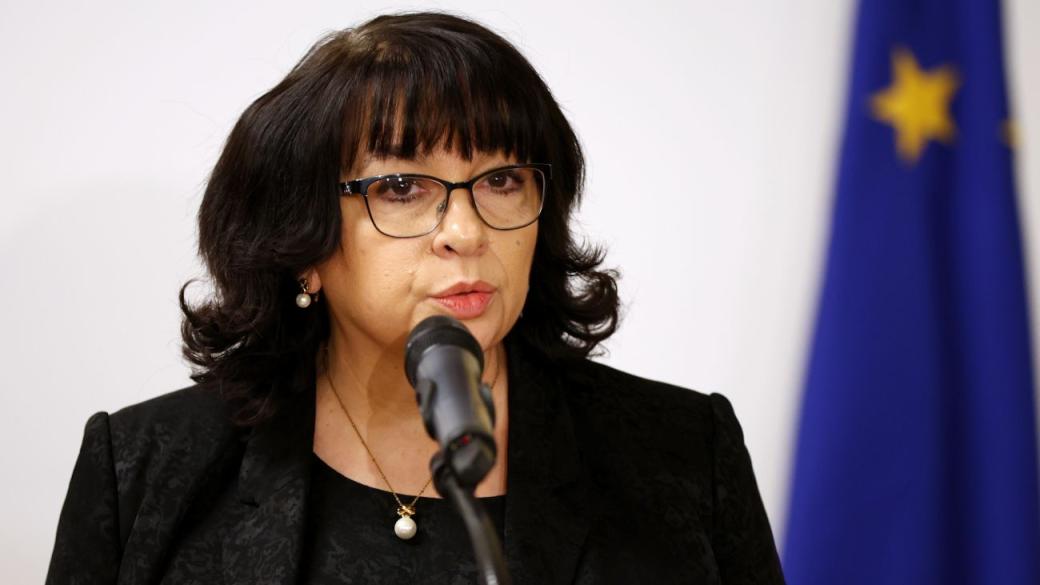
The data on the implementation of the state budget show two things: the revenue agencies (the National Revenue Agency and Customs) did an excellent job of collecting tax liabilities, while Finance Minister Temenuzhka Petkova failed to plan for them. In fact, statistics in the archives of the Ministry of Finance (MF) show that there has been no such shortfall in tax revenues (excluding social security contributions) since the crisis year of 2009.
Petkova was helped in terms of the budget deficit by the money from the Recovery Plan, which Brussels transferred at the last minute last year, the significant cuts in the capital program – i.e., investments in infrastructure and other areas that improve the environment – and, of course, the "tricks" with the Bulgarian Development Bank (BDB), the Bulgarian Energy Holding (BEH), and other state-owned companies, which took on a number of debt-financed investment activities so that they would not pass through the budget purely for accounting purposes and the deficit would be reduced to an "acceptable" level.
Petkova herself, however, considers the deficit result a great success.
Despite numerous comments about a significant deterioration in the budget balance, the year ended with a minimal deviation of only 0.1 percent from the forecast GDP," the Ministry of Finance said in its statement on Monday.
As many experts predicted, the Ministry of Finance failed to meet its plan for a 34% increase in VAT revenue compared to the previous year. EKIP economist Georgi Vuldzhev, for example, commented that this was "the largest one-year jump in at least 1997" in indirect tax, which is also the largest single revenue item in the budget, calling it "completely impossible." And he turned out to be right, as did many other leading Bulgarian economists, along with the Fiscal Council. The data now shows that only BGN 21.6 billion has been collected (87% of the target). In fact, the amount is not small at all – it is a record, with 16.4% growth on an annual basis (again a record).
Excise duty collection is also lagging behind (only 96.5% of the plan), but compared to previous years, the 7.5% increase to a record BGN 7.4 billion is noteworthy.
Key factors for "tying" the budget
A review by Economic.bg of the detailed data on the implementation of the state budget showed that in 2025, the capital program was only 67.8% implemented. In other words, the budget saved BGN 1.8 billion from this item, which is BGN 3.6 billion instead of the planned BGN 5.4 billion. This does not include the money for the municipalities, BGN 1 billion of which was transferred for payment through the BBR.
A huge factor in improving the budget balance was the payments received at the end of 2025 under the Recovery and Resilience Plan (RRP). We would like to remind you that their receipt was not certain until the very last moment, and the third decision of the European Commission (EC) came shortly before Christmas.
However, both transfers were significantly reduced due to unfulfilled reforms related to the Anti-Corruption Commission. Because of them, the second payment was about €200 million less, and the third was also reduced by a similar amount. Nevertheless, the budget received a financial injection of BGN 4 billion under the PPA.
Key parameters under the MFF for 2025
Total revenues, grants, and donations under the MFF for 2025 amount to BGN 86 billion, or 95.4% of the annual estimates. Compared to the previous year, revenues increased by BGN 14 billion, which, according to the Ministry of Finance, is the highest nominal revenue growth in recent years.
The growth is mainly due to tax revenues, which increased by 15.3% (BGN 9 billion) compared to 2024. Non-tax revenues increased by BGN 2.1 billion, while revenues from aid and donations increased by BGN 2.9 billion.
Expenditures under the Consolidated Fiscal Program, including the contribution to the EU budget, amounted to BGN 92.9 billion, which is 96.1% of the annual estimates. This growth is mainly due to the increase in social and health insurance expenditures (by BGN 4.1 billion), as well as in personnel expenditures (by BGN 4 billion), capital expenditures and transfers (BGN 3.5 billion), and others.
Bulgaria's contribution to the EU budget, paid as of December 31, amounts to BGN 2 billion.
The nominal amount of public debt incurred under the Public Debt Act as of December 31, 2025, amounts to BGN 6.4 billion, and the debt-to-GDP ratio at the end of December 2025 is 27.8%.
The fiscal reserve amounts to BGN 17.4 billion, including BGN 14.8 billion in fiscal reserve deposits with the BNB and banks and BGN 2 billion in receivables from European Union funds for certified expenditure, advances, and others.
Translated with DeepL.