Small Businesses in Sofia Province Seek EU Funding for Start-ups and Modernization
Interest is highest in funding through local action groups, and Pravets has reported the highest number of participants in the informational meetings
~ 4 min read
 Gloria Hristova
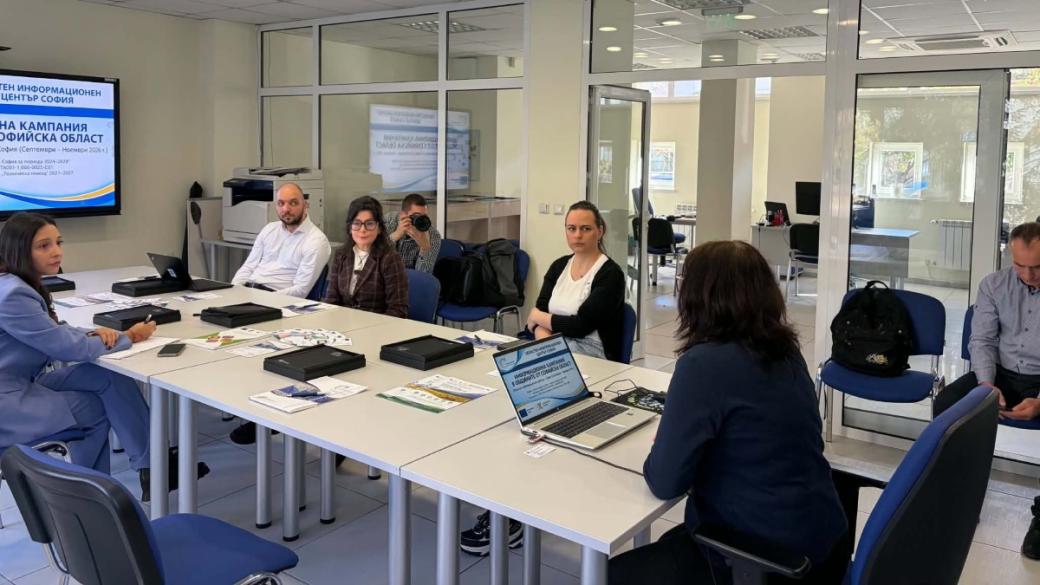
Opportunities to start a business, modernize enterprises and develop local initiatives are among the most sought-after forms of European funding in Sofia Province. Projects that can be implemented through Local Action Groups (LAGs) are of particular interest and residents and organizations from the municipality of Pravets were the most active participants in the informational meetings. The results of the fall campaign of the Sofia Regional Information Center (RIC – Sofia) show this and the center presented them at a media briefing on Friday.
The campaign took place between September and November 2026 and covered all 22 municipalities in the Sofia Region. A total of 372 representatives from the business community, agricultural producers, nongovernmental organizations, municipal administrations and citizens participated in the meetings.
Pravets had the most participants (54), followed by Botevgrad (25). In Svoge and Dragoman 22 people attended each meeting while in Chavdar and Dolna Banya 21 people attended each. Attendance was lowest in Ihtiman and Bozhurishte where 7 people participated in each meeting.
At the regional level the highest level of participation was recorded in the Sredna Gora region with 104 participants, followed by the Botevgrad district with 94 and the western part of the region with 92. Interest was significantly lower in the Gorna Malina and Elin Pelin area, where a total of 20 people attended.
Local action groups attract the most interest
According to data presented by the OIC more than half of the inquiries during the campaign were related to the “Community-Led Local Development” (CLLD) approach. Through this approach local action groups allocate European funding for projects by businesses, municipalities, nongovernmental organizations and other eligible applicants within a specific territory.
There are eight LAGs with approved strategies in the Sofia Region. Among them are the groups in Samokov, Botevgrad, Elin Pelin – Gorna Malina, Kostenets – Dolna Banya, Yablanitsa – Pravets, Western Balkan, Kostinbrod – Svoge and Slivnitsa – Breznik.
The groups are expected to announce application procedures in 2027 within the framework of their strategies. These cover various areas – from support for businesses and agriculture to education, culture, social activities and local infrastructure development.
During the presentation of the results Madlen Georgieva, an expert from the OIC – Sofia, explained that this approach provides additional opportunities for small businesses, including startups. The reason is that applicants compete for funds earmarked for the specific territory, rather than solely through national procedures.
According to her, for certain measures grant funding can reach up to 65% of eligible expenses for women entrepreneurs. However the specific conditions and the amount of support depend on the relevant procedure.
There are also additional opportunities for the municipalities of Samokov and Botevgrad. In addition to participating through local action groups they can take part in projects under the “Integrated Territorial Investments” approach, which encourages joint initiatives between municipalities, businesses and other organizations.
What are people seeking EU funding for?
Among the most common inquiries from businesses are opportunities to purchase equipment, modernize production, digitize operations, innovate and reduce energy costs.
Farmers are interested in funding for machinery, farm implements, drones and farm modernization. In the tourism sector there is a search for opportunities to develop tourism services and promote local natural and cultural heritage.
There is also interest in support for traditional crafts, local cultural initiatives, social enterprises and vocational training.
Interest in the renovation of public spaces, parks, green areas and local infrastructure is more moderate. According to representatives of the information center these issues are particularly relevant for smaller towns, where there continues to be a need for improvements to local infrastructure.
A separate topic concerns opportunities for energy efficiency in residential buildings and the use of renewable energy sources. Citizens continue to inquire about funding for building retrofits, solar panels and other energy-saving measures. The Information Center clarified that at this time no new programs have been launched to provide such support to households following the completion of the relevant measures under the Recovery and Resilience Plan.
European Funds and Small Towns
During the meeting EIC representatives also highlighted the difficulties faced by potential applicants outside major cities. According to the experts people often have ideas for their own businesses but hesitate to apply due to the complex paperwork and unfamiliarity with the procedures. This also applies to relatively small investments – for example, in stores, hair salons, restaurants or auto repair shops.
In a discussion following the presentation the center cited the example of two young entrepreneurs who are running a car repair shop and sought information on potential European funding. It was also noted that interest in specific measures increases significantly when new procedures are announced and following their media coverage.
To reach potential applicants EIC staff conduct two information campaigns per year throughout Sofia Province. In the spring they organize outreach sessions and individual consultations and in the fall they present current and upcoming opportunities for European funding.
The information and consultations are free of charge. The center does not draft the project proposals itself, but explains the application requirements and guides potential beneficiaries in the preparation and implementation of their projects.
Translated with DeepL
Co-Funded by the European Union. Views and opinions expressed are however those of the author(s) only and do not necessarily reflect those of the European Union. The European Union cannot be held responsible for them.