The Supreme Administrative Court Upholds the Sanction Against NEK for Manipulation of the Electricity Market
The court ruled that the pattern of transactions on the energy exchange was sufficient to establish prior coordination among the participants
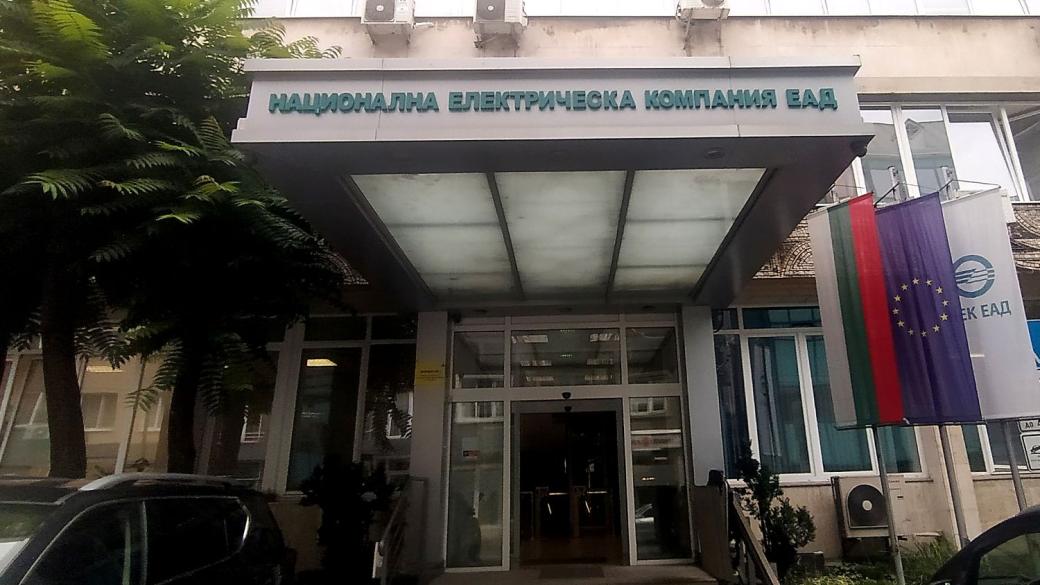
© ECONOMIC.BG / Krasimir Svrakov
~ 2 min read
 Georgi Zhelyazkov
The Supreme Administrative Court (SAC) has definitively upheld the financial penalty of nearly €320 000 imposed on the National Electric Company (NEC) for manipulating the electricity market. In its decision dated November 4, 2026 the SAC overturned the 2024 ruling of the Sofia City Administrative Court and dismissed NEC’s appeal against the Energy and Water Regulatory Commission (EWRC), the regulator announced on November 19, 2026.
The case concerns transactions on the Bulgarian Independent Energy Exchange (BNEB) between February 1, 2019 - June 30, 2019. The EWRC launched the investigation following reports from the exchange and the Agency for Cooperation among Energy Regulators. The Commission found that NEK’s transactions with five other energy companies, considered collectively, violate the prohibition on market manipulation under the European REMIT regulation.
What the regulator found
The Energy and Water Regulatory Commission (EWRC) identified 208 “A – B – A” type transactions. In these sequences of purchases and sales the economic interest and market risk remain essentially the same. The regulator also identified 61 purchases of block products with a total volume of 46 460 MWh and a value of approximately €1.85 million.
In another group of transactions quantities of electricity purchased on the “Day-Ahead” segment were subsequently sold to NEC at a higher price on the “Intraday” segment. According to the Energy and Water Regulatory Commission (EWRC), the exact match in quantities, when considered together with the other transactions, points to prior coordination and an exchange of information among the participants.
What the Court Ruled
The Supreme Administrative Court (SAC) held that the transactions described by the regulator and the trading pattern allow for the conclusion of prior coordination based on circumstantial evidence. The court rejected NEK’s objections regarding the anonymity of exchange trading and the lack of direct evidence of collusion.
According to the court to establish the violation it is sufficient that the transactions could send misleading signals regarding demand, supply or price or lead to an artificial price level. Proving an actual market distortion or a specific intent on the part of the participant is not a prerequisite for establishing the violation.
The penalty imposed on NEK is the largest of the six that the Energy and Water Regulatory Commission (EWRC) imposed in November 2022 in connection with this case. As Economic.bg reported at the time, the regulator also sanctioned five private companies – “Interprom,” “Energy MT,” “Most Energy,” “Grand Energy Distribution” and “Interelectric.” After the conclusion of the proceedings the Energy and Water Regulatory Commission (EWRC) also sent a report to the Sofia City Prosecutor’s Office.
Translated with DeepL.