Simona Gotsova
Public Finances
BNB expects a clearer link between the budget and the economy in 2027
Deputy Governor Petar Chobanov once again warned of unsustainable, consumption-driven growth, which is already leading to overheating
© ECONOMIC.BG / BTA
~ 2 min read

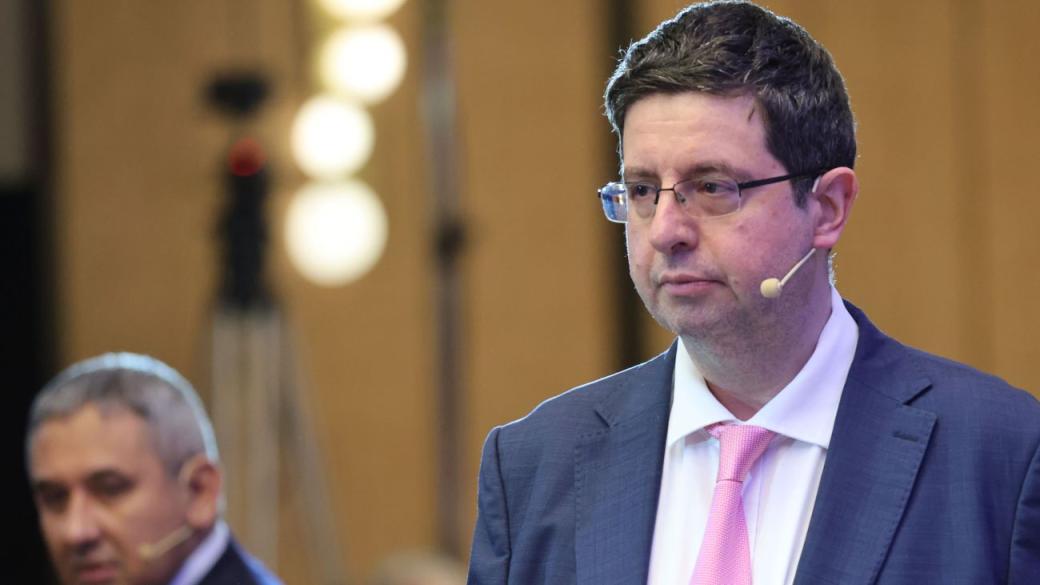
We expect to see a clearer link to economic development in the 2027 budget. This was stated by Petar Chobanov, Deputy Governor of the Bulgarian National Bank (BNB), during a meeting of the Parliamentary Committee on Budget and Finance, at which lawmakers are reviewing the 2026 draft budget on first reading.
In his remarks, he emphasized that Bulgaria should seek “a slightly different investment model” and that the pre-2007 model, characterized by high foreign investment, is not bad; rather, there is currently a need for more strategic partnerships between the Bulgarian government and domestic companies.
The state and Bulgarian companies that make up the national capital must participate in such projects so that there is control over what is happening, and so that a larger share of the positive results from these projects remains in our country,” Chobanov commented.
“An Unsustainable Growth Model”
Chobanov recalled that the central bank has been issuing warnings for years about the nature of Bulgaria’s economic growth.
What we have been warning about over the years is that a consumption-based growth model is unsustainable. “If it is not accompanied by reforms, measures, actions, and effects on the supply side, there is no way it can be sustained over a prolonged period of time,” he told the members of parliament.
According to him, the pace of consumption itself sends clear signals that the economy is overheating, which is unusual given the current GDP growth.
The increases in consumption itself send clear signals that the economy is overheating, which, with 2.8% growth, should not be happening. In other words, we should not be in such a phase,” noted the BNB representative.
According to him, the main supply-side factors that require attention—and which are not in good shape – are labor, capital, and technology. Chobanov highlighted the extremely tight labor market and the shortage of workers in a number of sectors – both low- and highly-skilled – and emphasized the need to attract investment and stimulate domestic investment.
The Excessive Deficit Procedure
Chobanov also addressed the country’s commitments under the ongoing excessive deficit procedure.
From the perspective of the excessive deficit procedure and our obligations, we must submit a draft budget for 2027 to the European Commission by October 15, as well as a report and forecast of what will happen by the end of 2026, as currently provided for in the medium-term framework,” he said.
Regarding net expenditures, he added that they “are working out for now,” and therefore the idea is to avoid a very large percentage increase, while acknowledging that this year’s target levels will likely be exceeded depending on actual performance.
For next year, they should be around 3.4%, which corresponds to an accrual-based deficit of 3.8 – 3.9% of GDP. “Not that it’s low, and not that we shouldn’t strive for more substantial consolidation, but if we follow a similar trajectory, it would bring us closer to the fiscal consolidation target,” Chobanov summarized.
Translated with DeepL.