The Cabinet is looking for its own “fair” way to make civil servants pay social security contributions
The government failed to reach an agreement with business and labor unions at an emergency meeting on the issue

© ECONOMIC.BG / BTA
~ 2 min read
 Simona Gotsova
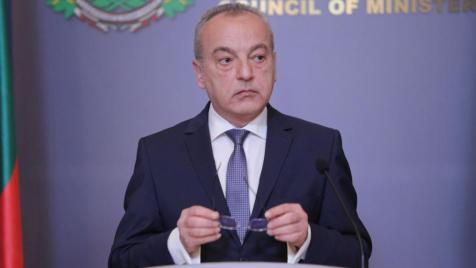
 Prime Minister Rumen Radev’s government is seeking a “fair” way to require civil servants to pay their own social security contributions. Finance Minister Galab Donev announced the news at the start of an emergency meeting of the National Council for Tripartite Cooperation (NCTC) on Tuesday.
At the meeting, the government, together with employers and labor unions, discussed proposed amendments to the Social Security Code (SSC) introduced by MP Martin Dimitrov and a group of lawmakers from “Democratic Bulgaria.” These amendments provided for a gradual increase in the ratio between civil servants’ personal contributions and employer contributions. For 2026, the proposal is for the ratio to be 2% to 98%; for 2027, 5% to 95%; and over a 7-year period, to reach 40% to 60%, as is the case in the private sector.
We do not accept this proposal,” Social Affairs Minister Natalia Efremova stated categorically.
According to her, the bill offers no guarantee that civil servants’ incomes will be preserved, nor does it ensure that fairness will be guaranteed for them.
Donev himself pointed out even before the session that the cabinet is working on its own version of the proposal.
We are working on a proposal that will achieve equality without taking away rights or reducing incomes. This is social justice in action,” commented the top finance official.
The Confederation of Independent Trade Unions in Bulgaria (KNSB) was also adamant that it does not support the proposals.
If you were so concerned about civil servants, you wouldn’t have proposed a bill without considering that it would reduce their disposable income,” said Asya Goneva of the KNSB, as quoted by BTA.
On the other hand, employers expressed support in principle, but with some reservations.
According to the Bulgarian Chamber of Commerce and Industry (BCCI), the bill lacks estimates of its financial impact on the state social security budget. The Association of Industrial Capital in Bulgaria (AICB) stated that this is “a step in the right direction, as it restores fairness and harmonizes the social security regime for workers in the public and private sectors,” but they also had some reservations regarding the wording of the provisions.
Translated with DeepL.