Gloria Hristova
Infrastructure
The Shipka Tunnel is part of the EU program, but lacks funding and faces environmental hurdles
RIA cannot apply for funding until additional environmental conditions regarding the route through the “Bulgarka” Nature Park are met
~ 9 min read

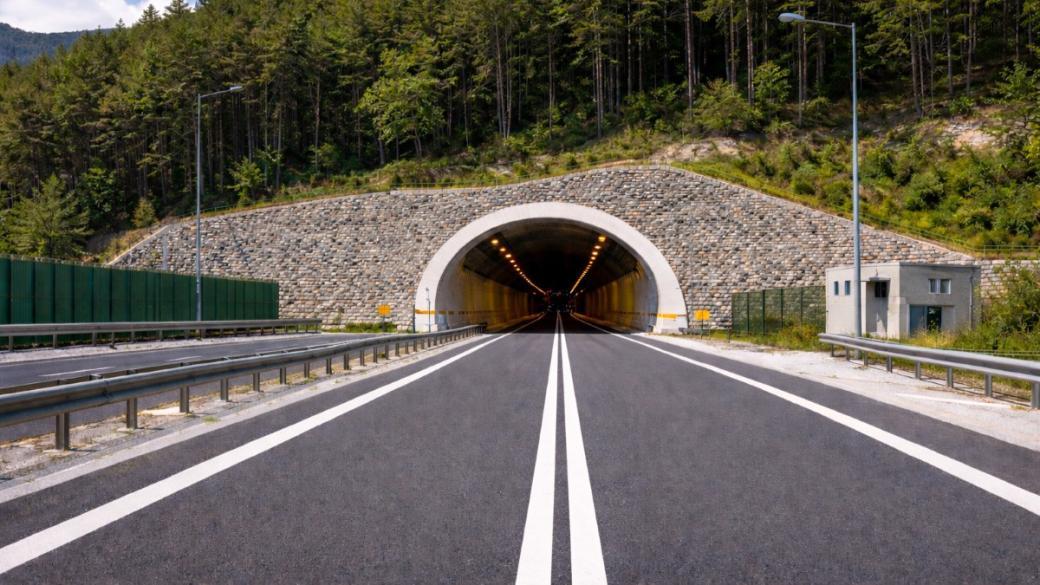
The Shipka Tunnel formally remains part of the “Transport Connectivity” Program for 2021 – 2027, but at present, there are no available EU funds for it. Furthermore, the Road Infrastructure Agency cannot apply for funding under the program due to environmental conditions related to the route passing through the “Bulgarka” Nature Park.
This is evident from written responses to Economic.bg from the Ministry of Transport and Communications – the Managing Authority of the “Transport Connectivity” Program – and from the Road Infrastructure Agency.
Thus, one of Bulgaria’s most anticipated infrastructure projects finds itself in a paradoxical situation: it has not been excluded from the European program, but there are no available funds for it within the program. Against this backdrop, the government maintains that it is not abandoning the project, but no specific alternative source of funding has been announced, and a 2024 court ruling – which appeared to remove an obstacle – is in fact insufficient to “unblock” the project for EU funding.
The project “Gabrovo Bypass from km 20+124.50 to km 30+673.48, including a tunnel under Shipka Peak” is included in Priority 2 of the “Transport Connectivity” Program 2021 – 2027 and has not been removed from it. “At this time, there are no available funds in the program for its implementation,” the Ministry of Transport and Communications (MTS) stated in a response to Economic.bg.
When asked what alternative mechanisms for securing funding are being considered, the ministry did not specify a particular source. The ministry explained that the amount of future funding will be determined after the completion of the relevant planning and approval procedures – based on available resources, the eligibility of expenses, and the rules of the respective funding instrument.
RIA: We Cannot Apply
The API’s response provides further clarity on why the project, although included in the program, cannot actually receive European funding at this stage.
The project to build a bypass around the city of Gabrovo, including a tunnel under Shipka Peak, is one of the priority projects in the “Transport Connectivity” Program 2021 – 2027. At this time, the Road Infrastructure Agency (API) cannot apply for funding for the project due to the requirements set forth in the Program’s environmental assessment,” the Road Infrastructure Agency stated in a response to Economic.bg.
They added that the requirements relate to conducting additional assessments regarding the route’s passage through the territory of the “Bulgarka” Nature Park. The park includes protected areas for the conservation of wild birds, natural habitats, and wild flora and fauna. According to the Road Infrastructure Agency, these assessments must be conducted after the specific objectives and measures have been defined, as well as after the adoption of the Management Plan for the “Bulgarka” Nature Park.
This is a very important detail that explains why the 2024 court ruling did not automatically clear the way for the project, as had been assumed.
We recall that the Management Plan for the “Bulgarka” Nature Park was adopted by the Council of Ministers via Decision No. 894 of December 30, 2021, and published in the State Gazette on January 4, 2022.
As early as January 2024, then-Regional Minister Andrey Tsekov noted that the project was delayed due to “a host of problematic cases.” One of them was specifically related to the “Bulgarka” Nature Park. Tsekov explained in parliament that since the project is to be funded under the “Transport Connectivity” Program 2021 – 2027, additional environmental procedures are required. These include an assessment of the route’s passage through the nature park and the protected bird areas.
At the time, the minister noted that these measures must be consistent with the Management Plan for the “Bulgarka” Nature Park. The problem was that on February 9, 2023, the Sofia City Administrative Court had already overturned the Council of Ministers’ decision approving the plan. As of January 2024, the case had not yet been definitively concluded because the decision had been appealed to the Supreme Administrative Court.
On April 1, 2024, the Supreme Administrative Court definitively upheld the first-instance decision. In other words, the Council of Ministers’ decision to adopt the Management Plan for the “Bulgarka” Protected Area was definitively overturned.
At that point, it appeared that the project could move forward. The reason was that the controversial Plan contained restrictions in the area where the future tunnel under Shipka Pass was to be located. The Gabrovo Municipality pointed out that the Plan included a ban on any new construction, with limited exceptions, and this had cast doubt on the implementation of the final stage of the Gabrovo bypass – namely, the tunnel under Shipka.
However, subsequent responses from the Road Infrastructure Agency (RIA) indicate that the court ruling does not resolve the entire issue. It repeals the controversial Plan and the restrictions it contained, but does not overturn the requirements of the environmental assessment under the “Transport Connectivity” Program. On the contrary, according to the Road Infrastructure Agency, for the project to be eligible for funding, additional assessments must be conducted for the route through the “Bulgarka” Nature Park, after specific objectives and measures have been defined and a management plan for the park has been adopted.
Amendments must be made to the Management Plan for “Bulgarka” Nature Park, which provides for restrictions in the area of the tunnel under Shipka. The plan, adopted by a decision of the Council of Ministers in 2021, was repealed by a court ruling in 2024; accordingly, the Ministry of Environment and Water is the competent authority responsible for taking the necessary actions,” the Agency added.
Thus, the Supreme Administrative Court’s decision removed one obstacle but did not clear the way for the project to receive European funding. The old Plan no longer acts as a prohibition, but the lack of a new valid regulatory framework and the unfinished environmental procedures continue to block the Road Infrastructure Agency’s ability to apply for funding.
The court annulled the Plan due to substantial violations during its adoption. The SAC’s decision states that the adoption procedure should have been repeated before the project was submitted to the Council of Ministers, and among the grounds cited are issues with the assessment of the need for an environmental impact assessment and with the public consultation process.
To date, in compliance with the required environmental procedures, specific and detailed objectives for the protected areas have been developed and approved by orders of the Minister of Environment and Water. A contract has also been signed to conduct an analysis of the developed and approved specific objectives for the Natura 2000 protected areas,” the RIA added.
The issue came to light after Regional Minister Ivan Shishkov announced to the relevant parliamentary committee in July 2026 thatthere is no European funding for the project.
An attempt was made to secure European funding. But there is no EU funding available, including from the program that was supposed to finance this project,” Shishkov stated.
He further noted that actual construction is not expected to begin soon due to procedural issues, including land expropriation and environmental concerns.
I’ll say it again: first, there are enough procedural issues – which are not merely inherited – that they prevent actual construction from beginning,” Shishkov said.
The minister also confirmed that the tunnel under Shipka will not be part of the future extension of the Ruse – Veliko Tarnovo highway toward Makaza. The reason is that the route requires a highway-grade clearance, while the tunnel under Shipka is designed with only one lane in each direction. Thus, the project loses another important argument – that it would be part of the future high-speed corridor between Ruse and Makaza.
The Minutes: Included, but Without Secured Funding
The same picture is confirmed by the minutes of the first meeting of the “Road Projects and Road Safety” Subcommittee of the Monitoring Committee for the “Transport Connectivity” Program 2021–2027. The meeting was held on February 9, 2026, and the minutes are dated April 27, 2026. The minutes explicitly state that the Gabrovo bypass project, including a tunnel under Shipka Peak, is included in the Transport Connectivity Program but currently lacks secured funding.
The minutes identify the main risk to the project as a delay in construction due to coordination procedures for project approval and updating the Detailed Urban Plan (DUP).
Even then, it was noted that, out of a total length of 10.5 km, a building permit had been issued only for the first section, 2.6 km long (from km 20+124.50 to km 22+700), representing the northern approach from Gabrovo. As of February 2026, the Road Infrastructure Agency (API) reported that “Protocol 2A is pending signature” for the opening of the construction site.
However, the chronology of the documents reveals a striking example of administrative stagnation – five months later, in a written response from the regional minister dated June 11, 2026, it turns out that this protocol has not yet been finalized, as the response states that “the necessary documents are being prepared” for its drafting.
The protocol makes it clear that the second section (from km 22+700 to km 27+680), which covers the actual route to the tunnel and the tunnel section itself, requires an update to the technical design due to changes in the regulatory framework for tunnels.
The third section is the final, approximately 3-kilometer portion of the project. Regarding this section, the minutes indicate that a new conceptual design is being prepared to modify the initial plan. The reason is a statement from the Stara Zagora Water and Sewerage Company, according to which the old route poses a risk of affecting sanitary protection zones and the water supply to the town of Shipka.
Thus, the project appears to be stalled on several fronts simultaneously: the only section with a building permit has not yet actually begun construction; the middle section requires an update to the technical design; and the final kilometers must be redesigned due to the risk to the water supply. It is unclear whether any of these issues have been resolved since the Subcommittee meeting.
At the same Subcommittee meeting, alternative projects were also discussed that could be included in the “Transport Connectivity” Program. Among the fallback alternatives proposed by the Road Infrastructure Agency (API) are the Kazanlak bypass and several road safety projects – a traffic island on Road I-5 in the Gabrovo region (worth 10 million euros), the conversion of an intersection on Road I-5 in the Stara Zagora region into a roundabout (3 million euros), intelligent transportation systems along the “Trakiya” highway and a regional control center for ITS monitoring and management (7.5 million euros).
This procedural chaos fully validates the words of Minister Ivan Shishkov from July 2026, who, during a surprise inspection, stated that “actual construction does not appear likely to begin soon” precisely because of the enormous volume of land acquisition and environmental issues.
In its response to our media outlet, the Road Infrastructure Agency (API) emphasized that the project remains important for connectivity between Northern and Southern Bulgaria and for the development of cross-border road links and economic centers. That is why funding for project activities has so far been provided in stages from the state budget.
The 2026 – 2028 medium-term budget forecast allocates a total of over 60.5 million euros for the project, but this amount does not cover its full implementation.
As a reminder, the contract for the Gabrovo bypass, including the tunnel under Shipka, is valued at just over 183 million euros, including VAT. It was signed in 2022 with the “PSVT Consortium,” led by “Hidrostroi” AD, with “Road Construction Veliko Tarnovo” AD and “Patinengineeringstroy-T” EAD as additional participants.
Initially, the design period was set at 8 months, but it has already been extended several times. Actual construction is expected to take 3.5 years.
Thus, the Shipka Tunnel remains in a situation all too familiar to Bulgaria’s infrastructure sector—strategically important, politically promised, with a signed contract and partial permits, but without secured European funding, without finalized environmental procedures, and without a clear schedule for the actual construction of the tunnel itself.
Translated with DeepL.