Construction on Hold: The Industry Has the Capacity, but Is Waiting for the Government’s Plans
Against the backdrop of the risk of stagflation the construction sector warns that without urgent reforms, digitalization and the attraction of private capital the country risks missing a historic opportunity

© ECONOMIC.BG / BTA
~ 5 min read
 Gloria Hristova
 Against the backdrop of global risks of stagflation the construction industry declares full readiness to build the necessary strategic projects but faces a lack of predictability, outdated legislation and a lack of dialogue with the government.
This is the conclusion from the panel discussion “Infrastructure and Megaprojects: New Strategic Priorities” held as part of the 5th Annual Conference on Construction and Investment organized by Manager magazine.
The Macroeconomic Illusion and the Danger of Stagflation
On paper the Bulgarian economy looks good compared to stagnating Western Europe, but the structure of this growth is fundamentally flawed. According to Georgi Angelov, senior economist at the Open Society Institute, the current model is unsustainable because it is driven entirely by domestic demand and consumer credit (over €1.2 billion per month), while industry and exports are in decline.
The budget deficit and the budget structure are focused primarily on current expenditures rather than on investments and infrastructure – the very things that create long-term economic growth. Consumption alone is driving the economy, which directly impacts inflation,” Angelov stated emphatically.
He warned that the global economy faces a real risk of stagflation (high inflation combined with weak growth), driven by geopolitical conflicts and a potential oil shock due to the war in Iran.
Angelov makes a very interesting comparison with the 1973 oil shock, emphasizing that the current situation holds even greater potential for a price spike. The reason we are not feeling a severe blow is that the world started the year with massive strategic and commercial oil reserves.
We are running on reserves, but they are dwindling fast. Most countries have about 100 d of reserves and those are already gone. We are entering tough times and by late summer and fall the physical market could react very differently. Since fuels are an inelastic commodity – no one stops driving because of a 20 ¢ increase – the price would have to jump drastically to reduce consumption.”
At the same time he also sees a positive scenario – a potential split within OPEC. If the conflict ends soon countries like the United Arab Emirates (which have massive capacity and low production costs) could quickly flood the market with oil and trigger a price war that would normalize the market.
We have the capacity; we seek predictability
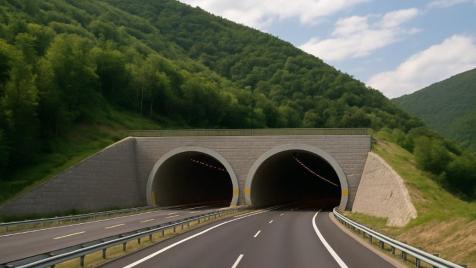
The Bulgarian construction sector is ready to shoulder the burden of new megaprojects, especially along the key “North-South” corridor and the “Black Sea” highway. The main stumbling block however is that the government has not yet announced its investment plans.
Engineer Lyubomir Kachamakov, Chairman of the Board of the Bulgarian Construction Chamber (BCC), outlined the harsh reality for the industry, which has been moving “from crisis to crisis” in recent years. He noted that the Chamber has not yet held discussions with the Ministry of Regional Development to understand the plans for infrastructure projects in the country.
As builders we have the capabilities and motivation to construct these projects. However we need volume and work. It is extremely important for us to know the government’s plans so that we can mobilize and retain our workforce. The workforce is dwindling,” he stated.
He emphasized that the lack of consistency in projects is detrimental. The situation with the national renovation program from a few years ago is a classic example – the initial boom created thousands of trained workers who, after the program was halted, simply migrated to markets like Germany and Spain. Their return today depends solely on financial incentives and a secure job market.
In light of the lack of government planning Angelov issues a serious warning regarding the consistency of projects.
We must be careful not to fall into a vicious cycle. We should not have three years of many projects, bring back 100 000 Bulgarians and then suddenly have the projects stop, lay them off and have them never return. Just as happened after the boom up to 2008. Investments must be spread out over time to ensure predictability for both companies and the workforce.”
According to the economist infrastructure investments should be measured solely by their economic impact on Bulgarian business, but the reality is different.
We find billions for transit gas pipelines, but one of the largest investors and factories in our country waited 15 yr for a simple gas pipeline branch. The investor is looking for fast logistics to the markets. If we have traffic jams on every bridge and every highway, they will not build a plant here, but in Central Europe.”
A Race Against Time and the Necessary Reforms
Unlocking this investment potential, however, requires urgently untangling several critical bottlenecks. First and foremost the state is in a race against time – we have only a few wk to complete the projects and reforms under the Recovery and Resilience Plan before we irrevocably lose European funding.
At the same time on the diplomatic front in Brussels Bulgaria must build a strong coalition in defense of cohesion policy. There is a real risk that the next EU budget will be entirely absorbed by the Green Deal and digitalization, which would leave our country’s basic infrastructure stuck in the 20th century.
Furthermore the construction industry warns that without profound legislative changes the sector will continue to stagnate, as the Public Procurement Act in its current form remains a dysfunctional and cumbersome instrument. To break this vicious cycle the Chamber is insisting on the mandatory introduction of standardized FIDIC-type contracts. Their aim is to restore balance and distribute responsibility fairly, so that the contractor ceases to be the scapegoat for the client’s poor planning.
However this entire transformation would be impossible without a large-scale digitization of processes – the only way to put an end to administrative arbitrariness and cadastral absurdities, which currently act as an insurmountable barrier even to the smallest private investors.
PPPs, Corruption and Private Capital
Since state resources and European funds will not be sufficient for the necessary megaprojects, experts are adamant that the formula must include private capital through public-private partnerships (PPPs). These models have been developed and are working all over the world – from toll systems in Greece to highway concessions in China and even the successful example of Danube Bridge 2 here in Bulgaria.
We also have financial resources in the form of pension funds, which are currently moving their money abroad because Bulgaria lacks long-term investment instruments. Why then do PPPs practically not exist in our country? Economist Yasen Guev’s answer was painfully candid:
When it comes to Bulgaria it comes down to corruption. That is the main reason these things do not happen. The reason the state has not moved toward this model is that control would have to be transferred to a private entity. Large projects create tension because they involve the transfer of money from one person to another.”
Translated with DeepL.