Economic.bg
Public Finances
Lagarde on Prices in Bulgaria: Some Were Held Back and a Correction Followed
The President of the European Central Bank acknowledged that Bulgaria has experienced a different inflation scenario than other countries in the eurozone
© ECONOMIC.BG / Depositphotos
~ 2 min read

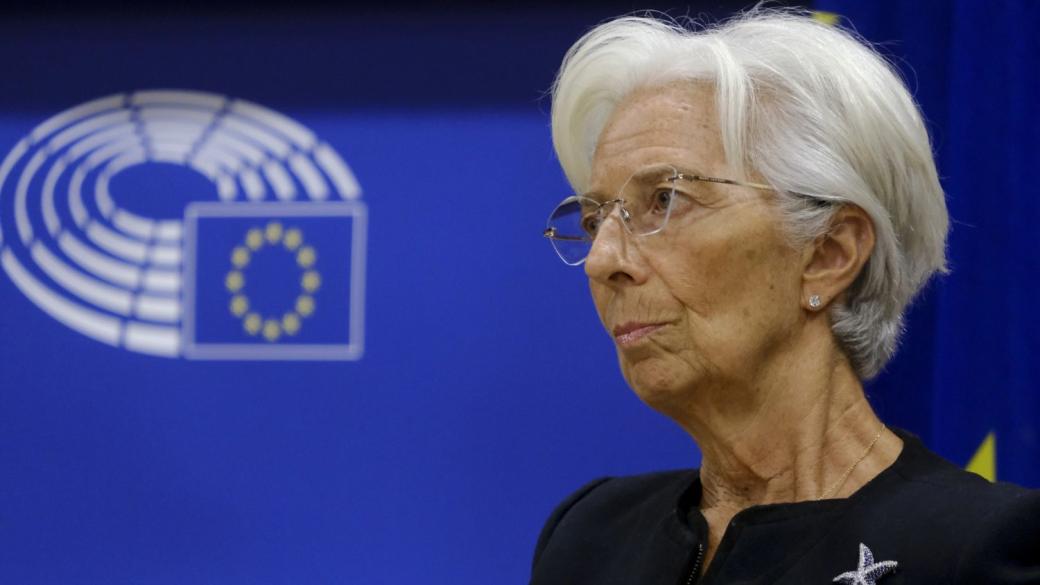
European Central Bank (ECB) President Christine Lagarde acknowledged that prices in Bulgaria have been high since the country joined the eurozone. Responding to a question from BTA she offered her explanation and called for measures to tackle inflation.
You are correct that Bulgaria is currently experiencing high price levels and high inflation,” Lagarde replied to the journalist’s question during today’s press conference following the two-day monetary policy meeting in Frankfurt am Main.
“This may be due to the fact that certain prices, which had been held in check for a certain period of time, have now found their place in the markets. This is not entirely unusual. And there are always differences among member states,” Lagarde added.
According to her it is also important to ensure that inflation returns to more acceptable levels, especially for the Bulgarian population.
We are monitoring the eurozone as a whole, but we are also paying attention to the differences, and this is definitely one of them right now,” added the ECB president.
The European Central Bank (ECB) left its key interest rates unchanged today following its two-day meeting. The interest rate on the deposit facility remains at 2.25%, while the interest rate on the main refinancing operations – 2.4% – and that on the marginal lending facility – 2.65% – also remain unchanged.
The Governing Council raised all three rates by 25 bps in June following data showing an acceleration in eurozone inflation in the wake of the energy shock triggered by the war in the Middle East.
The current decision was based on the outlook for energy prices, which are now close to the baseline scenario in the Eurosystem experts’ June projections and significantly above the levels recorded before the conflict in the Middle East.
Uncertainty remains high and the full inflationary impact of the energy shock has not yet fully materialized, the ECB noted in the rationale for today’s decision.
Eurostat data for June showed a slowdown in the inflation rate to 2.8%, while core inflation – which excludes highly volatile categories such as energy and food – stood at 2.4%, down from the 2.5% recorded in May and once again approaching the ECB’s 2% inflation target, BTA reports.
Translated with DeepL.