Gloria Hristova
Energy
Rumen Radev spoke about reviving the Belene NPP project
Sofia will not sell the surplus equipment to Kyiv, but proposes to build the plant and sell electricity to Ukraine
~ 3 min read
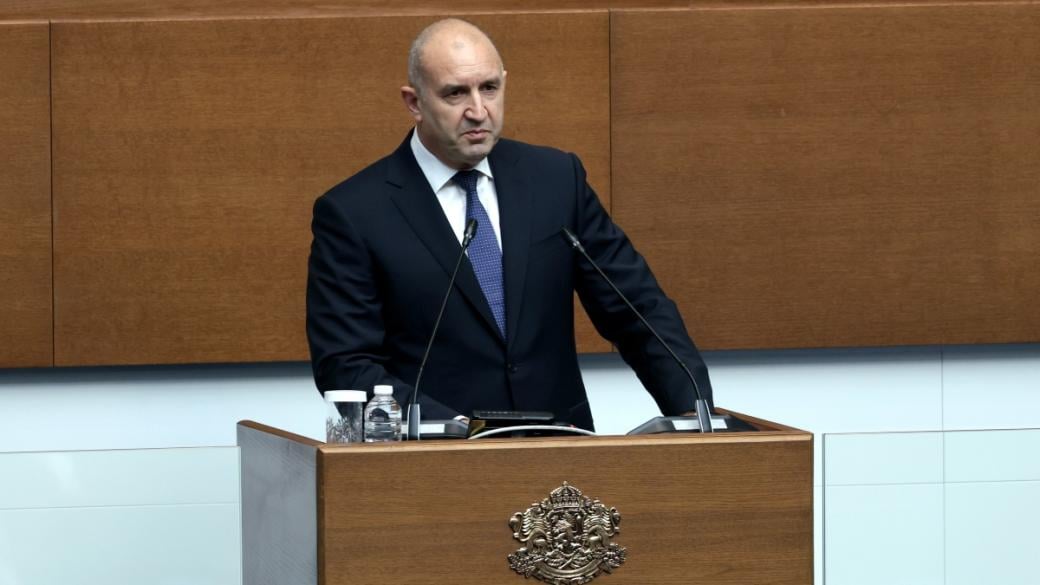
Bulgaria will not part with the equipment for the Belene Nuclear Power Plant, which has been sitting covered in plastic sheeting for years at the site of the failed nuclear project. Instead of selling it to Ukraine – as the Denkov government had planned in 2023 – the Radev cabinet is now proposing to revive the project and use the two reactors there. This became clear from Prime Minister Rumen Radev’s remarks during Friday’s parliamentary oversight session.
In fact, during the administration of the “Zhelyazkov” cabinet – supported by GERB, DPS, BSP, and ITN – it was decided to halt talks with Ukraine regarding the sale of the surplus equipment. The difference now is that Radev does want to work with Ukraine after all, including by selling it the electricity potentially generated by the plant.
The issue of the future of the nuclear equipment was raised in the National Assembly following a question from “Vazrazhdane” leader Kostadin Kostadinov regarding the 10-year security agreement with Ukraine, signed by Andrey Gyurov’s last caretaker cabinet.
Prime Minister Radev revealed details of his conversation with Ukrainian President Volodymyr Zelenskyy, which took place last month in Brussels.
He did indeed propose once again that they purchase the reactors from the Belene Nuclear Power Plant. I offered him an alternative: “Let’s – you and us, together with European funding – build the Belene Nuclear Power Plant with these reactors and supply you with electricity via Romania,” Radev stated from the parliamentary rostrum.
According to the prime minister, discussions along these lines will continue, but this remains the government’s firm position, as such a scenario would be economically beneficial for Bulgaria.
In response to criticism from Kostadin Kostadinov that Bulgaria is in a “subordinate position” and has “committed” to selling the reactors and producing weapons for Ukraine, the prime minister pointed out that the document stipulates only the obligation to continue talks on “possibilities for sale,” which in practice has opened the door to Bulgaria’s counterproposal.
Regarding the signed agreement, the prime minister was adamant that the cabinet would not annul the document, as this would deal a severe blow to the country’s international image.
Regardless of who signed a given international agreement as an individual, it is signed by the state. “This signifies institutional integrity and respect for international law,” Radev emphasized.
According to Radev, the agreement merely provides for an exploration of potential ways to provide support, with everything depending on the state’s available resources.
We have not made any specific commitment because it states: “according to our capabilities.” The idea is to explore possibilities. Well, we don’t have the capabilities at the moment,” the prime minister argued.
We recall that the political shift on this issue began as early as the spring of 2025, when the then-ruling coalition (GERB, BSP, DPS, and ITN) unitedaround the decision to halt the sale of equipment to Ukraine. At that time, the BSP declared the reactors a “key asset” against the backdrop of growing global energy insecurity, effectively blocking the sale process that had been launched a year earlier at a minimum price of 600 million euros.
With the two Russian VVER-1000 reactors, Ukraine’s Energoatom sought to complete the construction of the Khmelnitsky Nuclear Power Plant. The deal was required to receive a series of approvals in Ukraine. In March 2025, Ukrainian President Volodymyr Zelenskyy signed the law approving the purchase of equipment necessary for the construction of the power units.
Translated with DeepL.