Economic.bg
Politics
Radev Does Not Guarantee That “Litasco” Will Drop the Arbitration Case Against Bulgaria
The prime minister’s uncertain stance comes after this week’s agreement with the Swiss-registered company
© ECONOMIC.BG / BTA
~ 4 min read

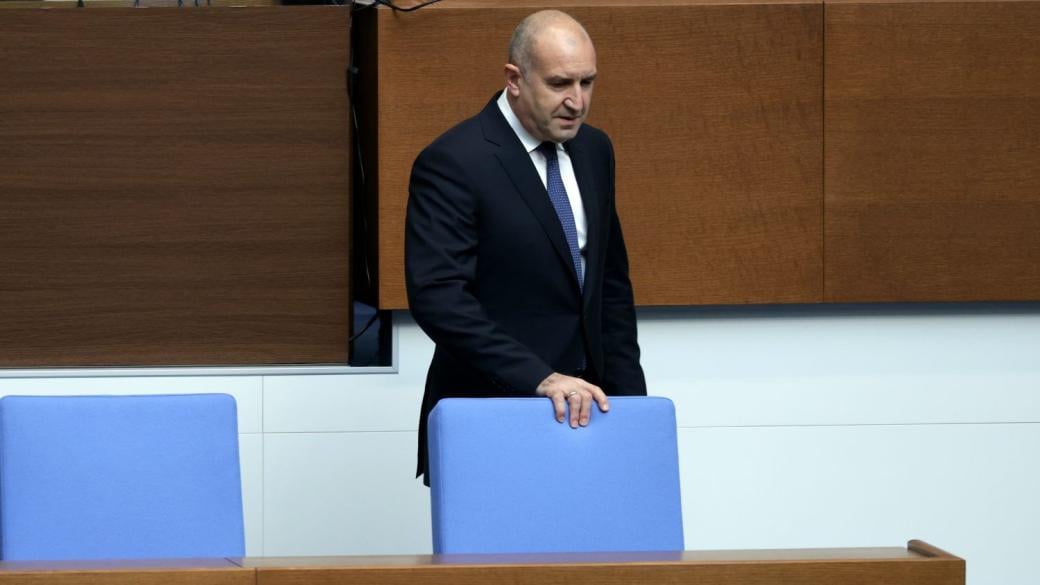
I cannot guarantee that we will avoid arbitration, said Prime Minister Rumen Radev during Friday’s parliamentary session, commenting on the case filed against Bulgaria by “Litasco” – the Swiss-registered company that owns Lukoil’s assets in Bulgaria. He added, however: “I have reason to hope that we will find confirmation of this in the fall.”
The prime minister’s statement comes a few days after the Bulgarian government and “Litasco” reached an agreement under which, effective July 1, the Swiss-registered company lifted the freeze on the Burgas refinery’s ability to do business with Swiss companies, which are among the world’s largest oil traders. Bulgaria, for its part, will oppose European sanctions against Vagit Alekperov – the main shareholder in the Russian group “Lukoil.”
The news of the lifting of the restrictions by the Geneva court was also officially confirmed by “Litasco” representative Inna Dariy.
As for the arbitration case itself, which threatens Bulgaria with a 3 billion euro penalty, Rumen Radev promised to do “everything possible to avoid it.”
I have no doubt about the ability of our lawyers to defend the country’s interests, but they were very confident that we wouldn’t have to pay for the Belene Nuclear Power Plant either, yet we ended up paying a huge sum,” Radev said, explaining why agreements were reached with “Litasco” instead of defending Bulgaria’s position in the arbitration.
How did the arbitration dispute arise?
The dispute between Bulgaria and “Litasco” arose after the Swiss company accused the country of unlawful expropriation of its investments. Bulgaria was notified of the claim on February 19, 2026—the day the Gyurov caretaker government was appointed. The company stated that it was taking these actions to protect its rights and legitimate interests as the owner of the affected companies.
The case relates to legislative changes adopted on November 14, 2025 (during the term of the “Zhelyazkov” cabinet and the administration of GERB, DPS, BSP, and ITN), under which the state took over management of “Lukoil Neftohim Burgas” AD, “Lukoil Bulgaria” EOOD, and two other companies of the Russian group in Bulgaria, appointing Rumen Spetsov as special commercial manager.
A major problem with these legislative changes was that they completely eliminated the possibility of legislative oversight over the decisions of the special manager, who effectively gained the right to dispose of the private company’s assets at his discretion, including selling them.
At the time, the government justified the measures by citing the need to protect energy security and ensure the refinery’s normal operation following the U.S. sanctions imposed on the Russian group.
In early June, Spetsov was replaced by the Radev government due to “lack of transparency, lack of accountability, and illegality.” The cabinet appointed Evgeni Simeonov to replace him, while also limiting the special administrator’s powers.
Seizures Due to an Outstanding Loan
During his remarks on Friday, Rumen Radev stated that “Litasco” would lift the seizure and “Lukoil” would be able to purchase crude oil without restrictions from companies registered in Switzerland, while complying with European sanctions and requirements. The refinery will now be able to supply crude oil with the required specifications, and “the transportation process will be much more efficient.”
The supply crisis arose due to a loan granted by the Swiss company in 2023. Prime Minister Radev explained that in November 2025, a ban was imposed on Lukoil Neftohim regarding the purchase of crude oil from companies registered in Switzerland, due to the outstanding loan from Litasco to Lukoil, which had not been repaid “to a significant extent.”
A large portion of the companies trading in crude oil and petroleum products are registered in Switzerland, which restricted Lukoil’s ability to purchase crude oil. As a result, the refinery faced logistical and supply issues with crude oil and had to process heavy crude, which led to technical problems, Radev explained.
It (the refinery) is designed for "Urals" crude, which is unavailable due to the sanctions, and has been seeking various grades that come close to those characteristics,” the prime minister stated.
Radev explained that this was not possible, which forced the refinery to process heavy crude. This led to rapid wear and tear on the equipment, placed an additional burden on the staff, extended the delivery routes for tankers, and consequently drove up prices.
If you talk to the people who work at the refinery and who constantly have to maintain and readjust its systems, you’ll understand that if we continue to operate under this sanctions regime – imposed, in part, by Litasco – the refinery is at risk of shutting down.”
The prime minister clarified that the maintenance cycle for the oil refining facilities is six years. But that cycle is already nearly exhausted, in a very short time.
This means a shutdown, significant financial costs, increased risk, and most importantly – higher prices for Bulgarian citizens,” the prime minister added.
Translated with DeepL.