Coface: After Years of Decline, Bankruptcies in Bulgaria Are on the Rise
A liquidity crisis threatens companies, and payment delays are reaching 120 days

© ECONOMIC.BG / Depositphotos
~ 3 min read
 Economic.bg
 Bulgarian businesses are facing a new wave of challenges against the backdrop of a progressively deteriorating global economic environment. After several consecutive years of decline, the number of companies filing for bankruptcy in Bulgaria is expected to see a gradual increase of about 2-3% in 2026, according to forecasts by experts at leading credit insurer Coface.
Transportation sector under pressure and risk of a chain reaction in Bulgaria
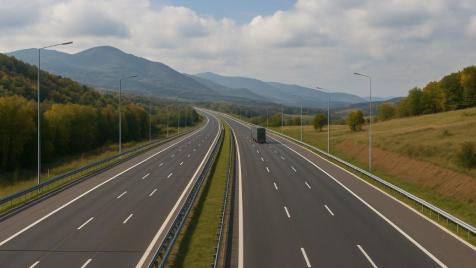
The main driver behind the negative trend in Bulgaria is the transportation sector, which is exposed to enormous risk due to the sharp rise in fuel prices since the beginning of the year, triggered by the escalation of tensions in the Strait of Hormuz.
To thrive in such a complex geopolitical environment, companies must continue to pay special attention to liquidity management, adapt to market volatility, and proactively identify counterparty risk,” warns Plamen Dimitrov, Managing Director of Coface Bulgaria.
The situation is complicated by the fact that the transport sector is directly linked to nearly every other industry. This raises serious concerns about a chain reaction, manifesting as delayed payments and an increase in intercompany debt, which remains at high levels in the country. Data shows that the average payment delay in Bulgaria over the past 24 months has increased significantly and now ranges between 90 and 120 days. Experts note that bankruptcies are most often due not to a lack of orders or business, but to an acute lack of liquidity.
Additional pressure will come from the expected slowdown in global demand by about 2.5%, which will inevitably limit growth in Bulgaria and hit small companies – which dominate the Bulgarian economy – the hardest.
Global insolvency forecasts have been revised twice
The changes in Bulgaria reflect a broader and alarming global trend. The global business climate is deteriorating rapidly, with insolvency cases already jumping by 12% at the start of 2026. North America was the main driver of this global increase, recording a sharp rise of 22%.
As a result of geopolitical tensions, particularly the conflict with Iran and instability in the Middle East, businesses are under pressure from rising shipping costs, volatile energy prices, and high uncertainty. This has prompted Coface to drastically revise its forecasts: global bankruptcies in 2026 are expected to rise by 6% – a figure that is more than double the initial estimates from the beginning of the year.
Projected growth in bankruptcies by key economies:
- United States and France: +8%;
- Japan: +7%;
- Germany and the Netherlands: around 5%;
- Spain, Italy, and the United Kingdom: between 2% and 3%.
Interest rates and the lack of a government “safety net”
In the background, financing conditions remain extremely difficult. Although central banks have begun a cycle of monetary easing, interest rates remain high, keeping borrowing costs unaffordable for many firms that entered the crisis with record levels of debt. Estimates suggest that even a minimal increase in loan interest rates of just 25 basis points could once again accelerate global insolvency to 2025 levels.
The sectors most affected at present are cyclical sectors such as construction, the chemical industry, and the textile industry, which are highly dependent on production costs and consumer demand. The problems are felt most acutely by small and medium-sized enterprises (SMEs), which have more limited cash flows.
Unlike the 2020–2023 period, when massive government support (around 2 – 4% of GDP for major European economies) saved thousands of companies following the pandemic and the start of the war in Ukraine, governments today do not have the same fiscal resources. Current rescue programs are highly limited and strictly targeted (for example, the largest one in Spain amounts to just 0.3% of GDP), which means that government intervention this time will not be able to act as an effective brake against the wave of bankruptcies.
Translated with DeepL.