Sofia Grozdanova
Public Finances
Bulgaria started the year with a sharp rise in public debt
The country still ranks among those with the lowest debt-to-GDP ratios but is gradually losing ground compared to other European Union member states
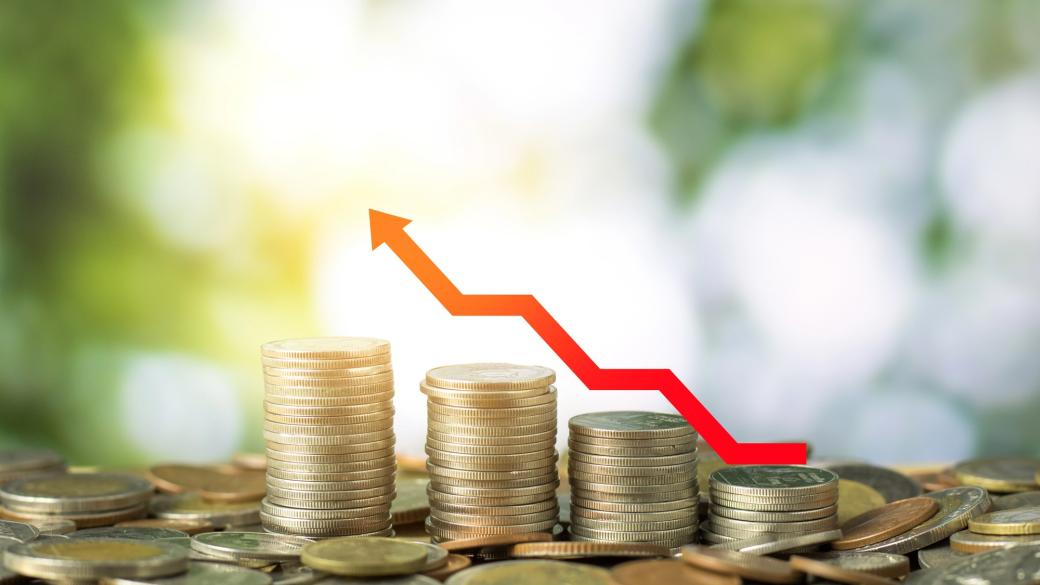
© ECONOMIC.BG / Depositphotos
~ 3 min read

Bulgaria’s public debt-to-GDP ratio stood at 28.5% in the first quarter of 2026, according to Eurostat data. This ranks the country third from the bottom in the European Union, with only Denmark and Estonia ahead of Bulgaria, at 26.8% and 25.2%, respectively.
Although Bulgaria maintains a relatively low debt-to-GDP ratio, the country recorded the second-fastest year-over-year growth rate (4.8 percentage points), with only Finland reporting a larger increase (5.5 percentage points).
The average debt-to-GDP ratio in the EU is 82.9% and has increased by 1.5 percentage points. At the other end of the spectrum is Greece, which recorded a decline of 9.4 percentage points to 143.5% debt-to-GDP.
Why is Bulgaria losing ground?
For a long time Bulgaria was the EU country with the second-lowest debt-to-GDP ratio. However Denmark overtook it in the fourth quarter of 2025 – by which time the Bulgarian government had already drawn down most of its allowable new debt for the year. Last year’s budget set a ceiling of 18.9 billion levs (9.7 billion euros) on new government debt – a record amount in the country’s history – and the “Zhelyazkov” government, led by Finance Minister Temenuzhka Petkova, fully utilized this amount. As a result by the end of the year the country’s total debt burden reached €31.4 billion.
Last month Prime Minister Rumen Radev proposed that public debt increase significantly over the next two years. According to the Updated Medium-Term Budget Forecast for 2026 – 2028 the debt will rise from about €37.7 billion at the end of 2026 to €44.7 billion in 2027 and nearly €50.5 billion in 2028. As a share of the economy, this represents an increase from 30.1% of GDP to 35.2% of GDP over the forecast period.
This growth is driven by the planned issuance of new debt each year: up to €10.1 billion in 2026, approximately €8.8 billion in 2027 and approximately €8 billion in 2028 – for a total of about €27 billion over the three years.
The proceeds from the new government debt, which is expected to be issued during the year, will be used to refinance outstanding debt, cover the budget deficit – including pre-financing under the Recovery and Resilience Plan for the Republic of Bulgaria – and to acquire shares, shares and equity interests as well as other financing operations,” the Ministry of Finance explains in its medium-term forecast.
On a quarterly basis
When compared on a quarterly basis (against the fourth quarter of 2025), the statistics show an improvement in the debt-to-GDP ratio. Bulgaria is, in fact, the EU country with the second-largest decrease in this indicator (-1.3 percentage points) . Ahead of it is only Greece (-2.6 percentage points), which, however, holds the record for the highest debt-to-GDP ratio.
One explanation for Bulgaria’s improvement is the lack of a regular budget for 2026 and the use of a stopgap law that prohibits taking on new debt exceeding the amount of upcoming maturities (€1.41 billion). With the Radev cabinet coming to power, lawmakers passed emergency legislation to circumvent this restriction and two weeks ago the government issued new debt totaling €2.5 billion on international markets.
Translated with DeepL.