Bulgarian unicorn Payhawk has joined the even more exclusive club of centaurs
The company's annual recurring revenue exceeds $100 million, which is already a sign of its true scale
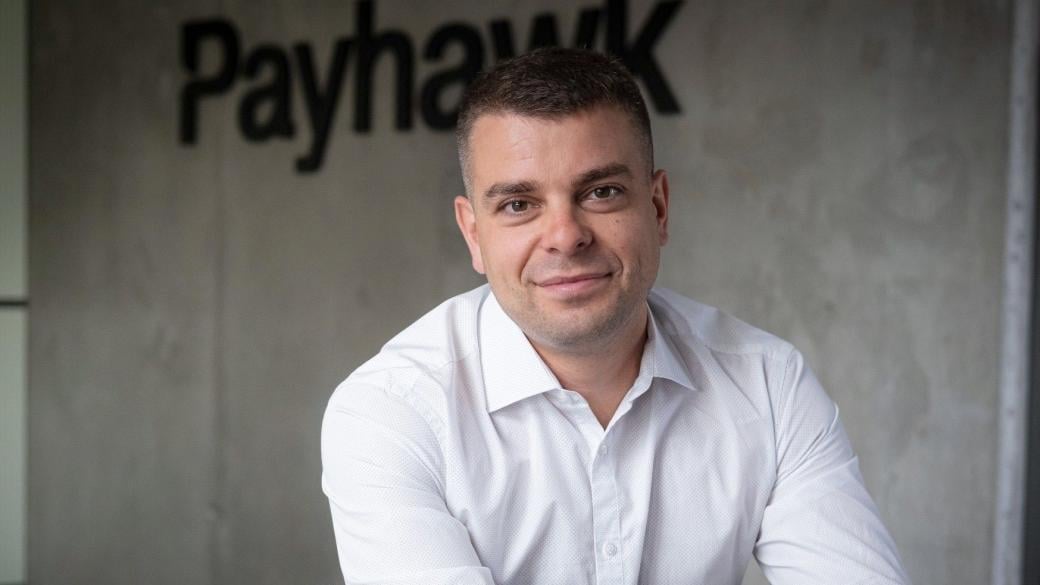
© ECONOMIC.BG / Payhawk
~ 3 min read
 Mirela Vavova
 The Bulgarian fintech company Payhawk has crossed a key milestone in its development, surpassing $100 million in annual recurring revenue (ARR). With this achievement, the corporate expense management platform has officially earned “Centaur” status – a financial and business term in the tech sector used to describe private companies with a market capitalization of over $1 billion and annual revenue of at least $100 million.
The success of the company, founded in 2018 by Hristo Borisov and Boyko Karadzhov, places it in an extremely exclusive global circle. According to data from the analytics firm Bessemer Venture Partners, there are only about 250 software companies worldwide with “Centaur” status. This club is considered roughly seven times more exclusive than the popular “unicorn” status (companies with a market valuation of over $1 billion, which Payhawk achieved in 2022).
The reason for this distinction in the venture capital industry is practical: while a unicorn’s valuation is often based on market expectations and future potential, centaur status is proof of actual scale, financial discipline, and a working business model with predictable revenue.
At a time when investors in the tech sector are demanding sustainability rather than growth at any cost, Payhawk demonstrates high capital efficiency. Since its inception, the company has invested a net total of approximately $120 million to reach its current $100 million in ARR. This translates to a total burn multiple of approximately 1.2 over its entire existence. The data also shows that, to date, the company has used only half of the total capital raised from external investors.
A $1 Trillion Market and Ambitions in Europe
Payhawk’s achievement comes against the backdrop of a shift in the scale of the market in which the company operates.
When we founded Payhawk in 2018, we valued this market at $1 billion. Today, we believe it exceeds $1 trillion,” commented co-founder and CEO Hristo Borisov.
The company’s own development also illustrates the expansion of the entire market. From its initial focus entirely on corporate cards, the Bulgarian platform now covers payments to suppliers, accounts payable (AP) management, business travel bookings, and procurement process automation.
The company’s short-term growth forecasts remain aggressive. Payhawk expects that by the fourth quarter of this year, one out of every 500 business card payments in Europe will be made through their platform. The long-term vision is aimed at radically reducing administrative costs for businesses
Our goal is to enable a company with 500 employees to manage its entire finance function with just two people,” says Hristo Borisov.
The Role of AI
Behind Payhawk’s market growth lies a comprehensive internal transformation that began 24 months ago. Instead of simply adding artificial intelligence as an external feature to its products, the company has reorganized its operational processes around autonomous AI agents. This move has had a direct impact on the company’s financial and operational metrics.
The company cites labor productivity and the optimization of sales processes as examples. Annual recurring revenue (ARR) per full-time employee has grown by 75% year-over-year, reaching approximately $238,000. Meanwhile, the sales team generated 159% more net new business year-over-year, even though the total number of employees on the team decreased by 10%.
Currently, the platform – which is headquartered in London but maintains a major development center in Sofia – serves medium and large businesses in over 33 countries. Its client base includes fast-growing European tech companies such as Flatpay, Aikido, Apollo AI, Vox AI, and Nscale. The volume of payments processed through the system has grown by 95% year-over-year.
Translated with DeepL.