Georgi Zhelyazkov
Public Finances
Bulgaria must return €250 million received under the Recovery Plan
Within a month, the caretaker government will request the fourth payment, but hundreds of millions are at risk there too
~ 3 min read

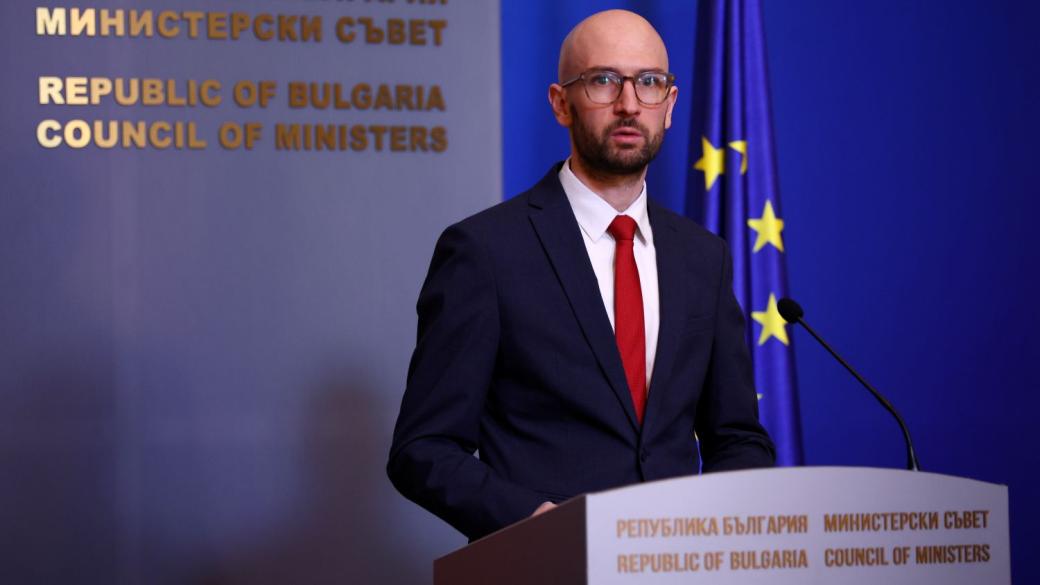
Bulgaria must return €250 million to the European Commission, Finance Minister Georgi Klisurski said in an interview with BNR. This is part of the third payment under the Recovery Plan, received at the last minute last year, on December 29. Even then, however, the European Commission withheld over €100 million, and it is now clear that the withholding will total over €350 million (about BGN 700 million).
We recall that the €1.47 million transferred in the last days of the year helped the then finance minister Temenuzhka Petkova, along with many other accounting tricks she applied, to bring the cash-based budget deficit to 3.1% of GDP. However, Eurostat's accrual-based estimates are due to be released in April-May, which will reveal the real picture of the accrual-based budget.
The money already transferred to Bulgaria will not be returned to the Commission as a direct tranche, but will be deducted from the fourth payment, according to Klisurski.
Hundreds of millions wasted so far
The additional deduction from the money Klisurski is talking about is due to the closure of the Anti-Corruption Commission (ACC) at the end of January, initially initiated by Delian Peevski, but supported by the votes of the entire ruling coalition – GERB, DPS – New Start, BSP, and ITN, as well as PP-DB, which even had its own bill in this direction.
We recall that the first €100 million withheld from the third payment was due to the ruling party's unwillingness to introduce a working mechanism for accountability and control of the chief prosecutor into the legislation.
Bulgaria was also withheld over €200 million from the second payment made by the European Commission in November 2025. Thus, the total funds that the government has squandered due to its unwillingness to implement the reforms requested by Brussels amount to nearly €700 million (BGN 1.4 billion).
Fourth payment coming
Regarding the fourth payment, the finance minister said that the caretaker government is working "very hard" with the EC to submit the request for this payment "at the end of this month or the beginning of next month." The goal is for the funds to reach Bulgaria in June or July.
This will be one of the main goals of the caretaker cabinet. We can receive a maximum of €900 million for this payment," Klisurski said.
However, he warned that if the current National Assembly, which has only ten days left before going on recess due to the election campaign, does not adopt the Transparency and Integrity in Government Act, better known as the Lobbying Act, which has been discussed with the European Commission, half of the money could be lost.
We would like to remind you that GERB has already submitted a bill in this regard, and now Klissurski said that the Council of Ministers will also submit its own draft.
The important thing is that the law, as agreed with the EC, be adopted. If it is not adopted, up to €400 million may be withheld from the fourth payment," the minister said.
He called on the parties to act in the interests of the state and to adopt the law.
We are also working on the next payments, and I hope that by the end of August we will submit a request for the fifth payment. Of course, the cabinet's priority at the moment is the fourth payment," he added.
Urgent extension of the budget
Klisurski also drew attention to the urgency of the budget extension law, which will cease to be in force at the end of March if it is not extended further.
If a regular budget is adopted after August, this will greatly delay all investments in the country," he warned.
The minister hopes that after the next parliament is formed, whether with the caretaker government or with the next regular cabinet, work will be done to adopt the regular budget by June or July, "so that the country can get back to normal."
The best thing would be for a regular cabinet to propose, defend, and adopt a regular budget. So we support this way of thinking. But if the timeframe is extended in such a way that it appears that there will be no budget adopted by the summer, we, as a caretaker cabinet, will propose a draft budget for 2026 in order to reduce the risks of the budget being adopted too late," Klisurski said.
Translated with DeepL.