Simona Gotsova
Public Finances
Coface expects Bulgaria’s economic growth to slow
The country has yet to feel the benefits of joining the eurozone
© ECONOMIC.BG / Depositphotos
~ 2 min read

The ongoing crisis in the Middle East will affect Bulgaria’s economic growth this year, which will turn out to be lower than initially expected. This became clear during a webinar hosted by the credit insurance company Coface on Tuesday.
During the event, Mateusz Dadej, an economist for the Central and Eastern Europe (CEE) region, commented that no country will remain unaffected by supply shocks (editor’s note: due to the blockade of the Strait of Hormuz).
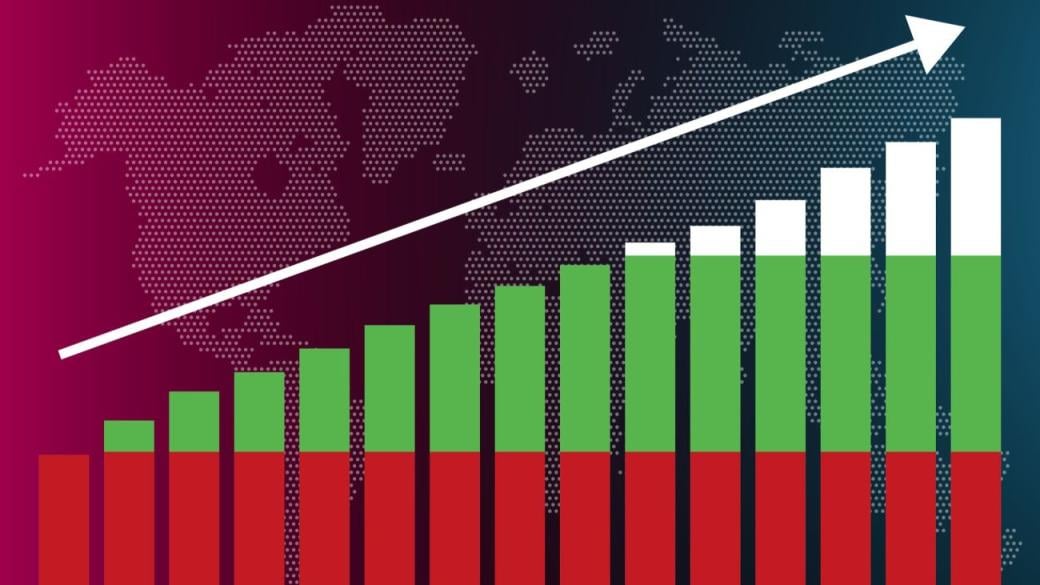
Consequently, the company revised its economic growth forecasts for CEE countries, including Bulgaria – the current forecast is for 2.4% GDP growth in 2026, while the previous forecast, from January, was for 2.6% growth.
We remind you that just a few days ago, the Bulgarian National Bank (BNB) also revised downward its forecasts for Bulgarian GDP growth this year – from 3.1 to 3%.
Dadej commented that Bulgaria’s economic growth for 2025 had been underestimated and is very strong despite the political situation over the past five years or so.
It seems that companies have simply gotten used to operating in an environment of political uncertainty, and this is having less and less of an impact on them,” he noted.
The expert emphasized, however, that labor productivity in the country remains among the lowest in the region. He also highlighted the weak institutional environment as another drawback, which will be forced to improve with the introduction of the euro.
Wage growth has moderated, which has eased companies’ operating costs. “I am optimistic about the euro, and from now on it will bring only benefits to Bulgaria,” the economist believes.
According to him, the new currency has not led to a systematic rise in prices, but rather there have been “sporadic cases of price manipulation.”
Risks Remain
During the webinar, Coface presented its study on the insolvency rate of companies in Central and Eastern Europe.
We are currently seeing some stabilization,” Dadej noted.
He explained that before the pandemic, corporate insolvency cases numbered around 30,000 per year, but after 2022 – with the phasing out of fiscal measures supporting businesses – their number rose significantly, to around 50,000. Over the past two years, however (the 2024 – 2025 period), the number of these cases has remained nearly unchanged.
There is fragmentation, however – while some countries have seen double-digit growth, others have experienced a double-digit decline in insolvency cases. The situation is most serious in Poland, Slovenia, and Serbia, where the increase is around or above 10 percent. Bulgaria is at the other end of the spectrum – with a 6% decline for 2025, followed by Hungary and Latvia with slightly higher figures.
We expect insolvency in CEE to increase this year,” he noted.
On the risk map, which shows the impact of a country’s environment on business performance, Bulgaria is among the countries with “relatively high” risk. Romania is in the same group, while Greece has moderate risk.
Translated with DeepL.