RIA owes over 750 million euros, but has funds only for the next three months
Following the "silent approvals" for guardrails and roadside assistance, the Ministry of Regional Development is handing over schemes involving hundreds of millions to investigators
© ECONOMIC.BG / BTA
~ 4 min read
 Gloria Hristova
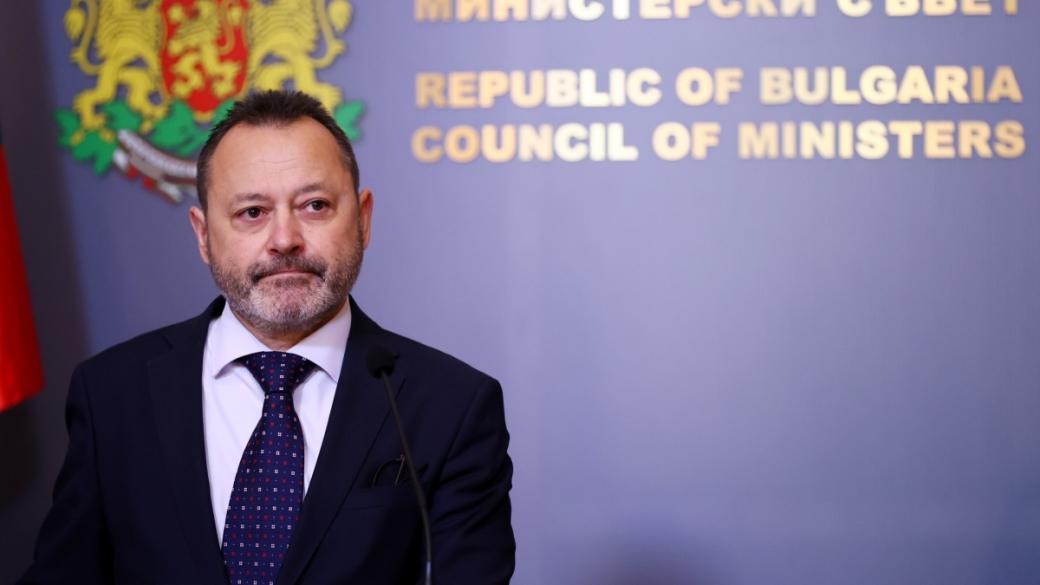
 The Road Infrastructure Agency (API) is facing financial difficulties after it became clear that its debts to contractors amount to €752 million, while the available funds for the next three months are a mere €200 million. This admission by acting Regional Minister Nikolay Naydenov brought an end to a tense day that began with a sharp accusation by Prime Minister Andrey Gyurov that systemic corruption in the sector is no longer merely financial damage, but a direct “theft of lives.”
The new leadership’s audit shows that the budget planned over four years for road repair and maintenance has literally “vanished” in a year and a half, leaving the state in a situation where it owes hundreds of millions while having only crumbs for actual maintenance.
Minister Naydenov outlined a critical timeline for the survival of the road network over the next three months, with the Road Infrastructure Agency (RIA) having a total of €200 million at its disposal. For March, €34 million is allocated for routine maintenance and €42 million for new construction. In April, the focus shifts to maintenance with €80 million, compared to just €20 million for construction activities, and in May the situation becomes critical with only €17 million for maintenance and a meager €5 million for new sections of major projects such as the Hemus, “Struma,” and the Vidin – Botevgrad road.
This stark arithmetic stems from the revelation that 100% of the allocated four-year budget for road repair and maintenance has already been spent through questionable practices. The public procurement contracts for these activities are worth over €2 billion, which was supposed to be spent over 4 years.
As of February 19 of this year, the values and awards under these contracts exceed €2 billion. The budget was allocated for four years, but 100% of the funds were spent in just a year and a half. Another issue is that the bulk of the funds, the main allocation, goes toward so-called “preventive repairs,” which are essentially disguised major repairs. “This is an extremely corrupt practice at the Road Infrastructure Agency, and I intend to severely limit it,” Naydenov commented.
According to him, the Road Infrastructure Agency’s total liabilities as of today exceed €752 million. Of this amount, €528 million is owed under the aforementioned contracts for routine repairs and maintenance. Another €168 million is owed due to legal disputes and settlements from 2018–2020, and in addition, the Road Infrastructure Agency owes €55 million in interest.
The acting regional minister also commented on the €590 million mega-contract for guardrails mentioned earlier in the day by Prime Minister Gyurov. The Inspectorate’s report on this procedure, which was carried out under conditions of complete information blackout hours before the change of government, has already been submitted to the Ministry of the Interior for investigation of serious irregularities.
The Inspectorate’s report is ready; numerous irregularities have been identified, and I have submitted it to the Ministry of the Interior so that Minister Dechev (note: the interior minister) can review it,” Naydenov stated.
He further commented that an example of egregious poor planning is the preparation of the route for the 2026 Giro d’Italia, whose cost has skyrocketed fivefold in just two months—from the initially planned €10 million in November to bring the route into compliance for the race, to €55 million by the end of February.
Naydenov also commented on the Anti-Corruption Fund’s investigation into “24/7 roadside assistance,” for which the state paid €7.1 million monthly to a company with a criminal background, without citizens even suspecting the existence of this “free” service. The minister is adamant that this activity will be immediately separated from the Road Infrastructure Agency (RIA).
The goal of the new leadership at the RIA is not only to try to “patch up” the roads with the remaining minimal resources, but also to stop the corrupt practice of annexes. Naydenov announced that from now on, every assignment, contract, and request for asphalting will be published online in real time so that the public can track where every euro goes, while the state attempts to restore the authority of one of its oldest institutions.
One of the goals of these reports I am submitting to the Ministry of the Interior and the State Financial Inspection Agency is to send a message to everyone who spends public funds that sooner or later the truth will come out, and it is not the one who eats the pie who is crazy, but the one who gives it," Naydenov added.
Translated with DeepL.