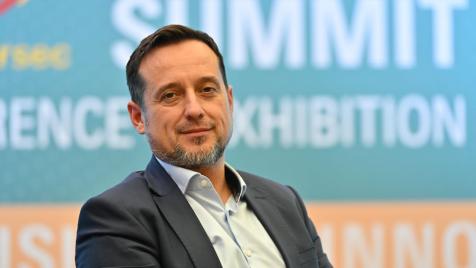
The End of the “Free Lunch”: Oleg Petrov on Hidden Inflation and the True Cost of AI
Artificial intelligence seems cheap because someone else is footing the bill – the subsidy for this illusion is coming to an end

~ 8 min read
 Mirela Vavova
 Artificial intelligence (AI) is the tech sector’s new “payday loan” – deceptively cheap at the outset, but with potentially unaffordable interest rates down the road. While companies rush to replace junior specialists with algorithms, they often overlook the fact that they are operating within an economic anomaly sustained by billions in venture capital. However, a transition from euphoria to efficiency is on the horizon.
AI is simultaneously changing the world and bleeding money. We are in the era of “subsidized intelligence,” where the gap between the real cost of computing and what we pay is setting the stage for an economic sobering-up that will reshape the market even more drastically than the dot-com bubble.
We discuss the topic with Oleg Petrov, a programmer with years of experience, an entrepreneur, and an AI specialist. Before we dive into the heart of the upcoming business transformation, he insists on explaining how the technology works, because:
Otherwise, the reasons for the price increase will remain misunderstood.”
Mathematics You Can’t See
Language models – ChatGPT, Claude, Gemini, and the rest – don’t “think” in the literal sense. They are mathematical models, linear algebra. Every sentence a person sends to them is converted into a sequence of numbers (so-called tokens). To return a response, the machine performs billions of calculations and determines which numbers should follow so that the user receives a meaningful answer, explains Oleg Petrov. Roughly speaking: the program knows that after “1, 2, 3” comes “4, 5, 6,” and it assembles the most likely sequences.
If you look at the documentation from Anthropic or OpenAI, you’ll see the pricing clearly: 1 million tokens cost “X” amount of money – that’s how pricing works.”
But exactly how many tokens are there when you ask a “simple” question? Here’s the catch that escapes the average user’s attention. Depending on the language and the complexity of the vocabulary, the number of words corresponds to a different number of tokens. English, for example, is highly optimized, and there about 75 words equal approximately 100 tokens. With Bulgarian, however – partly because it uses the Cyrillic alphabet, but also because it has more complex morphology – words are often “broken down” into more tokens.
When you ask a 10-word question, the program doesn’t send it that way. It adds a huge amount of additional text – internal instructions, context, explanations – to make the question as clear as possible for the model.
I’ve run tests. I give a 100-word programming task. Behind the scenes, the program expands it, and the entire input package can end up being 10,000 tokens (note: depending on the program, as the numbers vary across different software). A hundredfold difference.”
At the same time, the complexity of queries is growing faster than hardware optimization. The new “thinking” models don’t just respond; they reason, ask themselves additional internal questions, and generate thousands of tokens invisible to the user before sending the final answer. If a year ago a model answered a question with 500 tokens, today’s more complex architectures use 1,500 tokens for the same result to achieve a “more human” sound.
The user thinks they entered 10 words. In reality, it’s much more. We’re talking about up to a 300% increase in cost that a person doesn’t see right away (the numerical parameters depend on the program the user is working with),” notes Oleg Petrov.
On top of that, there’s very expensive hardware behind the scenes. Graphics cards – or more precisely, specialized GPU chips adapted from the gaming industry for AI computations—are produced almost exclusively by Nvidia.
“A single unit (GPU chip) can cost anywhere from $50,000 to $300,000. Large companies use tens of thousands of them. And they require exceptional power. I’ve run a local AI model on a graphics card costing 3,500 BGN (about 1,750 euros) – it consumes half a kilowatt to one kilowatt per hour. And this model is 100–500 times weaker than ChatGPT. Now imagine a data center with 10,000 such units,” Oleg Petrov gives as an example.
Hidden inflation
Here the topic delves into specifics that few users notice. A few days ago, for example, Anthropic, the creators of Claude, released a new model whose price, at first glance, remains the same. But:
The new model uses 30% more tokens to return the final answer. In other words, the price has gone up by 30%, but the user doesn’t see it – they only see the same amount.”
OpenAI, meanwhile, did the opposite: it announced that the new model uses 30% fewer tokens. But it doubled the price.
Another form of hidden inflation is limits and so-called “product degradation” – companies quietly limit message quotas or switch users to cheaper (and dumber) models until they’re forced to switch to enterprise plans starting at $200 and up.
For a programmer or a small business, the difference is drastic: if until recently $20 covered 6 hours of intensive work, today it’s enough for just 20–30 minutes of high-quality interaction with the model, says Oleg Petrov. That’s a tenfold increase in cost in less than a year.
The limits aren’t clearly defined. They change dynamically, without notice. No one tells you exactly how much you have. They just message you at some point: “Your limit will be reset in five hours.”
The Strategy of Dependency
This is an incredible business strategy,” says Oleg. “To get people hooked in such a way that their work depends entirely on the product. And then suddenly you see that it’s getting more and more expensive.”
The logic he describes isn’t a conspiracy – it’s well-known in marketing. Launch it cheaply to get the consumer hooked; then raise the price once the addiction is a fact.
OpenAI, for example, is currently operating at a colossal financial loss – last year it was in the order of $2 billion.
Imagine how confident they are that they’ll recoup their money to afford losing billions every year,” Petrov commented.
What’s more, this year and next, each of the major AI companies is expected to spend at least $5 billion just on training their new models. And that amount will be paid out every year.
The Inevitable Financial Crisis
Current low consumer prices are subsidized. Venture capital funds, banks, and investors are financing the companies’ colossal losses, expecting future returns. Oleg Petrov’s forecast for the global economy, based on artificial intelligence, is not particularly optimistic.
I expect a 30 – 50% annual increase in AI costs. I don’t see anything else rising in price that quickly. Every industry using AI will raise the prices of its end products – because their dependence on it is growing.”
The tipping point will come when investors stop subsidizing. “When companies get fed up with financing losses, they’ll say: we’re stopping, we want a profit. This will lead to a major, sharp drop in price. Perhaps half the users will drop off within a month, and the rest will cover the loss,” says Oleg Petrov, citing Anthropic as an example, which already offers $200 plans.
A large portion of these premium subscribers, he says, don’t reach their limits, so by paying more for something they don’t use, they’re effectively subsidizing the rest.
Small companies that build their businesses around third-party models are most at risk from the expected rise in AI costs.
Small startups realize too late how to structure their pricing, and the numbers just don’t add up. You might start with a $20 plan, but two years later, your cost for the same service could be over $200.”
Their only options are either to raise prices and lose customers, or to absorb the loss and likely go out of business. The third option is to pass the cost on to the consumer, which also carries the risk of a customer exodus.
Regardless of his expectations of a crisis, according to Oleg Petrov, “artificial intelligence is not a bubble in the classical sense.”
Bubbles burst and disappear. But AI is something that actually works, does its job exceptionally well, and is getting stronger all the time. That’s why it will simply come at a high price.”
The comparison with the real estate bubble is more accurate, in his view: “There, too, third parties benefited directly from the inflation, just as here it is Nvidia, investors, and the AI companies themselves – all have an interest in prices going up.”
Ultimately, the divide that is emerging is also social – some companies and people will be able to afford full access to the technology. The rest – just bits and pieces of it.
The IT Labor Market: The End of the Junior Programmer and the Rise of Business Thinking
Despite the financial risks, the technology is already entrenched in the professional world, and Oleg Petrov notes that 90% of programmers who initially denied, ignored, and dismissed AI now use it constantly.
The modern labor market faces the paradox of the “expensive replacement,” where the illusion of cheap artificial intelligence is sustained solely by massive subsidies from major tech giants and venture capital funds. The real cost of the computing resources and energy required to run complex models often exceeds the cost of human labor, but this fact remains hidden behind enticing marketing strategies. The moment the investment bubble bursts and prices reach their true market levels, many companies will discover that they have replaced flexible and creative human capital with an incredibly expensive technological dependency that requires constant and growing financial resources for maintenance.
In programming, we had the term “full-stack” (i.e., a developer with a broad skill set – a programmer who covers the entire development cycle). Now you need people who understand business, pricing, and the market – people who can make forecasts. Startups today are mostly made up of technical people and marketers – but not businesspeople. And that’s the problem. Valuable businesspeople will become some of the most sought-after,” says Oleg Petrov.
In this new economic reality, the traditional model of narrow specialization is giving way to business figures who combine deep technological knowledge with strategy, psychology, and market logic. It is no longer enough to simply be a good executor or programmer, as AI is successfully automating these processes. The future belongs to those who know how to manage technology as a tool for added value, while those who rely solely on the operational use of third-party platforms risk disappearing along with the devaluation of basic human labor. Ultimately, AI will not replace humans entirely, but it will create a huge gap between highly paid visionaries and those who remain trapped in technological dependency.
Translated with DeepL.