What are “Progressive Bulgaria’s” plans regarding taxes in Bulgaria?
There is a promise to end the current practice of cutting the capital budget at the expense of other expenditures
© ECONOMIC.BG / BTA
~ 3 min read
 Simona Gotsova
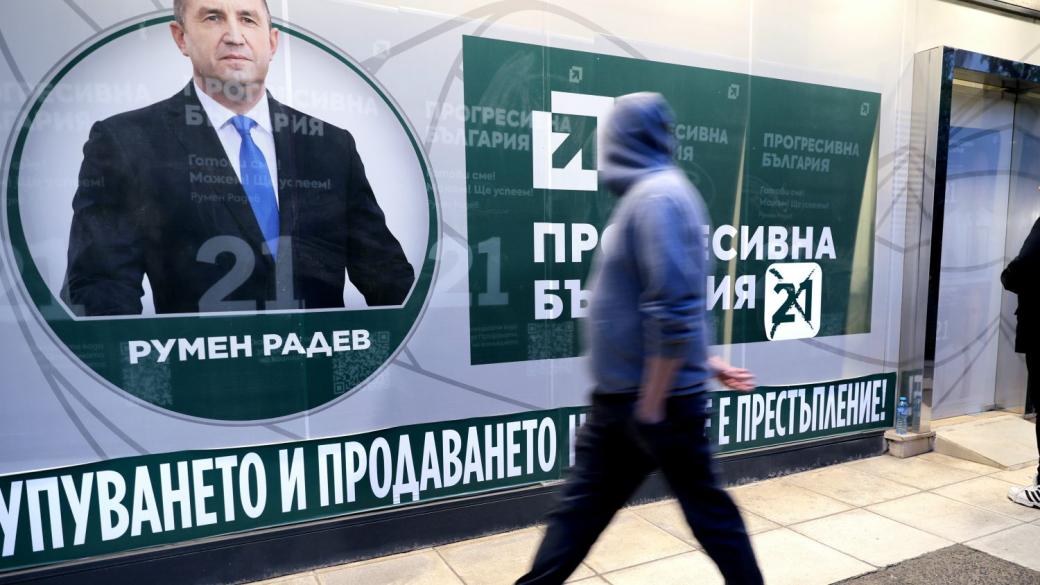
 Limiting public spending, reducing the budget deficit and maintaining low taxes in Bulgaria. These are some of the measures outlined in the program of “Progressive Bulgaria”, the winning party in the eighth early parliamentary elections.
The document makes it clear that among the party’s priorities is the pursuit of a “responsible fiscal policy.” To this end it calls for limiting the budget deficit (2025 ended with a 3.1% deficit), maintaining sustainable levels of public debt, a “gradual” return to the maximum (editor’s note: according to the Public Finance Act) threshold for budget expenditures of 40% of GDP, improving the collection of taxes and social security contributions and
maintaining low and flat taxes.”
The categorical stance on maintaining the tax system in its current form is surprising, given the continuously deteriorating state of Bulgaria’s public finances. In recent months a number of economists and financial experts, including even the former finance minister from 2014 – 2020, Vladislav Goranov, have warned that the deficit will only continue to balloon unless serious measures are taken to cut public spending.
At one point there was also talk of a possible change to the tax system (see the link below). Incidentally such a change was also being prepared for the pension system – social spending is one of the largest expenditure items in the budget – but the debate on this was postponed until 2026 and has not yet taken place.
Stricter control
The program does not specify exactly how our country will return to sound fiscal practices and rules. It merely hints that stricter control over public spending is forthcoming. This is intended to be achieved through several steps:
Introduction of ex-ante expenditure control (with targets, indicators and assessments) – i.e., when planning expenditures, their effectiveness and efficiency must first be demonstrated;
Strict application of cost-benefit analysis – i.e., each project will be evaluated to determine whether it is worthwhile and whether the benefits outweigh the costs;
New rules for public-private partnerships;
prioritization of investments with high social returns – i.e., priority will be given to those investments that provide the greatest benefit to society;
no more transfers from the capital program – the current practice of cutting the capital program or reallocating funds at the end of the year to meet the deficit rule of 3% of GDP will be restricted.
How low are taxes in Bulgaria, really?
A report by Economic.bg showed that at least as far as VAT is concerned our country is far from having the lowest rate in Europe.
The map makes it clear that a number of countries, including Germany, Malta, Luxembourg and others, have lower VAT rates than ours, and separately, most European countries also have a reduced rate for specific goods and services. For example in Germany a reduced VAT rate of 7% applies to essential goods, including food, medicine, books and public transportation.
As for income tax Bulgaria and Romania stand out with a 10% rate.
Among the member countries of the Organization for Economic Cooperation and Development (OECD) — which Bulgaria is expected to join next year — the average statutory maximum VAT rate is 43.4% in 2026. Denmark (60.5%), France (55.4%) and Austria (55%) have the highest maximum rates. Hungary (15%), Estonia (22%) and the Czech Republic (23%) have the lowest maximum rates.
European countries that are not part of the OECD tend to offer lower rates and tax personal income at a flat rate. Bulgaria and Romania (10%) have the lowest rate, followed by Moldova (12%), Ukraine (19.5%) and Georgia (20%),” according to the Tax Foundation.
Translated with DeepL.