What are Progressive Bulgaria's plans for the highway and railway networks?
The platform of the winners of the April 19 election aims to make the country a logistics leader in the Balkans
~ 4 min read
 Gloria Hristova
 Completion of the strategic Hemus and Struma highways, an urgent review of the rail transport contracts with Ivkoni Express, and large-scale development of port, waterway, and logistics infrastructure. These are just some of the priorities in the field of transport and infrastructure set out in the program of Progressive Bulgaria, the party that won yesterday’s early parliamentary elections.
Following the April 19 vote, the party led by Rumen Radev has positioned itself as a major political force whose plan for transport and regional connectivity calls for a comprehensive restart of state investments and enhanced oversight of project execution quality.
Highway Network and Key Breakthroughs
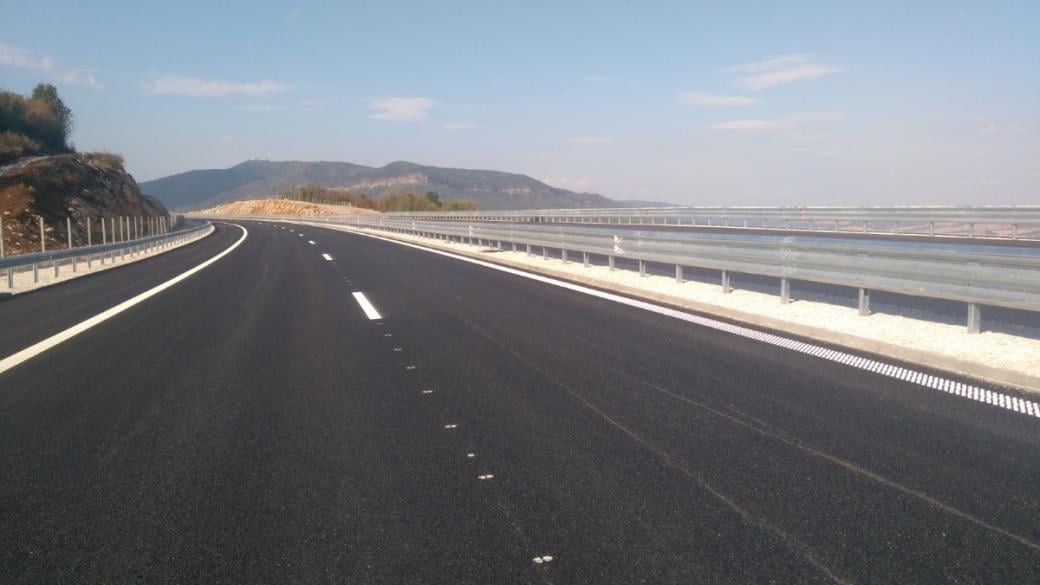
Progressive Bulgaria’s program calls for accelerating the construction of strategic road arteries, adding the “Black Sea” and “Rila” routes to the existing projects for the Hemus and Struma highways and the expressway between Vidin and Botevgrad.
Special attention is given to vertical connectivity and transit flows through the planned construction of the “Ruse – Makaza” highway and the “Lesovo – Maritsa” section, which are intended to transform the country into a genuine logistics gateway to neighboring countries.
Projects of the highest engineering complexity, such as the tunnels under Shipka and Petrohan, are directly linked to new transport connections across the Danube River and the modernization of border checkpoints to comprehensively ease traffic at the borders.
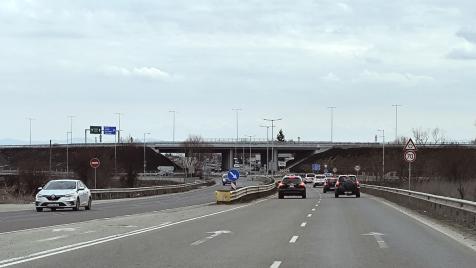
At the regional level, the focus is on completing the Southwest Arc of the Sofia Ring Road and the critically important expansion of the Trakia Highway in the heavily trafficked section from the capital to the junction with the Maritsa Highway.
Alongside new construction, a large-scale rehabilitation of the secondary road network is planned, with a priority on Northern Bulgaria, accompanied by the urgent reinforcement of high-risk bridge structures throughout the country.
Road safety has been identified as a top priority through a strategy to eliminate “black spots” and introduce mandatory safety audits for every new or rehabilitated project.
The comprehensive modernization is complemented by the full digitization of the investment process – from urban planning to building permits – which aims to eliminate administrative corruption and ensure predictability and quality in construction. Public-private partnerships are planned.
Rail Transport
In the “Rail Transport” sector, the program outlines a large-scale transformation aimed at making rail a viable alternative to road transport by completing the key European corridors of the TEN-T network.
The focus is on modernizing the Western axis, covering the routes from Sofia through Pernik and Radomir to Kulata, as well as the critical route from Stolnik through Mezdra to Vidin, along with a comprehensive rehabilitation of the Sofia railway junction.
The Central and Eastern axes are also identified as priorities, with a focus on upgrading the junctions in Ruse, Gorna Oryahovitsa, Plovdiv, and Varna, as well as the connecting lines between them, including the Ruse – Dimitrovgrad and Karnobat – Sindel routes.
The strategy is complemented by the development of the Southern Horizontal Axis, which is intended to provide a modern connection from the Serbian border at Dragoman, through Sofia and Plovdiv, to Burgas, as well as the long-awaited construction of the route to the Republic of North Macedonia via Gyueshevo.
This infrastructure initiative is directly linked to the ambition to increase design speeds to 160–200 km/h on the main lines and fully electrify strategic sections of the national network.
Particular attention is being paid to international connectivity through the accelerated development of Corridor No. 8, which will position Bulgaria as an indispensable factor in cross-border trade.
The program states that an analysis will be conducted of the contracts with “Ivkoni Express” for public transport services in the Southern and Northern regions. The aim of this review is to protect the public interest and minimize any potential negative impact on BDZ’s budget.
In parallel, a large-scale renewal of the rolling stock is planned, featuring new locomotives and energy-efficient, air-conditioned passenger cars, as well as the digitization of passenger services.
The plan concludes with the ambition to build a strong freight sector through the construction of new intermodal terminals and better connectivity between industrial zones and the railway network, which will definitively cement the railway’s role as the backbone of the Bulgarian economy.
Water and Sewerage Network and Regional Development
A reform is planned for the water and sewerage sector, where investments will be prioritized for regions suffering from chronic water shortages. The plan calls for reducing water losses through “smart” technological solutions and the introduction of the “price-for-quality” principle.
In the area of regional policy, the focus is on establishing ready-to-use industrial zones in less developed areas and strengthening the financial decentralization of municipalities.
Special attention is also given to the revitalization of Vitosha Nature Park through the modernization of the lift infrastructure and the creation of ecological green corridors integrated with urban mobility.
Maritime and River Transport
The program includes the modernization of the ports in Varna and Burgas, including the construction of specialized terminals for containers and liquefied natural gas. The full digitization of port services and the deepening of port basins are key to reducing ship turnaround times and attracting new trade flows along the Trans-Caspian Corridor.
Regarding the Danube River, measures are planned to ensure year-round navigability and the modernization of the river ports in Ruse, Vidin, and Lom. By building new intermodal connections between water, rail, and road transport, the program aims to make Bulgaria a key element in trade between Europe, Asia, and Africa.
Translated with DeepL.