The €1.4 billion returned by BDB could be used for pensions and salaries
The future regular government will decide whether the funds should also be allocated to investments under the Public-Private Partnership Program
© ECONOMIC.BG / BTA
~ 2 min read
 Simona Gotsova
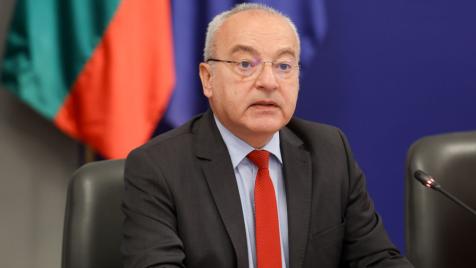
 The €1.4 billion returned to the state budget by the Bulgarian Development Bank (BDB) could be used for pensions, salaries, and investments. Acting Finance Minister Georgi Klissurski raised this possibility during a briefing on Wednesday.
According to him, the funds can be used for “absolutely all payments” in the country, including investments under the Recovery and Resilience Plan (RRP). Klissurski noted that Bulgaria will receive the fourth RRP payment by the end of June and the fifth by the end of the year. Until then, Bulgaria will have to make the investments using its own resources.
These 1.4 billion euros could be used to complete these investments, but also for everything else – anti-crisis measures, pensions, even salaries,” Klissurski summarized.
He also noted that in the eight months since the BDB received the total amount of approximately €2 billion from the previous government led by Prime Minister Rosen Zhelyazkov, only €600 million has been disbursed, and the institution has not specified how it plans to use the remaining funds to implement its strategy and develop the Bulgarian economy.
The remaining €1.4 billion remain unspent and “locked up” in the fiscal reserve – neither the BBR uses them, nor can the state access this resource,” the finance minister stated.
He added that the future regular government, which is expected to be formed in the coming weeks, will decide how to utilize the additional 1.4 billion euros.
In its statement, however, the BBR warns that such a capital change would actually take months and must be agreed upon by all of the bank’s creditors, including the European Investment Bank, the Council of Europe Development Bank, KfW, and other financial institutions.
During this period, the funds will effectively not be used by either the BDB or the government," the institution states.
It adds that reducing the capital "without prior consultation with the BDB and in the absence of an approved regular budget for
2026" carries risks and will lead to the following negative consequences:
- Limited capacity for payments under the municipalities’ investment program;
- Limited capacity for anti-crisis measures in connection with disrupted supply chains, rising fuel prices, and difficulties in various sectors such as transportation and agriculture;
- Limited capacity for the BBR to fulfill its commitments under the national program for energy efficiency in residential buildings;
- Risk to the €246.6 million in funds under the Recovery and Resilience Plan, provided to the BBR for management directly by the European Commission. The funds are intended for the renovation of multi-family residential buildings, among other things.
Translated with DeepL.