“Nothing Different This Summer”: BDZ Has Only 113 Air-Conditioned Cars
To unlock the potential of Plovdiv Airport, the cabinet will rely on an independent assessment by the World Bank and a new law on public-private partnerships
© ECONOMIC.BG / Krasimir Svrakov
~ 4 min read
 Gloria Hristova
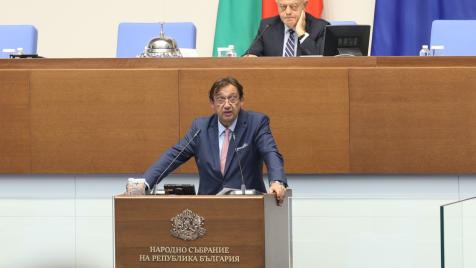
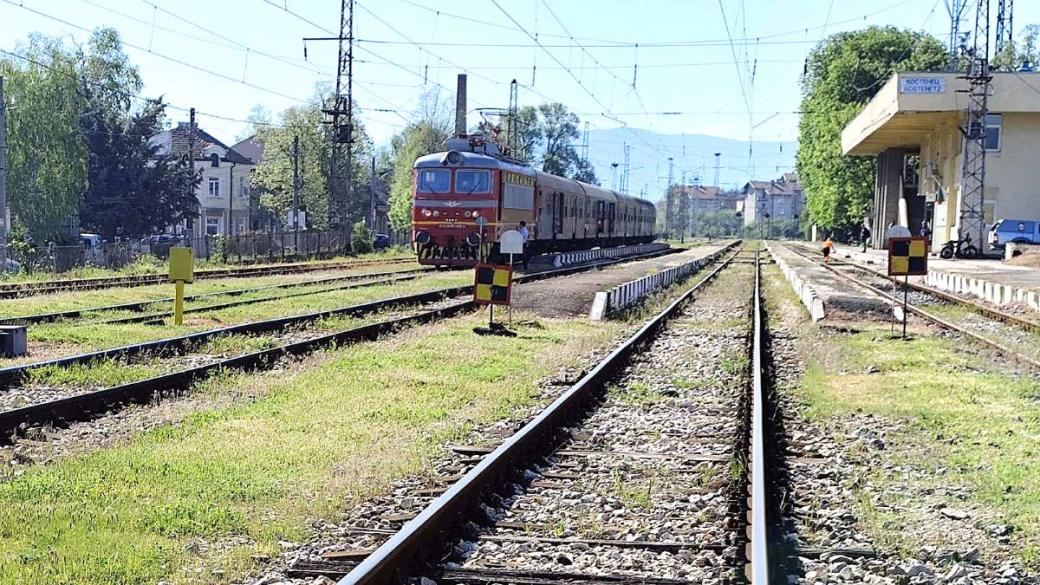
 The railways are in a state of deep systemic collapse, and this summer passengers will have to put up with widespread air-conditioning failures on trains, as there is no quick fix to the problem. Speaking to members of the Transport Committee, Minister Georgi Peev explained that the reason for this is a lack of sufficient rolling stock.
According to him, at least 285 railcars are needed for normal schedule operations, but the state currently has only 266, of which just 113 are air-conditioned. More than half of the rolling stock dates back to the 1970s and 1980s, and the carriages recently delivered from Germany stop cooling automatically as soon as the outside temperature exceeds 35 degrees.
This summer, nothing different will happen from what you’re seeing right now. The air conditioners will continue to fail. I could fire the head of the Gorna Oryahovitsa or Plovdiv division, but that won’t solve the problem. “We need to get to work on a plan, figure out how to finance new rolling stock, and motivate the employees, who are currently receiving humiliatingly low wages,” Peev explained.
He added that new rolling stock will enter service no earlier than September due to lengthy testing and certification procedures.
We recall that in mid-June, the minister released data on the financial condition of the sector, according to which “BDZ-Passenger Transport” has nearly 30 million euros in liabilities, while “Freight Transport” is effectively bankrupt with over 60 million euros in liabilities.
Audit of the National Railway Infrastructure Company (NRIC)
Regarding the railway infrastructure, Minister Peev announced that a new, comprehensive structural audit of the National Railway Infrastructure Company (NRIC) will be completed by the end of July. In addition, consideration is being given to engaging a reputable international firm to conduct an external assessment of the sector. At the same time, the World Bank is currently conducting an analysis focused on the company’s human resources.
The Minister of Transport also shared the results of his visit to a conference in Gdańsk, where he spoke with his Polish counterpart and with major infrastructure firms.
Their companies stated that if the environment is favorable, they would return to our market,” Peev noted.
We recall that the minister held a meeting with the Polish group ZUE, whose experience in modernizing railway networks and implementing European safety systems is seen as an opportunity to eliminate infrastructure “bottlenecks” in Bulgaria.
Regarding the draft budget, the minister explained that payments through the end of the year had been refined, with the ministry’s main goal being to prioritize projects related to safety and those funded by European funds.
We have tried to prioritize projects that are, first and foremost, related to safety, and secondly, to focus on those with European funding so as not to lose it,” he explained.
Plovdiv Airport
Members of Parliament raised the issue of the “unsatisfactory condition” of Plovdiv Airport compared to the regional airports in Varna and Burgas. Peev agreed that the airport has enormous but untapped potential, which should not be limited solely to attracting passenger traffic but should be developed into a major cargo hub for Southern Bulgaria.
The minister revealed that the current situation includes concession analyses commissioned from a local law firm. However, the ministry’s new team considers this approach insufficient.
We will take a more comprehensive look at the situation. Based on what the local law firm has prepared, we intend to bring in a major international player such as the World Bank to evaluate these analyses and provide us with an independent, business-oriented perspective,” Peev said.
He emphasized that the government has already initiated the drafting of an entirely new Public-Private Partnership (PPP) Law, which will build upon and streamline the cumbersome Concessions Law. Given the country’s severe budget constraints, a PPP in collaboration with the World Bank or a powerful foreign fund is seen as a viable formula for the airport’s actual modernization.
Urgent Measures Under the “Macron Law”
Minister Peev called on lawmakers to provide immediate assistance with a long-delayed bill, due to which the European Commission has imposed severe penalty proceedings against Bulgaria. This concerns the transposition of the Directive on the Posting of Drivers (the so-called “Macron Law”).
Currently, the daily fine exceeds 12,000 euros, and the total accumulated so far is over 400,000 euros. We must accelerate the process of adopting this legislation,” the minister warned.
He assured that the amendments to the Road Transport Act are being prepared in consultation with carriers and will be submitted to the National Assembly as quickly as possible to stop the financial drain.