The government insists that the Ruse-Gorna Oryahovitsa railway line should become a European priority
Sofia’s proposed that the strategic route be included in the Connecting Europe Facility (2028 – 2034), focusing on military mobility and the connection with Romania
© ECONOMIC.BG / Krasimir Svrakov
~ 2 min read
 Gloria Hristova
 Bulgaria’s taken a diplomatic step in an attempt to modernize the Ruse – Gorna Oryahovitsa railway section with European funds. During the last meeting of the EU Transport Council in Brussels the government proposed that the strategic project be included as a priority in the new Regulation on the Connecting Europe Facility (CEF) for the period 2028 – 2034.
The proposal envisages the route being considered as a branch of the large-scale Bucharest – Giurgiu – Ruse – Varna axis, becoming a critical point on the international “Baltic Sea – Black Sea – Aegean Sea” corridor.
This is clear from the results of Bulgaria’s participation in the Council, which the cabinet’s approved.
Bulgaria’s main trump card in the negotiations is the route’s role for military mobility. In the context of the changed security environment in Europe the capacity to quickly move equipment and resources from the northern ports to NATO’s southern flank is becoming a priority for Brussels.
Including the section in the annex to the new Regulation would guarantee our country access to significant financial resources under the Cohesion Policy and EU transport instruments. Similar success has already been achieved with the Sofia-Skopje route, which is also part of the priority European projects.
The Ruse – Gorna Oryahovitsa line is part of railway line No. 4. It’s the natural continuation of the oldest railway line in Bulgaria (Ruse – Varna, 1866) but as an independent strategic direction it developed actively during the first half of the 20th century.
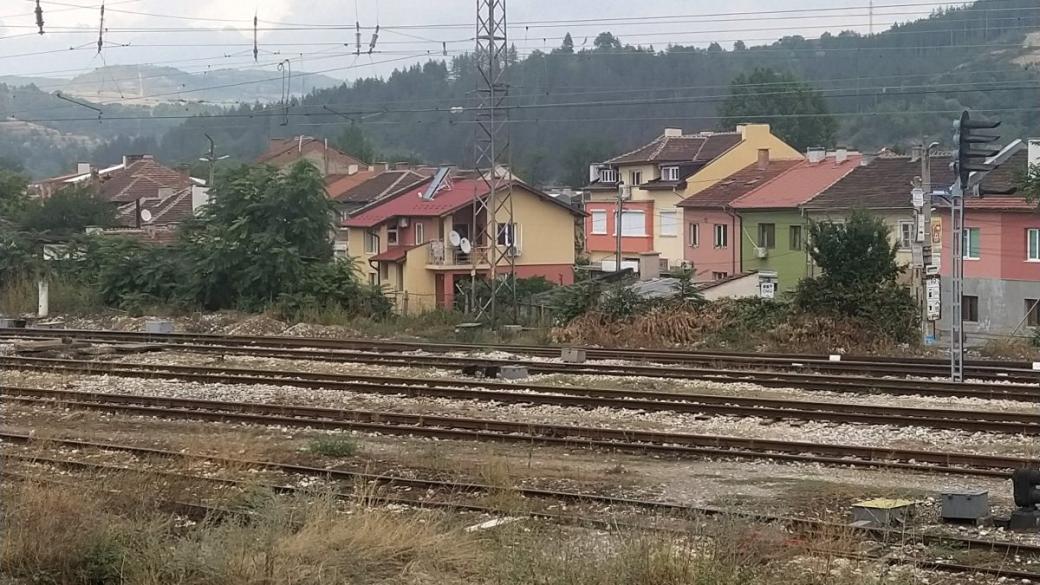
Currently the line’s in critical condition due to outdated infrastructure and complex terrain. Although documents allow speeds of up to 80 km/h in some places, the actual speed’s often much lower due to dozens of “permanent reductions” caused by worn rails and the risk of landslides in more hilly areas. The train journey between Ruse and Gorna Oryahovitsa takes nearly 2 h for a distance of only 77 km. By comparison with modern infrastructure (160 km/h) this distance would be covered in less than 35 - 40 min.
Translated with DeepL.
Co-Funded by the European Union. Views and opinions expressed are however those of the author(s) only and do not necessarily reflect those of the European Union. The European Union cannot be held responsible for them.