Oil supplies to the Burgas refinery are guaranteed only for March
Lukoil's special manager Rumen Spetsov explained in parliament that for April everything depends on the military actions in the Persian Gulf
~ 5 min read
 Georgi Zhelyazkov
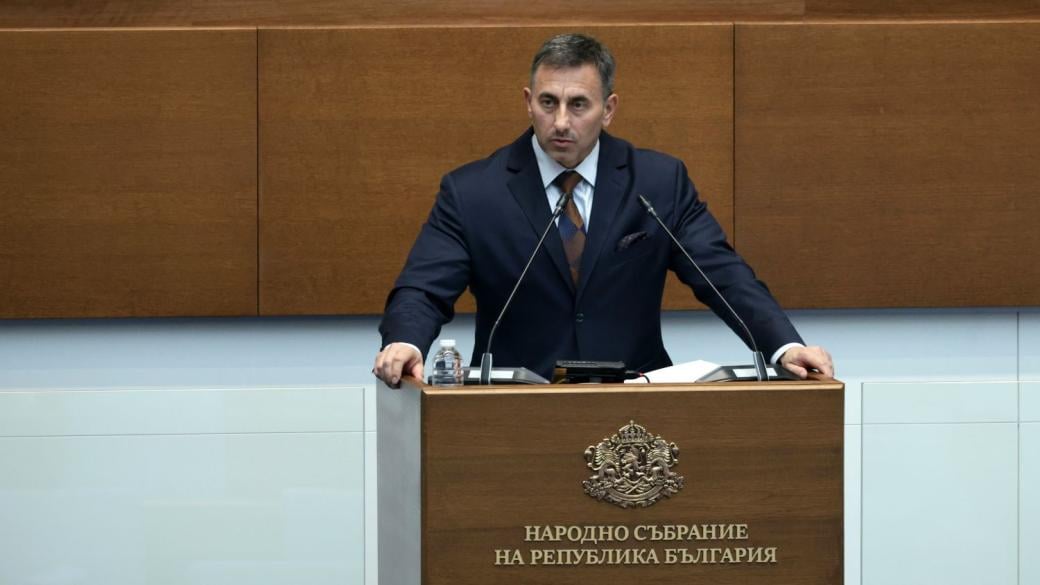
 Oil supplies for March will arrive. However, for April, "we will have to see how the military action develops and whether all contracts will be fulfilled." This was stated by Rumen Spetsov, special commercial manager of Lukoil's companies in Bulgaria, who was heard in the National Assembly on Tuesday.
There is currently a problem with the Turkish terminal in Ceyhan, which is not operating, and through which oil from Iraq is transported for use by the refinery.
We have assurances from Turkish operators that the problems will be quickly resolved and that the quantities transported through the pipeline will be restored," Spetsov said.
Overall, he explained that there is a delivery schedule for April, there are delays, but so far there is no information from traders that they will not fulfill the relevant deliveries.
There is some delay, but so far we have no refusal to fulfill them," the special manager specified.
However, the Ministry of Finance reassured that the state reserve has stocks for about 30 days, which are entirely in Bulgaria, and private commercial operators hold stocks for another 60 days, half of which are outside the country's borders.
Spetzov presented data showing that more than 800 vessels are blocked in the Persian Gulf – 300 tankers with crude oil, 300 with finished products, and 200 with liquefied natural gas.
There are many difficulties on a global scale – even if there is oil, there is no one to transport it. This is no less of a difficulty than the price of oil itself," said the special administrator.
How are oil and fuel prices determined?
He also explained how oil and fuel prices are set and why there has already been an increase at the pumps, even though the contracts for March were concluded at lower oil prices on the world markets.
The price of the raw material is determined primarily by the quotations of the agencies Platts, Argus, and Reuters, with Platts being the dominant one. However, in addition to these indices, other costs are also included in the pricing, such as transportation, insurance, freight, etc. Lukoil uses the Brent oil benchmark, taking its price and adding about $2.5 per barrel, which reflects the additional costs mentioned above, Spetsov explained.
Regarding the delivery times for raw materials, which also play a role in the pricing of raw materials and fuels at gas stations, Spetsov explained that it usually takes about a month from the date a tanker is loaded with oil to the release of this raw material from the refinery in the form of fuel.
He used this to explain the sometimes strange situation where prices at gas stations rise almost immediately after the market starts to go up, even though the refinery has reserves for several days. According to Spetsov, this is done "to secure the necessary funds."
According to the special manager, all four Lukoil companies in Bulgaria currently operate on a market basis and are competitors to each other. In other words, each of them – whether the refinery or the gas stations—tries to get the most out of the market.
Until now, they were under the umbrella of Litasc, a Swiss-registered company owned by Russia's Lukoil, and the companies worked in sync and entirely for the benefit of the parent company.
When asked whether the company could hedge the price risk and thus limit fuel price increases, Spetsov said that this was impossible at this point. The reason is that with such contracts, 100% of the price must be paid in advance. There are usually additional fees – about one dollar per barrel for hedging.
But if I have to pay everything in advance, I need to have 200, 300, or 400 million dollars at my disposal. Lukoil does not have that at the moment," said Spetsov. "We are working with what we have, there is no external financing from parent companies, which means that resources are very limited."
Problems with the type of oil
Due to sanctions against Russia related to the war in Ukraine, the refinery can no longer use the Urals grade, for which the production process is designed. Because of this, Spetsov explained, six different grades with different densities must be mixed to achieve the appropriate quality of raw material that the refinery can process and achieve high fuel quality.
But this raises several problems. One is logistical – the blending of different grades must be done strictly in a specific order.
The sequence is so important that if two tankers with light oil are at the port, but the refinery needs heavy oil, the ships will remain unloaded until we find heavy oil to balance production," explained Rumen Spetsov.
According to him, thanks to the petrochemical engineers and the commercial departments in the company, this system is currently being maintained.
But we are paying a high price for this. As a result, the system is wearing out faster than designed and the time between scheduled repairs is being drastically reduced," explained the company's special manager.
Problem with financial transactions
Spetzov also highlighted another problem he has to deal with while managing the companies. It turns out that despite the exemptions granted by the US and the UK, not all banks allow payments.
Correspondent banks are causing us problems and their compliance departments are scrutinising us. The parent company is also monitoring us," he said.
As for the intra-company credit line provided by Litasco to Lukoil, it turned out to be entirely beneficial to the Russian company, rather than to the Bulgarian companies.
Spezov described this scheme: Litasco granted loans to Lukoil, but only to buy oil from Litasco and, in addition, to pay it commissions on the transactions.
This elimination of Litasco alone saved the company $4 million. The credit line can be paid off if there is a repayment plan. But because of the sanctions, not a single dollar or euro can go to Russian accounts. So this credit line and the amounts under it will be part of the global asset agreements," said Rumen Spetsov.
He added that barter deals are also being made, but "only on a market basis and if the other party is interested. "This is a tool that, to a certain extent, facilitates quite a few deals."
Translated with DeepL.