Bulgarians have stopped buying certain products due to high prices
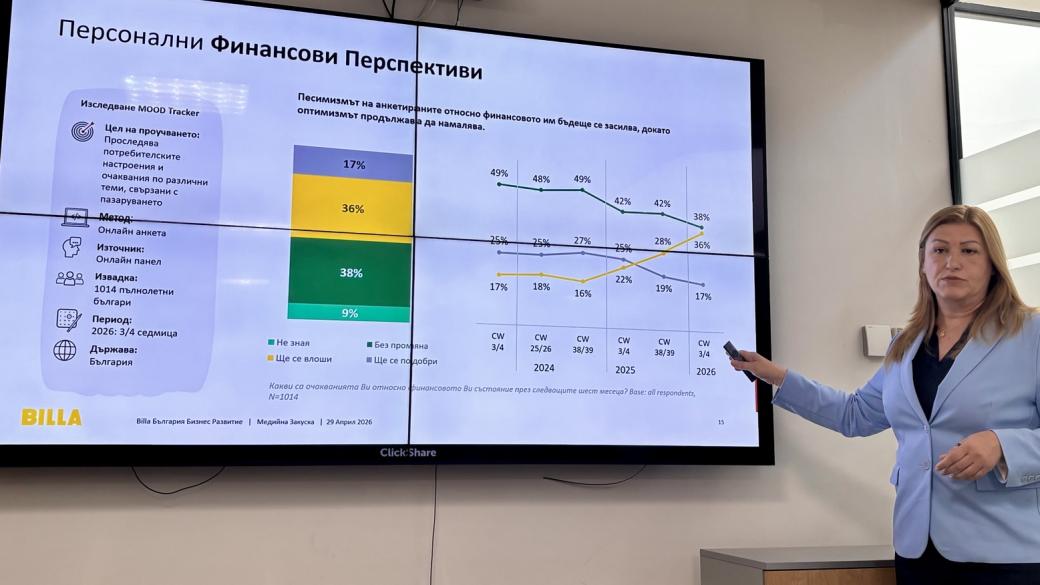
Households are pessimistic about the state of their personal finances
~ 3 min read
 Simona Gotsova
 Brand-name goods, premium brands, organic products, and locally produced items. These are just some of the purchases Bulgarians have stopped making in recent months due to rising prices. The data comes from a national online survey for Bulgaria commissioned by the REWE Group, the parent company of Billa Bulgaria.
It shows that:
- 55% of respondents have given up branded goods;
- 53% – non-essential foods (such as confectionery and snacks);
- 50% have stopped buying premium brands;
- 42% have stopped buying products with eco-friendly packaging;
- 40% have stopped buying organic products;
- 33% have stopped buying locally produced or sourced goods, and nearly one in three (29%) no longer buys meat products.
We also see this in the trends across product categories. There is a shift in consumption,” said Albena Georgieva, CEO of Billa Bulgaria, in a comment to journalists.
She clarified that the survey covers not only the chain’s stores but consumer attitudes in Bulgaria in general. According to her, Bulgarians have negative expectations regarding their financial situation – 36% expect it to worsen over the next 6 months, while only 17% foresee an improvement. Living expenses are a primary personal concern for 54% of those surveyed.
Unfortunately, pessimism is increasing in inverse proportion – the number of those expecting an improvement is steadily declining and returning to 2024 levels, when inflation was still present,” added Georgieva.
In Search of Deals and Discounts
The survey, conducted during the first weeks of Bulgaria’s membership in the eurozone, also tracks Bulgarians’ reaction to rising prices. Nearly 70% say they are looking for more deals, while 36% say they are already shopping more often at discount stores. 40% say they are making more of an effort to take advantage of loyalty programs. One-fifth choose to cut back on spending on premium products, while 30% buy items past their expiration date.
The top three deciding factors when choosing a place to shop are product quality, proximity, and variety. Among the leading factors are also a good selection of fruits and vegetables, staple foods, and a wide range of products. As for the impact of sustainability on our eating habits, 41% of Bulgarians say they prefer regional products that haven’t traveled long distances, as well as those that are traded fairly. Meanwhile, 31% indicate that they avoid unnecessary waste when shopping.
During a business breakfast, the food chain presented its investment plans for Bulgaria. Billa aims to have 200 stores in the country by 2028 – currently, there are 173 stores in 55 cities, with 10 new stores expected to open this year alone in small towns.
However, the main challenge remains finding staff due to the aging population and a shortage of skilled labor. As a result, the company has to hire people from smaller, neighboring towns for some of its locations, as well as rely on workers from third countries, i.e., outside the European Union.
Otherwise, for 2025, Billa reported a turnover of €820 million, which is 6.3% more than in 2024. This year, the chain plans to invest €43 million in Bulgaria – part of this money will go toward opening new stores, while another 15 are set to be renovated and modernized.
Translated with DeepL.