
The history of matcha: From medicine to today's most popular drink
Green tea is more than just a trend or fad, it is a cultural bridge
 Simona Gotsova
 A bright green drink that we see everywhere today—from cozy cafes to the profiles of wellness influencers—actually carries with it centuries of history, philosophy, and ritual. Matcha is not just another trend or health craze, but a cultural bridge between the Japanese tea ceremony and today's fast-paced world. To understand why this fine green powder is so special, we need to go back in time – to the monks, samurai, and silence of the tea ceremony.
Where did matcha come from?
The history of matcha begins in China, where tea leaves were often steamed and then shaped into small bricks. To make tea, part of the "brick" was broken off, ground into a fine powder, and mixed with hot water. This method basically laid the foundations for what would become matcha.
In the 12th century, the Zen Buddhist monk Eisai (editor's note: we talked about him when I told you about the samurai city of Kamakura) brought green tea seeds to Japan and planted them in the Sefuri Mountains. He gave some of them to another monk, who sowed them near the Uji area of Japan. To this day, this area is known for its production of high-quality matcha, thanks to the climate, soil, and expertise of local farmers.
While drinking green tea, Eisai noticed that his mind became clearer and his meditation improved. These observations were quickly accepted by the samurai class, who also began drinking matcha as a method of calming themselves before battle.
This led to the emergence of the tea ceremony as an important ritual in Japanese culture. In fact, another monk named Eichi was the first to serve tea to Emperor Saga, while Eisai introduced the method of preparing tea and mixing it with hot water. He presented tea not simply as a medicine or sweet drink, but as a method of promoting meditation, discipline, and health, especially among Zen Buddhist monks.
About the tea ceremony ritual
In this sense, the tea ceremony is much more than just drinking tea.
It aims to completely disconnect from secular life, even for a few minutes, and enter the world of meditation. The tea ceremony is usually performed in tea houses, with tatami (rice straw mats), a view of a beautiful Japanese garden, and other strictly defined elements.
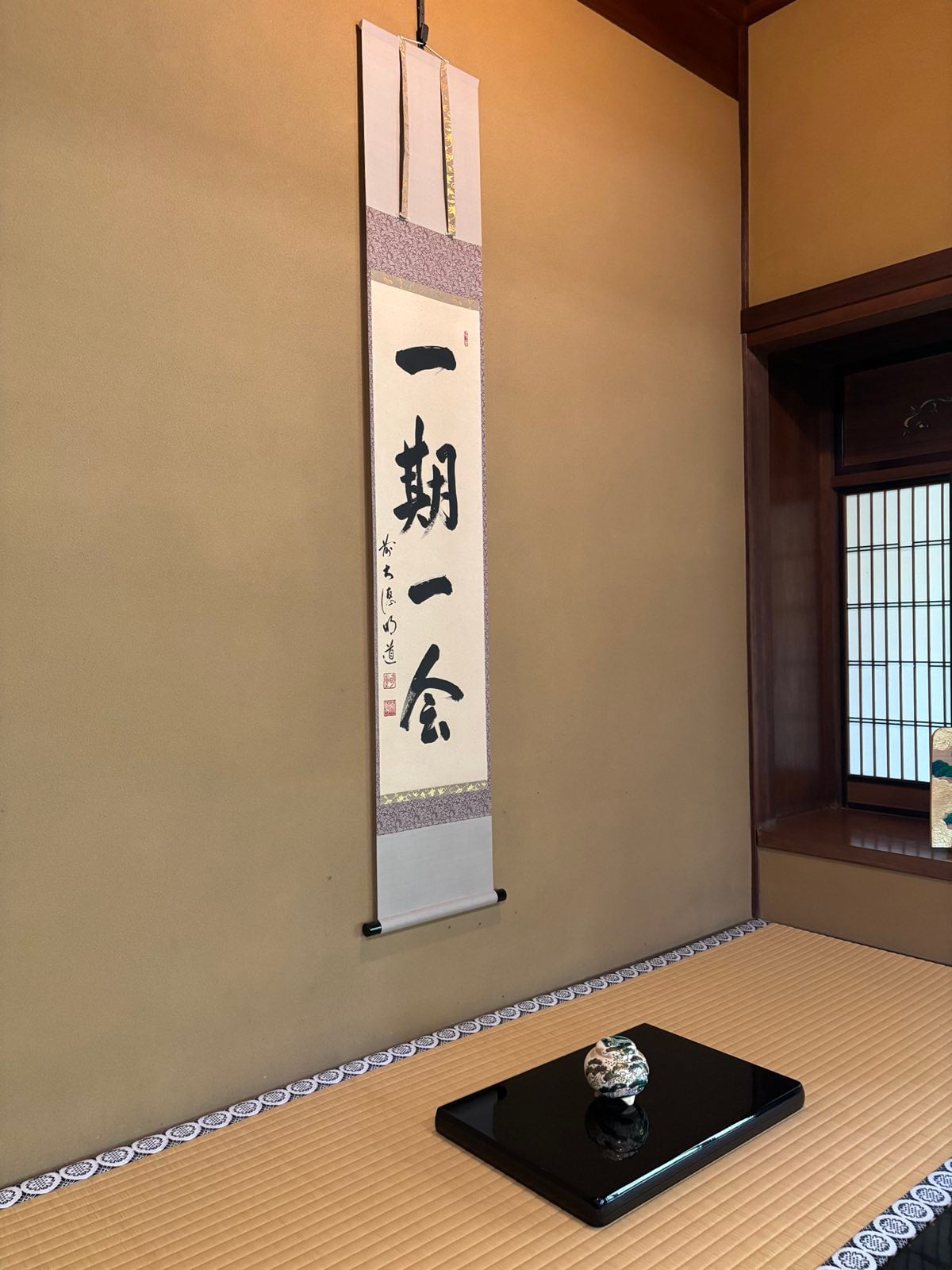
One of the essential elements is a scroll with calligraphy or a painting related to the theme of the gathering. This scroll bears the inscription ichigo ichie, which is the Japanese concept that every encounter, every moment, is unique and will never be repeated.
The tea ceremony is not a place for loud conversations and gossip about the day. It is a time when one breaks away and touches the transitory to appreciate its fleeting beauty (or in Japanese, this is the idea behind mono no aware) - the taste of tea, the people we are with, the weather outside, the view of the garden, the season.
It is no coincidence that the main principles of the tea ceremony are:
- Harmony
- Respect
- Purity
- Calmness
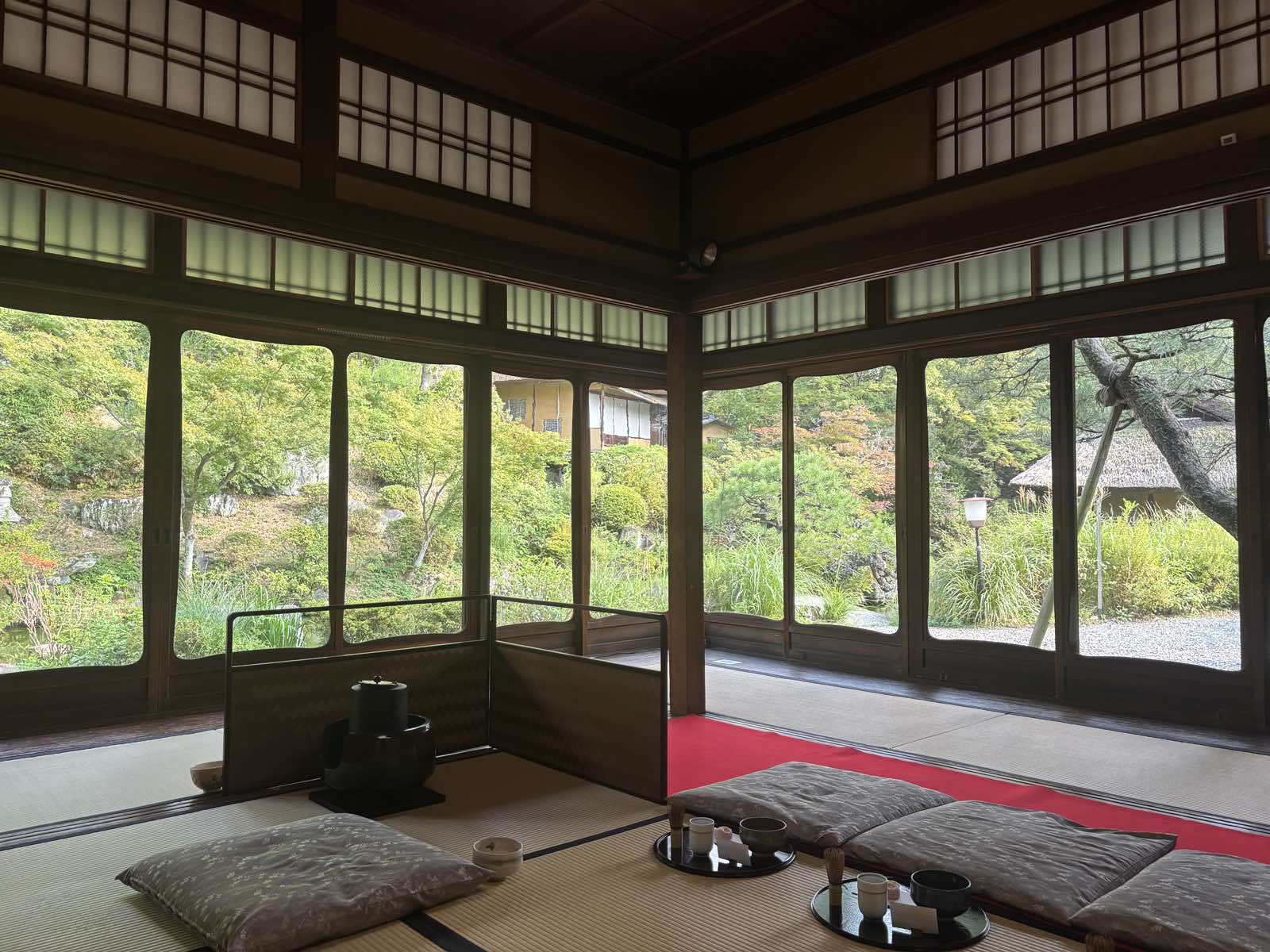
View of the Japanese garden during a tea ceremony.
How to prepare matcha and other useful tips
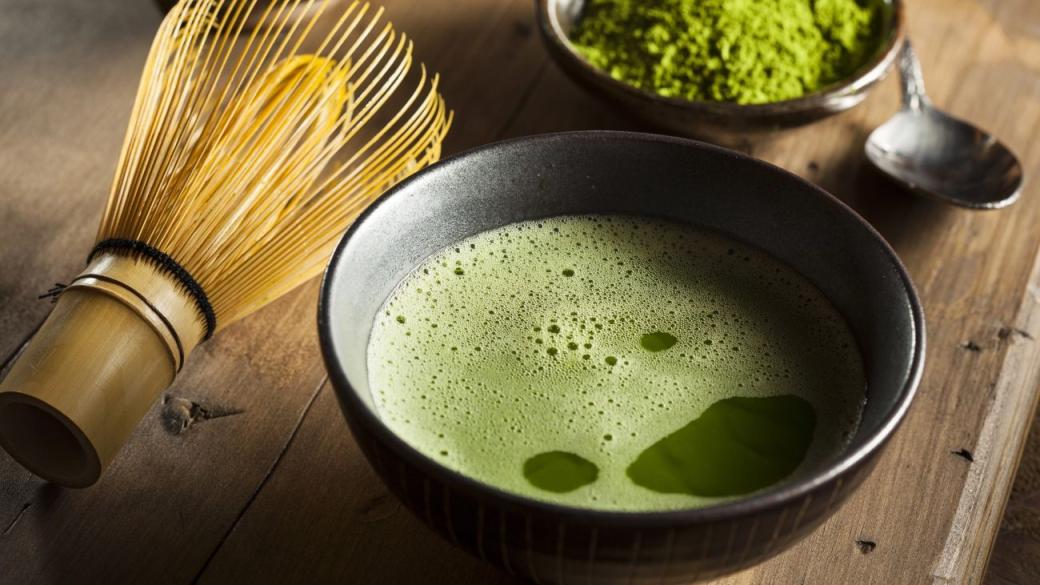
Preparing matcha at home is very easy. Pour a small amount of green powder into a cup (follow your own preferences or instructions, but never use too much, as you would with cocoa, for example) and then add cold or hot water. The modern version is matcha latte, where milk (which can be nut milk) is used instead of water.
If you think the taste may be bitter, you can add sugar or another sweetener.
During my trip to Japan, I had the opportunity to participate in a tea ceremony, where we were advised not to drink the green beverage after 3 p.m. The reason is that matcha contains caffeine, and if you drink it late in the day, you will find it more difficult to fall asleep at night (editor's note: I tested this theory by drinking matcha at 6 p.m. and then finding it difficult to fall asleep).
It is best to drink matcha in the morning after breakfast as a way to recharge your batteries for the day. Matcha also aids digestion and reduces bloating.
.
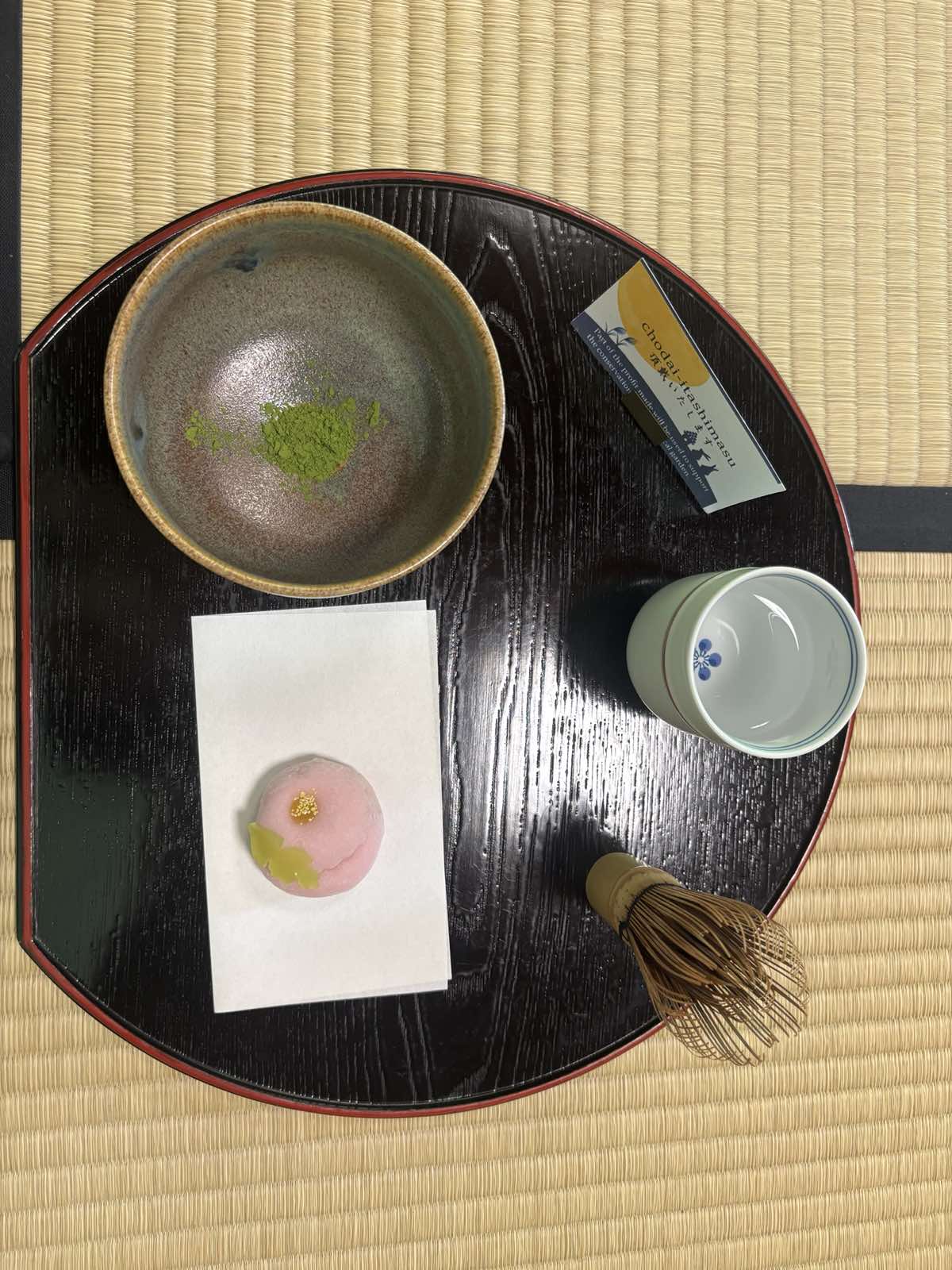
A tray with Japanese green tea, which is stirred with a bamboo whisk on the right. The tea is accompanied by wagashi, a traditional Japanese sweet with colors and shapes according to the season, in this case pink like sakura.