The rapid rise in wages is deterring both foreign and Bulgarian investors
The steep rise in labor costs in Bulgaria is encouraging tax evasion and the payment of less tax than is due
~ 3 min read
 Simona Gotsova
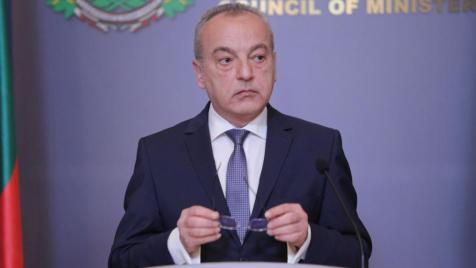
 Labor costs for private enterprises in Bulgaria have increased by 407% in the last 10 years alone. This statistic, which does not include state, government, or municipal institutions, was presented by Assoc. Prof. Krassen Stanchev, an economist and lecturer at Sofia University “St. Kliment Ohridski,” during a presentation of his study.
He explained that this growth affects both foreign investment – which he defined as “foreign savings flowing into Bulgaria” – and investment by local investors.
This (growth) is one, albeit not the most important, of the explanations for the decline in foreign investment – over the past 10 years, there has been a 407% increase in labor costs in Bulgaria,” Stanchev commented.
He also cited data from the European statistical office Eurostat, which placed the country at the top in terms of growth in these costs among European Union member states at the end of last year.
A review by Economic.bg of the statistics for the third quarter of 2025 (Editor’s note: Q4 data is set to be published later this month) indicates that hourly wage costs rose the most year-over-year in Bulgaria (+12.4%), Lithuania (+9.7%), Croatia (+9.1%), and Hungary (+8.8%).
By comparison, countries such as France (+1.3%), Spain (+2%), and Austria (+2.1%) rank at the bottom, while Malta even reported a 1.4% decrease.
When you have increased labor costs, you have grounds for an employer-employee agreement in which not all taxes are accounted for; otherwise, you become uncompetitive,” Stanchev added at the time.
Investors have left
As Economic.bg reported, in recent years several key foreign investors have announced plans to relocate or close their factories in Bulgaria. The main argument for this was that wages in the country are now too high for them to make a profit.
In 2024, the German automotive cable systems company Leoni closed its plant in Pleven, and the Japanese company “SE Bordnetz Bulgaria” EOOD did the same with its automotive cable harness plant in Mezdra.
This past February, the German automotive cable manufacturer MD Elektronik also joined the list after closing the doors of its plant in Vratsa.
This year, it became clear that Elhim Iskra AD, one of Bulgaria’s leading manufacturers of automotive batteries with over 60 years of history, would cease operations due to financial difficulties. Subsequently, a few days ago, the manufacturer clarified that no decision had been made regarding a permanent closure, but rather a temporary suspension of operations aimed at a comprehensive restructuring of the business.
What the data shows
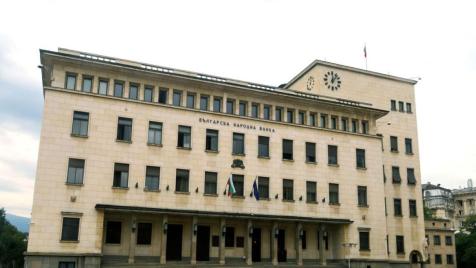
Economic.bg reviewed the official statistics of the Bulgarian National Bank (BNB) on the flow of foreign investment in Bulgaria over the past 10 years. Their annual trends reflect: If positive, this means that more investment is entering the country than is leaving.
- how much new investment;
- has entered the country during the year;
- whether there is a capital outflow;
- what the short-term trend is.
If it is positive, this means that more investment is entering the country than is leaving.
In 2025, the indicator surprisingly recorded double-digit growth, but according to economists, investment in the country is currently highly dependent on the market (Bulgarian and European) and on how well it functions. Competition poses a separate challenge.
It is important to note here that the data for 2024 – 2025 is subject to revision based on the NSI’s annual data and additional reports submitted by companies with foreign participation.
Translated with DeepL.