Simona Gotsova
Public Finances
“A Difficult Question”: The 2026 Budget Will Be Crucial for Bulgaria’s Fiscal Future
The country’s deteriorating demographic situation is leading to an inevitable rise in public debt and taxes
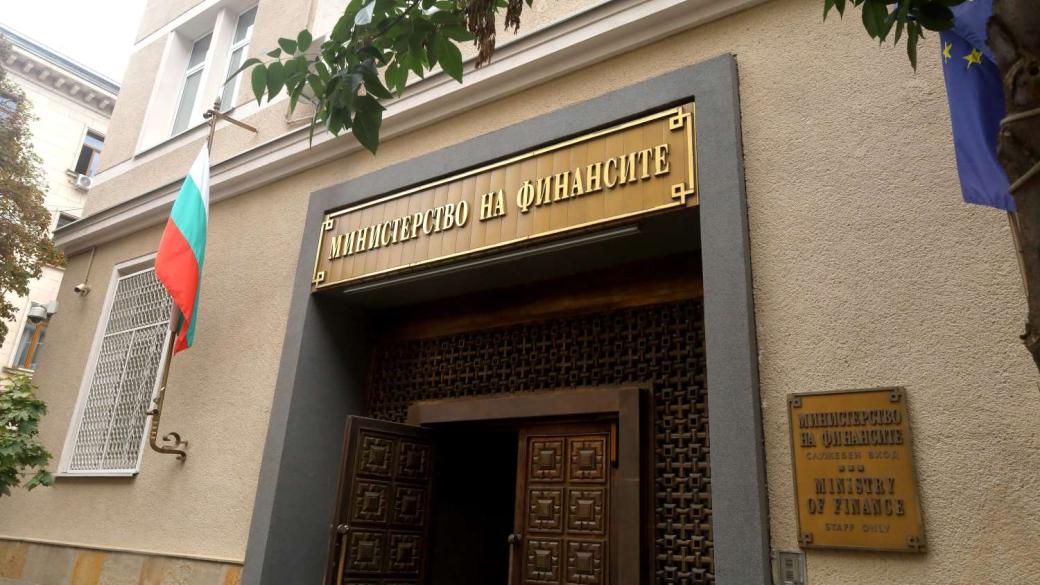
© ECONOMIC.BG / BTA
~ 4 min read

Bulgaria is not automatically at risk of an excessive deficit procedure, but faces a real risk of entering a corrective procedure if it fails to adhere to the set expenditure trajectory and deficit limits in the current and next budgets.
Last week, Eurostat and the National Statistical Institute (NSI) confirmed that the country did not meet the Maastricht criterion for a deficit of up to 3% of GDP in 2025 – at that time, the “hole” in the state budget was 3.5% of GDP, which raised the question: Is the country at risk of an excessive deficit procedure, and are we facing the so-called “Romanian scenario” of tax hikes?
In a commentary for Economic.bg, Assoc. Prof. Dr. Shteryo Nozharov, an economist and lecturer at the University of National and World Economy (UNWE), explained that the key problem is not just the current deficit, but the broader picture of public finances – including rising debt and deteriorating long-term trends, such as demographics and weak productivity growth.
There is no simple answer to this question. We need to go into detail – first and foremost, the deficit is an indicator of the current position, not an indicator of sustainability,” Nozharov noted.
He added that the European Commission (EC) monitors the deficit, but the real indicator of sustainability is the debt-to-GDP ratio, which in Bulgaria stands at 29.9% of GDP, or half of the limit allowed by the European Union.
There is no risk of a macroeconomic imbalance procedure (editor’s note: – i.e., an excessive deficit) because the debt is half the limit, but there is a risk of a corrective procedure if this year’s budget does not adhere to the expenditure trajectory set out in the medium-term fiscal structural plan,” Nozharov explained.
Essentially, the “correction procedure” is a stage of the corrective arm of the Stability and Growth Pact, which is triggered when a country begins to deviate from its agreed fiscal trajectory (for expenditure, deficit, and debt), even before a classic excessive deficit exists. Under this regime, the European Commission and the Council of the EU require corrective measures, impose a stricter framework for budgetary policy, and monitor the implementation of these measures more frequently and closely.
If the country fails to return to the plan’s parameters, the next step is a full-scale excessive deficit procedure, which also provides for financial sanctions every six months.
And although Bulgaria, at least for now, is doing well in terms of its debt-to-GDP ratio, Eurostat data for 2025 showed alarming results – last year, the country fell out of the top three with the lowest debt-to-GDP ratio. It is now fourth.
Nozharov attributed the decline to worsening demographic trends.
With a negative demographic trajectory, the deficit leads to increased debt, and increased debt inevitably means future tax hikes,” he stated emphatically.
Nozharov is not alone in his views. In recent months, an increasing number of economists and financiers, including former finance ministers, have begun warning about the state of public finances and the inevitable rise in taxes – even – if measures are not taken now to cut spending, eliminating the established automatic formulas (such as those for the minimum wage), and generally consolidating the state budget.
Which taxes could be increased
Nozharov explained that with limited opportunities for significant spending cuts, the more likely scenario is seeking additional revenue through indirect taxes, but without changes to the VAT. In his view, raising VAT would accelerate inflation and create additional strain, and the experience with temporary differentiated rates shows that once introduced, they are difficult to eliminate.
Instead, a more realistic option is to increase excise taxes, particularly on fuels, harmful goods, and luxury items, where Bulgaria is still close to the minimum European levels. In addition, he points to environmental taxes – including those related to carbon emissions, pollution, and waste – as a tool that could generate revenue with relatively less public resistance.
At the same time, pressure is also expected on the social security system, though not through a direct increase in rates, but by raising the minimum and maximum social security income thresholds.
There will be pressure to increase the minimum and maximum social security income – these are raised every year, which is a practical increase in the social security burden, but this year the step will be larger,” added Nozharov.
He added that even if the rate or the base remains unchanged, the amount paid increases. “This appears less painful and will not lead to such upheavals,” the economist concluded.
Translated with DeepL.