EU funds are key to addressing crises in the water and sanitation sector
“It is time for action, not just planning,” said Deputy Minister Pavleta Pelovska, highlighting the Danube Strategy as a key instrument for cohesion
~ 2 min read
 Gloria Hristova
 Bulgaria will use its rotating presidency of the EU Strategy for the Danube Region in 2026 to focus on one of the most pressing issues for citizens – access to quality water services and the state of water and sanitation infrastructure. This was made clear in a statement by Deputy Regional Minister Pavleta Pelovska.
Overcoming the significant disparities in the development of the water sector is a key factor in achieving real socio-economic convergence in Southeast Europe.
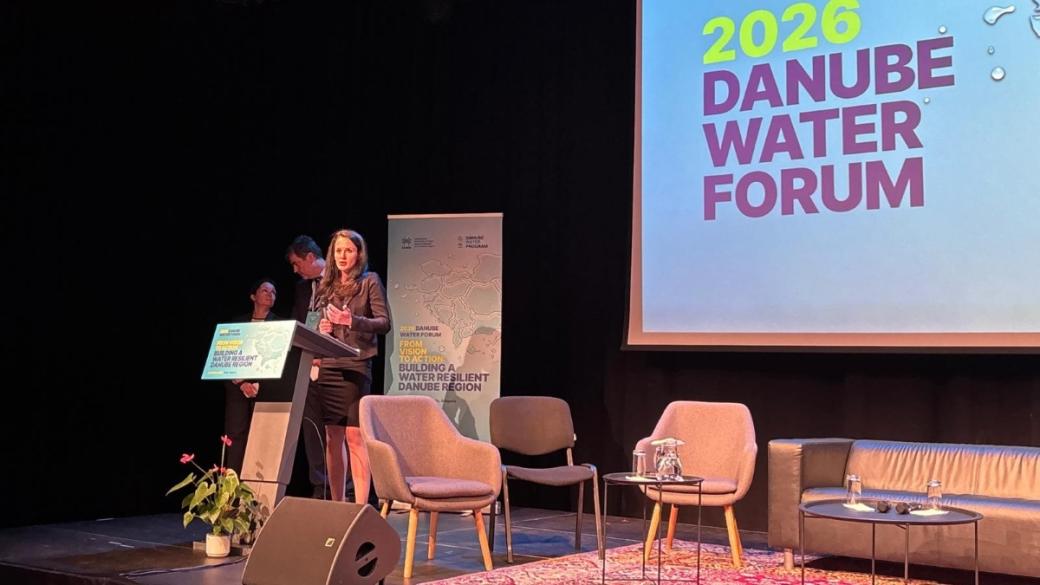
Pelovska participated in the international “Danube Water Forum 2026,” which is being held in the capital in partnership with the Bulgarian Water Association and the International Association of Water Supply Companies in the Danube River Basin.
According to Pelovska, solving the problem of water scarcity and deteriorating networks requires immediate action.
With regard to the water sector in Bulgaria, the most important priority is to take action; we cannot afford to simply plan, but must act,” Pelovska stated, as quoted by the relevant ministry.
She clearly outlined the direction in which the sector must develop to meet European standards.
Our goals are clear: to renovate and modernize the water and sanitation infrastructure and ensure uninterrupted access to clean drinking water for every citizen.”
The Danube Strategy as a tool for convergence
National budgets alone are insufficient to achieve these large-scale infrastructure goals. In parallel, funds must be mobilized from the European Structural Funds for the comprehensive technological modernization of the water and sanitation networks.
In parallel with the national budget, we must also mobilize funds from the European Structural Funds for the comprehensive technological modernization of the water and sanitation network,” Pelovska stated.
She emphasized that the EU Strategy for the Danube Region – of which Bulgaria holds the presidency this year, with the Ministry of Regional Development and Public Works (MRDPW) responsible for its coordination – serves as a European instrument for uniting efforts to develop modern and sustainable water and sanitation infrastructure in the Danube region.
Pelovska noted that significant disparities in the development of water infrastructure still exist in many parts of the Danube region. For this reason, improving access to safe drinking water and the sustainable management of water resources have been set as prerequisites for improving public health and stimulating the economic development of local communities.
This approach is fully in line with the motto of the Bulgarian Presidency of the Strategy this year – “Connected Regions, Greater Cohesion: A Stronger Danube for All.” Through it, our country insists that macro-regional strategies serve as a direct lever for cohesion policy, ensuring that European solidarity and investments reach municipalities directly to address fundamental issues such as access to water.
Translated with DeepL.
Co-Funded by the European Union. Views and opinions expressed are however those of the author(s) only and do not necessarily reflect those of the European Union. The European Union cannot be held responsible for them.