How can Kyustendil retain its active workforce?
A survey of the indirectly employed reveals that 72% of the workforce is of working age, but 83% need their skills certified for the renewable energy sector

© ECONOMIC.BG / BTA
~ 4 min read
 Gloria Hristova
 Kyustendil has technical personnel in their prime who are loyal to their region. A just transition here will only be successful if it recognizes their experience through validation and provides local businesses with resources for transformation. A mapping of the skills and attitudes of 1,106 individuals indirectly affected by the energy transition in the region reveals a picture of a region that has technically skilled people but is seriously threatened by an economic “tsunami.”
The study focuses on people indirectly linked to the coal mining industry – employees of local enterprises and businesses that provide services, logistics, or support to the energy sector and whose livelihoods depend on its stability.
People want to stay in the region
One of the most persistent myths in the modern labor market is that workers are mobile and ready to follow investment wherever it appears. The study in Kyustendil categorically debunks this illusion.
An impressive 85.3% of respondents state a firm desire to remain at the same company, even if its line of business were to change radically. This figure is not merely a statistic – it is an expression of deep social attachment. Even more telling is the fact that 70% of people refuse to commute more than 50 km for work.
We are not talking here about people nearing retirement; on the contrary, 72.2% of those surveyed have more than 11 years until retirement. This is a working-age generation that wants to build its future in the region
Their Interests
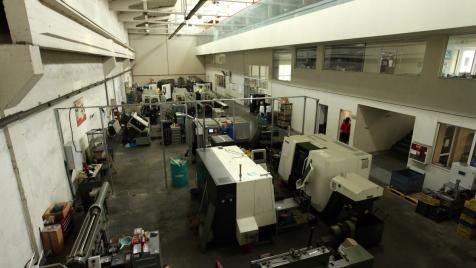
Discussions about reskilling often veer toward “digital skills.” The reality in Kyustendil, however, is technical. Workers in the region do not see themselves in offices – they want to continue creating and repairing with their own hands.
The survey shows that nearly 75% of people have a secondary education, with an impressive 43.1% holding a technical secondary education. There is a real and concrete interest in new energy technologies: 17.3% express direct interest in the installation of photovoltaic systems, followed by interest in energy storage systems (batteries).
An interesting point is that although these people are the backbone of the regional industry, 83.7% of them do not have an official certificate of qualification for the skills they actually practice or are striving to acquire. These “invisible experts” do not need fundamental retraining, but rather validation of their skills and specific certification to become a legitimate driving force in Bulgaria’s renewable energy sector.
Business Concerns
The just transition in Kyustendil also has a very concrete financial dimension. The data indicate that people’s expectations are firmly grounded in reality but also firm regarding their standard of living. Nearly 40% of those surveyed would not take a new job for a net salary below 1,300 euros.
This pragmatism clashes with management’s fears. Businesses in the region, heavily tied to the coal sector, are forecasting a dramatic drop in revenue – between 30 and 50%. When a company loses half its revenue, retraining becomes a secondary concern – the primary one is sheer survival.
Without direct government support for the diversification of these companies, the risk is enormous. If the new “green” jobs cannot offer security and incomes close to current levels, the region faces a new wave of economic migration – something that 85% of local people are actively trying to avoid.
Recommendations
For the transformation to be successful, it must become a socially sensitive and economically balanced process that supports both workers and businesses. A just energy transition will only be accepted by the majority if it is linked to the creation of real jobs, guaranteed long-term employment, and practical activities that provide people with security.
In this regard, strictly differentiated training programs are needed that take into account the specificities of each age group and their professional profiles. While for young workers the focus must be on innovation and new green technologies, for middle-aged employees it is critically important to build upon existing technical skills, and for older workers – to ensure secure forms of employment and a smooth transition to retirement.
A key element of the strategy is that all training must be directly linked to specific investment projects in the Kyustendil region to avoid the risk of acquiring qualifications that cannot be put into practice.
In parallel with training the workforce, indirectly affected enterprises urgently need financial and expert support to diversify their production, digitize their operations, and successfully enter new markets.
About the data
Collected under the project “Mapping the Skills of Indirectly Affected Individuals,” funded by the Operational Program “Regional Development” 2021 – 2027. The project aims to identify the real potential of people who do not work in the mines but whose businesses and lives are inextricably linked to the energy sector. In Kyustendil, 1,106 primarily indirectly affected individuals were surveyed – a figure that provides a representative and objective picture of attitudes in the region.
It is being carried out by the Confederation of Independent Trade Unions in Bulgaria (KNSB) in partnership with the Podkrepa Labor Confederation, with support from the Ministry of Labor and Social Policy.
Translated with DeepL.
Co-Funded by the European Union. Views and opinions expressed are however those of the author(s) only and do not necessarily reflect those of the European Union. The European Union cannot be held responsible for them.