“It Means Cuts”: Bulgaria Can No Longer Afford “Financial Tricks” in Its Budgets
The excessive deficit procedure is damaging to Bulgaria’s reputation, threatens its credit rating, and jeopardizes its OECD membership
© ECONOMIC.BG / BTA
~ 5 min read
 Simona Gotsova
 The European Commission (EC) will launch an excessive deficit procedure against Bulgaria within days, Prime Minister Rumen Radev announced earlier on Friday. For the country, this could mean reputational damage, a lower credit rating, more expensive debt and corporate financing, and even a risk to its membership in the Organization for Economic Cooperation and Development (OECD).
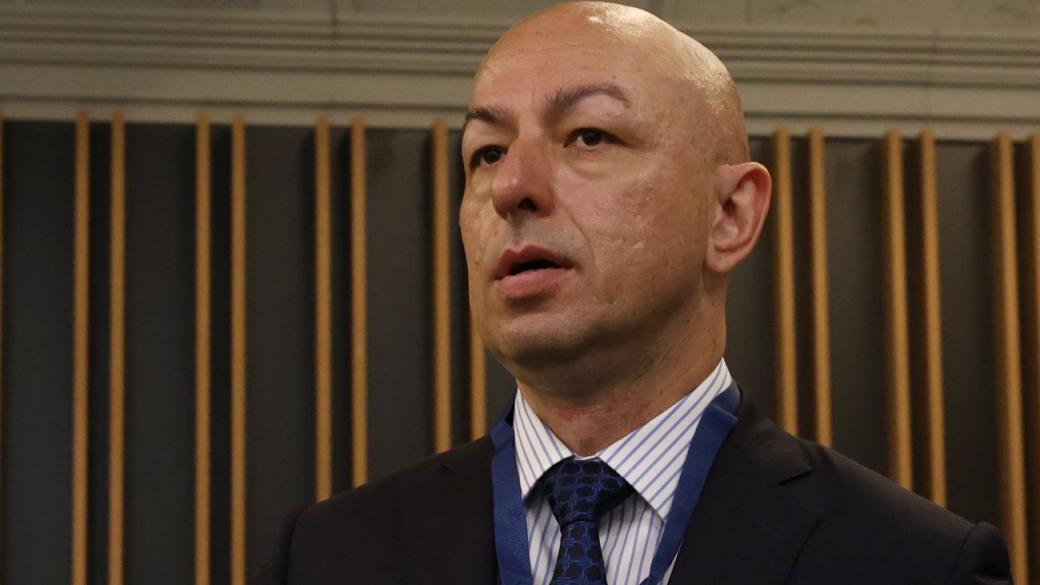
Now Bulgaria must provide an explanation to the EC regarding its “financial maneuvers” from last year, which led to an excessive deficit in 2025. This was stated in a comment for Economic.bg by Assoc. Prof. Dr. Shteryo Nozharov, an economist and lecturer at the University of National and World Economy (UNWE).
Questions about all these financial maneuvers are just beginning to arise,” said Nozharov.
As an example, he cited the approximately 250 million euros in advance tax collected from banks last year, as well as the profits reaped from state-owned enterprises. According to him, this amounts to a total of 900 million euros, which, if not recognized in the 2025 deficit accounts, could result in a significantly larger deficit.
We remind you that Bulgaria ended 2025 with a 3.5% budget deficit on an accrual basis, exceeding the 3% limit and violating fiscal discipline rules – in the very same year it received the green light to join the eurozone.
As another example of “financial focus,” the economist cited the capitalization of the Bulgarian Development Bank (BDB) and energy companies through debt, after which the funds are withdrawn as a 100% dividend.
In other words, you take out a foreign loan ostensibly for capitalization (of the companies) and then withdraw the amount as a dividend, which goes toward bolstering revenue. There are many such issues, and if the EC does not recognize even part of them, we are heading for a deficit of at least 4.5% (for 2025),” he added.
Specifically, the steps that will follow in an excessive deficit procedure are: As preliminary Eurostat data showed (editor’s note: final figures are expected in the fall), even these “focuses” did not help reduce the chronic budget shortfall that has accumulated in recent years, during which a 3% budget deficit became the norm rather than the exception.
- The EC prepares a report and analyzes whether a Member State has an excessive deficit when the reference values for the deficit or debt are exceeded or there is a risk that this will happen soon;
- If the EC determines that an excessive deficit procedure is necessary, it notifies the Council of the European Union and proposes a decision establishing the existence of an excessive deficit;
- Following the Commission’s proposal, the Council considers the observations of the Member State concerned and adopts a decision containing a comprehensive assessment of the situation. If the Council concludes that an excessive deficit exists, it adopts a recommendation to correct the situation based on the Commission’s recommendation;
- The recommendation may include a quantified corrective budgetary plan and a deadline for implementation. The Member State concerned must take the necessary action within six months;
- If effective action has not been taken by the deadline or the recommendation has not been implemented, the Council may impose sanctions. For eurozone countries, sanctions may include a fine of up to 0.05% of the previous year’s GDP. The fine is paid every six months until the Council determines that effective action has been taken. If the Member State continues to fail to meet its obligations, the Council may intensify the sanctions.
The only option to “patch up” the situation for 2025 was the military spending derogation, but Nozharov explained that the full amount of spending is not recognized under that provision.
Under the derogation, only the amount exceeding the (defense) spending of the previous year is recognized, i.e., compared to 2024,” he added.
And he raised the question of why deputy ministers responsible for “financial tricks” have been reinstated at the Ministry of Finance.
We remind you that Lyudmila Petkova, who is currently a deputy minister, was the subject of widespread criticism as acting finance minister for her 2025 draft budget, which projected unrealistic revenue growth and even 4 – 5 times more revenue from an additional tax on the extraction of underground resources.
Among the more controversial proposals were those for the two types of tax amnesties, in which she saw “a huge reserve for collecting unpaid but declared taxes, and for evaded taxes.”
These ministers were there (editor’s note: at the Ministry of Finance) during the periods when this fiscal policy was being formulated, which is why it now turns out that the European Commission will sanction Bulgaria. Are these the right people to be managing the state’s finances at this moment?” he asked.
The issue of the excessive deficit procedure has been actively discussed in recent years, with the Fiscal Council and even the Bulgarian National Bank (BNB) repeatedly warning that a way must be found to restore fiscal discipline.
“The bigger problem”
The bigger problem, according to Nozharov, is what will happen to Bulgaria’s reputation in international markets.
Such action by the EC means that Bulgaria’s credit rating could even be downgraded, which would immediately impact debt financing; foreign direct investment would decline even further; and the situation would become more costly for certain private ratings and large companies, because this action signals that public finances are not being managed well," he explained.
He added that Bulgaria is currently borrowing at higher costs than even Italy and France, which have debt-to-GDP ratios exceeding 100%.
Risk to OECD Membership
It turns out that this procedure also poses a risk to the country’s membership in the Organization for Economic Cooperation and Development (OECD). It recently became clear that Bulgaria is nearing the end of the technical phase of the accession process to the organization, and 2027 is increasingly seen as the year this could become a reality.
Even if you meet the criteria on paper, they may not want to take on such a reputational burden – to accept a country with a newly established procedure flag,” added Nozharov.
“Inopportune Moment”
The economist noted that so far, our country has entered such a procedure twice – between 2010 and 2020 – but the situation was different then because the economy was in good shape and on an upward trend.
We’ve taken note, but now is not the right time – entering such a procedure now means cuts,” added Nozharov.
How quickly will we get out of this?
Perhaps very soon (we’ll exit the procedure), because it depends on how the two budgets – for 2026 and 2027 – are structured,” predicted the UNWE professor.
According to him, all three draft budgets for this year and next, which have already been prepared by the Ministry of Finance, “must be scrapped and started over” in the manner the EC wants – with fiscal consolidation and structural reforms. This, however, will require “tightening our belts.”
The Commission is, to some extent, punishing Bulgaria for shying away from reforms, because we implemented the easier ones but not the harder ones; that is why they are now showing us that these reforms will have to be implemented,” he added.
Translated with DeepL.