The government will provide direct cash payments to low-income individuals
For now, support for businesses affected by higher energy prices will consist solely of not raising toll fees
© ECONOMIC.BG / BTA
~ 3 min read
 Georgi Zhelyazkov
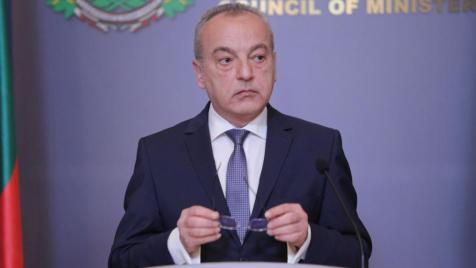
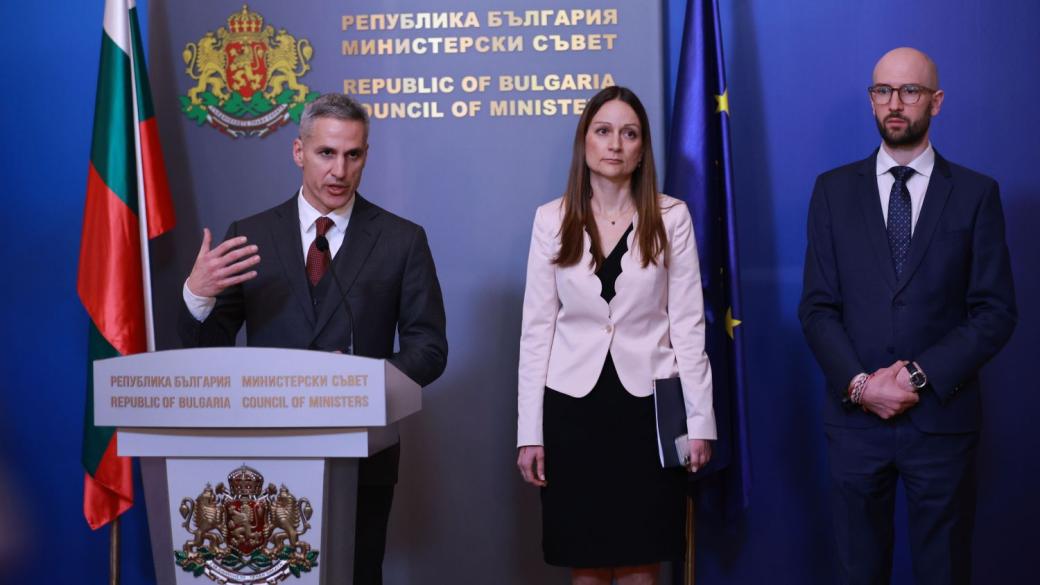
 The caretaker government attempted to outline measures it will take to assist households and businesses due to higher fuel prices. Unfortunately, neither Prime Minister Andrey Gyurov, nor Finance Minister Georgi Klisurski, nor Economy Minister Irina Shtonova managed to provide sufficient clarity on what lies ahead.
During a briefing at the Council of Ministers, attended by all three, it became clear that certain low-income groups will receive monthly direct payments from the government into their bank accounts as assistance due to higher fuel prices and the resulting inflation. This measure will take effect starting this month.
Government representatives were unable to specify exactly which groups would receive the funds. Pensioners will certainly be included, though likely not all of them, as some receive quite large amounts; however, students and unemployed individuals were also mentioned. Finance Minister Georgi Klissurski requested another day or two to finalize the details of the scheme.
But they were adamant that there will be a specific income threshold below which people will receive money. It is not yet clear; an analysis by the National Revenue Agency (NRA) is pending “for all types of income received by individuals.”
All types of income will be analyzed, and a maximum allowable income threshold will be used to determine the group of individuals eligible for assistance. We have specific estimates, but we are selecting the most appropriate one,” Klisurski said.
Government representatives were asked several times by journalists about the total amount of budget funds that will be required for this measure. Ultimately, Andrey Gyurov announced that the figure is “around 30 million euros.”
The Prime Minister added that this is only the first stage of the measures and if fuel prices – which are not yet that high in Bulgaria – rise significantly, other measures that have not yet been mentioned will also be implemented.
We receive weekly reports on prices, and when necessary, we will take additional measures. “For now, petroleum product prices are the lowest in Europe, but through the mechanism of direct support for the lowest-income groups and margin controls by the National Revenue Agency, we will ensure there is no speculative price increase,” Gyurov said.
He clarified that regulators are currently conducting intensified inspections at gas stations, pursuant to the Euro Act, to determine whether there is “speculation” anywhere or whether fuel prices are rising justifiably – due to increases in supply prices.
Support for businesses?
For now, businesses will be supported only by maintaining the current level of toll fees. According to the plan, these were supposed to increase starting March 1 due to the new requirement to include a “bio” component. First, Angelina Boneva, regional minister for a few days in the Gyurov cabinet, secured a one-month postponement from Brussels. Now, Economy Minister Irina Shtonova said that negotiations will be held with the European Commission to postpone the implementation of the higher toll fees by a few more months.
Prime Minister Gyurov believes that the effect of this measure on the budget will be neutral, since, according to him, the lost revenue from the higher tolls will be offset by increased VAT collections.
Shtonova explained that discussions are underway with the business community regarding other support mechanisms.
We are currently discussing with them what would be most appropriate. Let’s see how things develop. If electricity prices rise above a certain level, what can we do to help? But whatever measures we take, the money has to come from somewhere. So we have to be very careful about what we introduce,” said the Minister of Economy.
Translated with DeepL.