Energy projects worth over €1 billion are at risk due to mismanagement
Minister Iva Petrova announced that the previous government failed to disburse funds for key projects, such as the Vertical Gas Corridor and the new pumped-storage hydroelectric plant
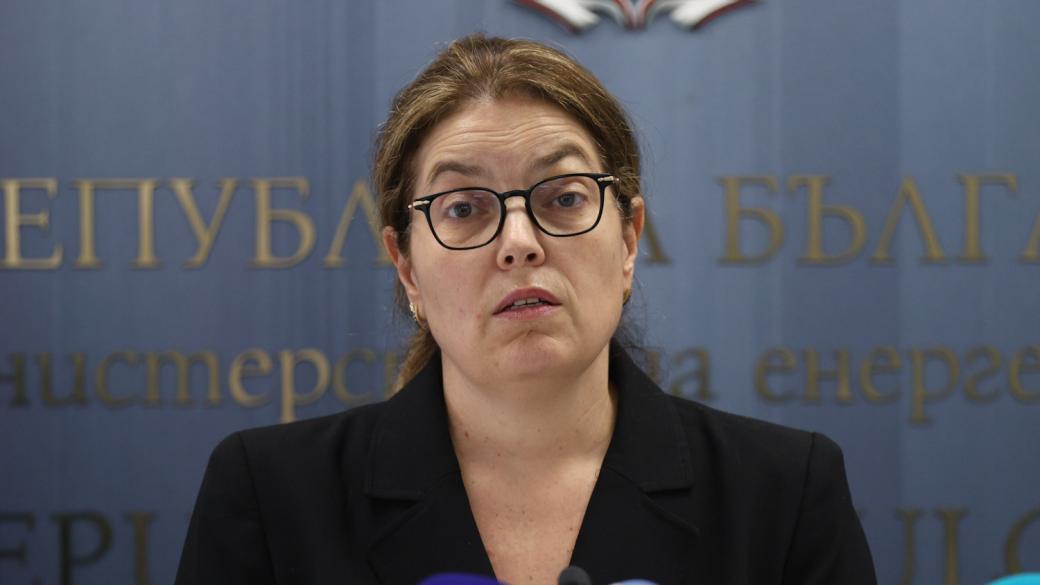
© ECONOMIC.BG / BTA
~ 3 min read
 Georgi Zhelyazkov
 There are delays in key reforms, difficulties in implementing strategic investments, a risk of losing EU funding, and questionable management practices. This is how Energy Minister Iva Petrova described the energy sector in Bulgaria, inherited from the regular “Zhelyazkov” cabinet led by Minister Zhecho Stankov and left largely unchanged by the caretaker government of Andrey Gyurov with Minister Traicho Traikov.
One of the minister’s first steps is to replace the entire leadership of the Bulgarian Energy Holding (BEH), which plays a key role in managing state-owned companies in the Bulgarian energy sector. Iva Petrova announced that a phased, in-depth audit of the companies is beginning, starting with BEH, “Kozloduy NPP – New Capacities,” which is building the large-scale project for new reactors at the Kozloduy NPP, and “Mini Maritsa East.”
She promised to brief journalists on the results of these audits, which will form the basis for future decisions by the new administration.
Loss of EU Funds?
Iva Petrova announced that there is a risk of losing 1 billion euros from the Recovery and Resilience Plan and the Territorial Plans for a Just Transition.
She painted an extremely bleak picture regarding the various programs. For example, the previous administrations – both the regular and the caretaker government – have achieved only 1% disbursement under the battery program. Under RESTORE, which funds projects for large-scale energy storage battery complexes, only 6% of the funds have been disbursed, the minister said.
Petrova added that there are major problems with other programs as well – such as the Norwegian program, which can fund the creation of energy communities, pre-project studies for pumped-storage hydroelectric plants, and more.
There is a critical delay. We need to fully mobilize all the ministry’s resources so that these investments can happen,” the minister said.
Some of the problems are related to unimplemented legislative initiatives, such as the adoption of amendments to the Energy Act, the Renewable Energy Sources Act, the Energy Efficiency Act, and other subordinate legislation.
“Concerning management practices” at BEH
At the BEH level, certain concerning management practices have been identified—a full audit and objective assessment are needed.
At this stage, I cannot say definitively what they are before the audit results are released, but there are questionable management practices that could put the management of some companies in the BEH group at risk,” she said.
The minister specified that a “deterioration in maintenance readiness at some companies, as well as a critical lag in investments and maintenance programs” had been identified.
There were delays in the maintenance of base-load capacity. “Available capacity is maintained during the winter, when the load is high,” said Petrova.
She presented alarming data indicating that funds for priority investments – such as the Vertical Gas Corridor, projects to strengthen the power grid, the construction of a new pumped-storage hydroelectric plant, and the expansion of the gas interconnector with Greece – had been deliberately delayed.
I cannot find an explanation for why available funds earmarked for critical infrastructure have not been provided to operators to develop priority investments,” the minister said. “We will not tolerate such an approach, which puts our sector at risk.”
Furthermore, within the BEH group, there is a deterioration in the debt levels and liquidity of some companies.
For some of the companies, there are increased expenses without any new activities. We need to identify the factors influencing this process,” the minister added.
But he gave an example of the bureaucracy within BEH. According to the data presented, 136 people work at the Holding.
That’s almost an entire Ministry of Energy, even larger than the specialized administration within that ministry. We’re talking about an absurd structure, a bureaucratic structure – directors, deputy directors,” explained Petrova.
Translated with DeepL.