Home delivery is becoming a luxury: Lockers and the new logic of the courier market
Box Now will add about 400 self-service kiosks by the end of the year
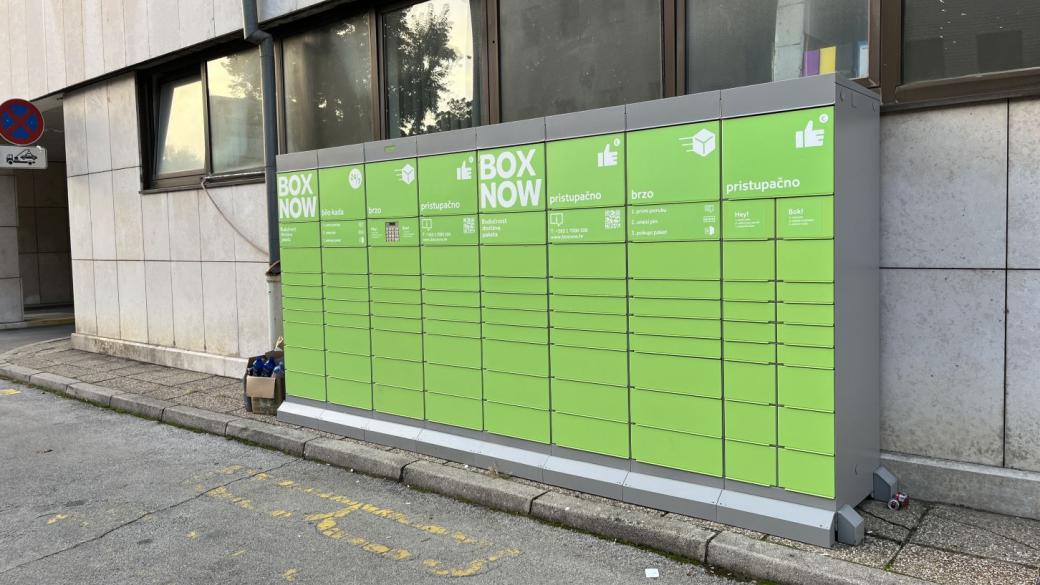
© ECONOMIC.BG / Box Now
~ 4 min read
 Mirela Vavova
 Just four years ago, barely more than 1% of e-commerce shipments in Bulgaria ended up in an automated locker. Today, one in five deliveries goes to a locker (automated boxes) – and the trend is accelerating. Behind this transformation lies a combination of economic pressure, changing consumer habits, and technological infrastructure that is increasingly becoming the backbone of the courier industry.
The speed of change is perhaps the most striking aspect of the history of the locker model in Bulgaria. “In just three years, the market share of lockers has grown from under 1% to 18 – 20% of all shipments,” said Box Now CEO Andrej Vyskrabka at an event for journalists.
Today, one in five shipments is delivered to a locker.”
Forecasts for 2026 indicate that during key shopping periods, such as Black Friday and Christmas, between 25 and 30% of all e-commerce deliveries in Bulgaria will be directed to lockers.
According to Vyskrabka, this rate of adoption follows trends in more mature markets in Central and Eastern Europe. In Estonia, the share of deliveries to lockers reaches 60 – 80%, in the Baltic countries and Poland – 50-70%, and in Greece, which adopted the model just a year and a half before Bulgaria, it already exceeds 30%.
And looking ahead to the next five years, Vyskrabka predicts that
we will see 45, perhaps 50% of all shipments delivered to lockers.”
The Economics of Consolidation
The main driver behind the widespread adoption of lockers is their undeniable operational advantages against the backdrop of inflationary pressure. The traditional “door-to-door” model requires stopping at every single address, which consumes enormous resources in terms of fuel and labor. Consolidated delivery to lockers works on the opposite principle – hundreds of packages are dropped off at a single location.
The difference in productivity is enormous. While a courier on a traditional route handles about 100 addresses per day, the same employee can deliver 800 packages to automated lockers during the same shift. This makes the model up to eight times more efficient.
Vyskrabka illustrates this transition with specific data on costs in the sector:
Labor costs in Bulgaria have risen by at least 30% in the logistics industry over the past three years, while fuel prices have jumped by 50% in just the last six months. Despite this, we haven’t raised our prices and we don’t have a ‘fuel surcharge’, simply because we don’t need them. We are eight times less affected by rising labor costs."
In the long term, this is expected to lead to a clear specialization of services. Door-to-door delivery will become a premium service for which consumers will pay more when they have a valid reason– for example, a heavy shipment or expensive goods that require inspection. For standard purchases, such as clothing, cosmetics, or books, lockers will be the natural choice due to their lower price and greater convenience, Vyskrabka believes.
The New Consumer Logic
Vyskrabka sees a deeper shift in the way people think about deliveries behind the numbers.
People no longer want to wait for their deliveries at home. They take their children to school, go to work, exercise, or juggle numerous responsibilities throughout the day. Delivery is becoming something that consumers expect to fit into their schedule, not the other way around.”
The parallel with contactless payments is telling: a technology that consumers initially approached with caution has become the norm.
Using a locker is now second nature to millions of people in Bulgaria. Right now, someone, somewhere in the country, is opening an automated locker. This is now part of everyday life – and this is just the beginning.”
The model isn’t limited to receiving packages. The peer-to-peer (P2P) shipping service for individuals, launched in Bulgaria in August 2024, has seen steady monthly growth – a sign that the locker network is integrating into the broader economy of resale and reuse.
Box Now: From Startup to Market Leader
In the locker market, Box Now handles about 60% of all deliveries to lockers in the country.
Six out of every ten shipments delivered to a locker go through Box Now,” said Vyskrabka.
In total, the company handles about 10% of the entire courier market in Bulgaria – enough to rank among the top three operators in the country, according to company data.
In April alone, Box Now delivered over one million shipments. The user base exceeds 2.2 million people, and most of them use service repeatedly.
Investment in infrastructure exceeds €20 million, invested primarily in the network of lockers.
In the coming months, we will invest another €5 – 6 million just to expand the network to the size needed to meet current market demand,” Vyskrabka explained.
By the end of 2026, the network is expected to grow from 800 to over 1,200 lockers, and geographic coverage from 160 to 320 locations. “Many small towns and villages have neither courier offices nor lockers,” noted the CEO.
Delivery capacity will more than double – from 1.5 million to over 3.5 million shipments per month.
Translated with DeepL.