Radev Defends Cohesion and Agriculture Funding Amid New Military Priorities
During his first visit abroad, Prime Minister Rumen Radev warned of the financial pressure on Bulgaria resulting from the increase in the country’s contribution to the EU budget
~ 3 min read
 Economic.bg
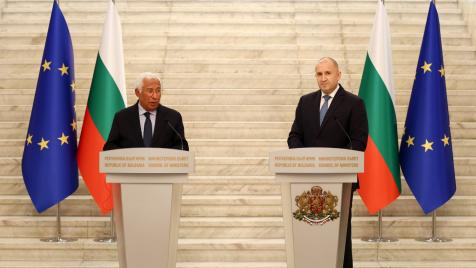
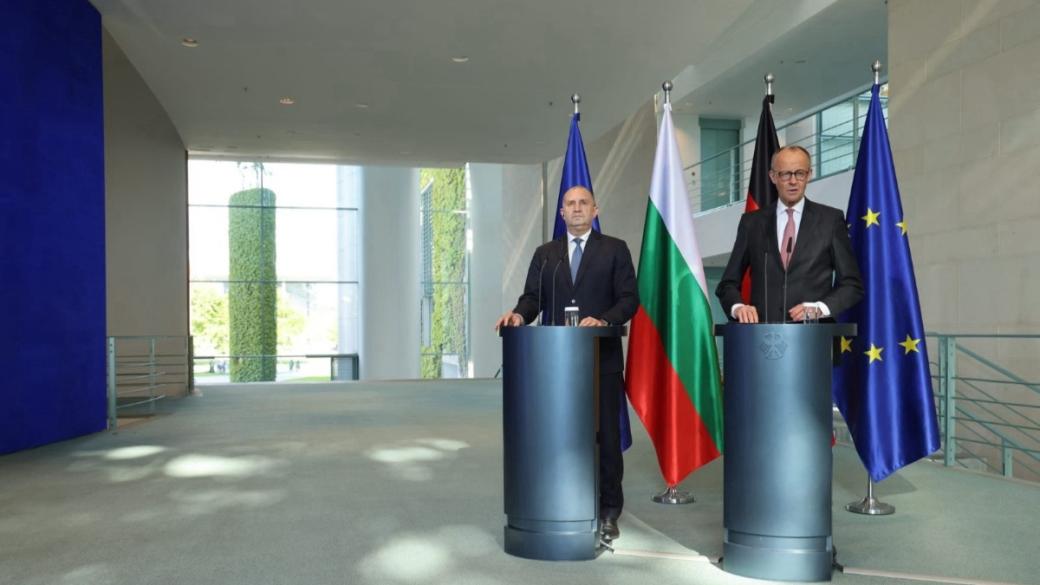
 Maintaining the European Union’s strong cohesion policy and Common Agricultural Policy will be a key priority for Bulgaria in the upcoming negotiations on the new long-term EU budget. Bulgarian Prime Minister Rumen Radev and German Chancellor Friedrich Merz agreed on this position during the new Bulgarian prime minister’s first official visit abroad.
Against the backdrop of global uncertainty and pressure to redirect European funds toward defense and security, the two leaders stated that traditional cohesion policies should not fall victim to new geopolitical realities, but rather that a balance should be sought between them.
Double the contribution and costs for the euro
The debate over the next Multiannual Financial Framework (MFF) – the EU’s seven-year budget that sets the Union’s financial priorities – is already beginning to draw dividing lines between member states. Prime Minister Rumen Radev emphasized the need for a sustainable balance between security, competitiveness, and cohesion policies, while expressing open reservations about the new mechanism for forming the MFF.
The problem for Bulgaria stems from the fact that, according to the new estimates, our national contribution to the European budget is doubling. This financial pressure comes at a delicate moment for the country, which is facing additional adjustment costs related to the introduction of the single European currency.
I believe we will seek a solution by viewing these goals not as competing but as mutually complementary,” Radev stated, referring to the clash between traditional cohesion funds and Europe’s new needs.
In the context of European policy, the Cohesion Funds are the main instrument for reducing economic and social disparities between individual regions—a process on which the Bulgarian economy and infrastructure are heavily dependent. The Common Agricultural Policy, for its part, is the backbone of European agriculture.
It is of utmost importance for Bulgaria that a strong Cohesion Policy and Common Agricultural Policy be preserved, as they are a guarantee of social and political stability, economic convergence, and food security against the backdrop of growing international uncertainty.”
Radev recalled the lessons of recent years – the COVID-19 crisis, energy shocks, disrupted supply chains, and military conflicts in neighboring regions. All of these have laid bare Europe’s vulnerabilities and demonstrated that food sovereignty and the resilience of food supplies are not merely economic issues, but an element of national and pan-European security.
When we put all the key factors on the table – military security, defense, competitiveness, food security, and economic resilience – we will be able to find the necessary balance and formula to guarantee Europe’s overall security and resilience,” the Bulgarian prime minister emphasized.
Less bureaucracy, preserved priorities
As the largest net contributor to the EU budget, Germany has a decisive voice in the MFF negotiations. Merz made no secret of the fact that intense negotiations on the next framework are ahead. However, he sent a reassuring message to countries relying on European solidarity by agreeing on the need to maintain two strong policies – agricultural policy and cohesion policy. At the same time, he noted that this must happen in parallel with the development of new priorities – defense and boosting European competitiveness.
The key to solving this equation with many unknowns, according to the German chancellor, lies in efficiency. Merz pointed to reducing European bureaucracy and opening markets as the main path toward a more rational and efficient use of public resources.
Translated with DeepL.
Co-Funded by the European Union. Views and opinions expressed are however those of the author(s) only and do not necessarily reflect those of the European Union. The European Union cannot be held responsible for them.