The European Parliament has identified cohesion as a "red line" in the new €2 trillion budget
The Parliament is calling for an ambitious financial plan for the EU to ensure that funds for local projects are not "eaten up" by interest on loans and rising prices
~ 3 min read
 Gloria Hristova
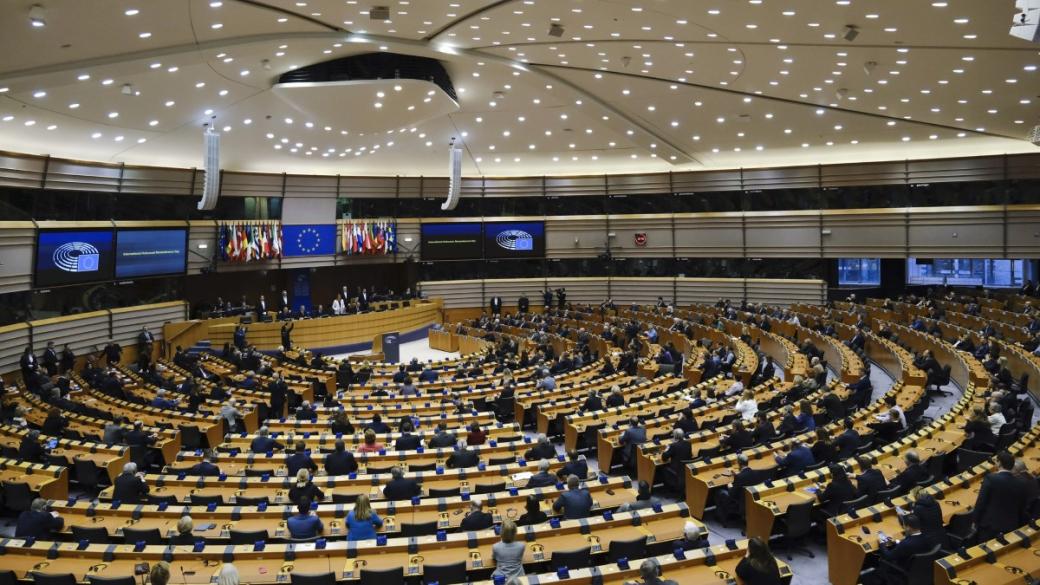
 The European Parliament has officially adopted its position on the next Multiannual Financial Framework (MFF), calling for an unprecedented budget of €2 trillion for the period 2028 – 2034. MEPs demanded a framework amounting to 1.27% of the EU’s gross national income (GNI).
With this vote, the Parliament issued an “ultimatum” to protect cohesion policy and agriculture, firmly opposing attempts to “renationalize” them or turn them into bargaining chips for new defense priorities.
More funds for regions and citizens
In the adopted interim report, MEPs propose a budget increase of about 10% compared to the Commission’s initial 2025 proposal. Overall, Parliament proposes a budget of €1.7 trillion (in 2025 constant prices) or €2 trillion (in current prices) to fund the EU’s policy priorities and strategic goals.
The explanation for the two figures is that constant prices reflect the real purchasing power of money today, while current prices reflect the higher amount that will actually be paid out in the future after accounting for projected inflation.
The 10% increase requested by MEPs compared to the Commission’s plans is not simply a desire to spend more, but “financial insurance.” It is necessary to ensure that rising living costs and material prices do not erode investments in the regions and that the EU will have sufficient “net” resources for new challenges without dipping into cohesion and agriculture funds.”
The main message is clear: cohesion policy, the European Social Fund, and the Common Agricultural Policy are not “relics,” but the backbone of the EU. MEPs insist on crystal-clear transparency in the allocation of resources, with funds to be directly and specifically linked to regional and national plans. This is directly linked to the call for the full participation of local and regional authorities, which should not be mere bystanders but active partners throughout the entire process – from initial planning to the final implementation of programs.
It is precisely this decentralized structure that serves as the Parliament’s main defense against the “one-size-fits-all” model proposed by the Commission. MEPs categorically reject this approach, seeing in it a serious risk of a loss of transparency and the danger that cohesion policies will become a tool for political bargaining rather than a driver of genuine European solidarity.
New Priorities and Financial Sustainability
While cohesion remains a priority, Parliament also welcomes the doubling of funds for sectors such as defense, competitiveness, digitalization, and healthcare. A key demand is that debt servicing costs for the NextGenerationEU recovery fund remain outside the budget ceilings so as not to “eat into” funds from the operational programs.
To finance this ambition, the EP is calling for the introduction of new “own resources” (such as a tax on digital services and crypto-assets), which would generate around €60 billion annually. If some proposals are dropped, MEPs call for alternatives to be considered, such as a digital services tax, a tax on online gambling, an expansion of the Carbon Border Adjustment Mechanism (CBAM), or a tax on capital gains from crypto-assets.
The Parliament emphasizes that access to funds must remain conditional on respect for the rule of law. At the same time, MEPs are seeking a mechanism whereby final beneficiaries (projects, municipalities, SMEs) are not penalized for the mistakes of their governments.
Now it is up to the European Council to respond to our ambitions, build on our proposals, and deliver a strong and timely budge – one that works for the regions, for the beneficiaries, and for the people. “We look forward to constructive negotiations,” said co-rapporteur Carla Tavares (S&D, Portugal)
With this vote, Parliament is ready for negotiations with the Member States (the Council). Since the decision requires full unanimity in the Council and subsequent approval by the EP, negotiations are expected to be long and complex, with the aim of having the new framework enter into force in time for 2028.
Translated with DeepL.
Co-Funded by the European Union. Views and opinions expressed are however those of the author(s) only and do not necessarily reflect those of the European Union. The European Union cannot be held responsible for them.